Summary:
You already know fire extinguishers are required. What you might not know is that the wrong type—or the wrong placement—can fail when you need it most, or worse, make a fire spread faster. Water fire extinguishers work exceptionally well for certain industrial fires, but they’re also one of the most misused fire suppression tools in commercial settings. If you’re managing a warehouse, manufacturing facility, or office building in Nassau County, you need to understand exactly when water-based extinguishers protect your property and when they create new hazards. This guide breaks down the practical differences between traditional water extinguishers and water mist systems, walks through real selection criteria for industrial environments, and clarifies what Nassau County actually requires for compliance.
Water Fire Extinguisher Types and Applications
Water fire extinguishers are designed for one specific job: cooling Class A fires involving ordinary combustibles like wood, paper, cardboard, fabric, and certain plastics. They work by removing heat from the fire triangle, dropping the burning material below its ignition temperature until the fire goes out completely. This makes them highly effective in warehouses storing paper products, textile facilities, woodworking shops, and office environments where the primary fire risk comes from solid materials that leave ash.
The effectiveness is real. Water has exceptional cooling properties and can prevent re-ignition better than many chemical agents, especially with materials that tend to smolder. But that same water becomes dangerous around electrical equipment, flammable liquids, or combustible metals. Using a water extinguisher on an electrical panel can create electrocution risks. Spraying water on burning oil spreads the fire across a larger area. These aren’t theoretical problems—they’re common mistakes that turn manageable situations into emergencies.
How Traditional Pressurized Water Extinguishers Work in Industrial Settings
Traditional pressurized water extinguishers deliver a solid stream of water, typically reaching 45 to 55 feet. This range makes them practical for larger industrial spaces where you might need to attack a fire from a safer distance. The discharge time runs around 55 seconds, giving even inexperienced operators enough time to apply the agent effectively on Class A fires.
These units are straightforward. You pull the pin, aim at the base of the fire, and squeeze the handle. The pressurized water shoots out in a concentrated stream that penetrates burning materials, soaking deep into piles of combustibles and cooling hot spots that might reignite later. In facilities with high volumes of paper, cardboard packaging, wood pallets, or textile materials, this penetrating action is exactly what you need.
The trade-off is water damage. A single 2.5-gallon water extinguisher discharged in an office or near sensitive equipment leaves everything soaked. Carpets, drywall, electronics, documents—all of it gets wet. For some operations, that’s acceptable. The fire is out, and water cleanup is manageable. For others, especially facilities with computer equipment, servers, or moisture-sensitive inventory, traditional water extinguishers create secondary damage that can be as costly as the fire itself.
Placement matters more than most people realize. OSHA requires Class A extinguishers to be positioned so that travel distance from any point in the protected area doesn’t exceed 75 feet. In a large warehouse, that means multiple units distributed throughout the space, mounted between 3.5 and 5 feet off the floor, clearly visible, and easily accessible. Nassau County inspectors check these details during annual inspections, and violations can result in fines or operational shutdowns until you’re compliant.
You also can’t use these extinguishers in environments where temperatures drop below freezing unless they’re specifically rated for low-temperature applications with antifreeze additives. Standard water extinguishers freeze, rendering them useless. If your facility has unheated areas or outdoor storage, you need to account for that in your selection.
When Water Fire Extinguishers Are the Wrong Choice
Water extinguishers fail—and create new hazards—when used on the wrong fire types. Electrical fires are the most common mistake. Water conducts electricity. Spraying water on live electrical equipment, control panels, or energized machinery creates a direct electrocution risk for the person operating the extinguisher. Even after the initial shock risk, water damage to electrical systems can cause short circuits, equipment failure, and extended downtime.
Flammable liquid fires are equally dangerous. Pouring water onto burning gasoline, oil, solvents, or other petroleum products doesn’t extinguish the fire. Instead, the water sinks below the burning liquid, and in some cases, causes the flammable material to spread across a wider area. What started as a small spill fire can become a rapidly expanding incident that overwhelms your response capability.
Combustible metal fires, though less common in most industrial settings, are another absolute no-go for water extinguishers. Metals like magnesium, titanium, sodium, and aluminum can react violently with water, sometimes explosively. Facilities involved in metalworking, machining, or manufacturing processes that generate metal dust or shavings need specialized Class D extinguishers, not water-based units.
The key is knowing your hazards before a fire starts. Walk through your facility and identify what’s actually burning if a fire breaks out. If you see rows of cardboard boxes, wooden pallets, paper files, or fabric materials, water extinguishers make sense. If you see electrical panels, machinery, chemical storage, or metal fabrication areas, you need different suppression agents. Many industrial facilities require multiple extinguisher types positioned based on the specific hazards in each zone. A warehouse might have water extinguishers near the loading dock where cardboard and wood dominate, CO2 extinguishers near the electrical room, and ABC dry chemical units in mixed-use areas.
Nassau County’s Fire Marshal’s Office conducts regular inspections of commercial properties to verify that extinguisher types match the hazards present. Inspectors look for proper classification, correct placement, current inspection tags, and evidence of annual maintenance. If your facility has water extinguishers positioned near obvious electrical hazards, expect questions—and potentially violations—during your next inspection.
Water Mist Fire Extinguisher Technology and Benefits
Water mist extinguishers represent a significant advancement in fire suppression technology, especially for facilities where traditional water extinguishers create too much collateral damage. These units use de-ionized water expelled through specialized nozzles that create microscopic droplets—some as small as 25 microns in diameter. The result is a fine mist that behaves completely differently than a solid water stream.
The mist provides two suppression mechanisms simultaneously. First, the tiny droplets evaporate rapidly when they contact the fire, absorbing massive amounts of heat and cooling the flames. Second, that evaporation creates steam, which displaces oxygen around the fire, suffocating it. This dual-action approach is highly efficient, requiring significantly less water to achieve the same—or better—fire suppression compared to traditional water extinguishers.
What makes water mist particularly valuable for industrial applications is the reduced water damage. The fine droplets don’t soak materials the way a solid stream does. After discharge, you’re not dealing with gallons of standing water, soaked inventory, or ruined equipment. The mist settles, evaporates, and leaves minimal residue. For facilities with electronics, sensitive machinery, documents, or high-value inventory, this difference is substantial.
Water Mist Performance on Class A and Electrical Fires
One of the most significant advantages of water mist technology is its ability to handle both Class A combustible fires and Class C electrical fires. Traditional water extinguishers are strictly prohibited on electrical fires due to conductivity risks. Water mist units use de-ionized water, which is non-conductive and non-toxic. This means you can safely use them on energized electrical equipment without creating electrocution hazards.
This versatility matters in real-world industrial environments where fire risks aren’t neatly separated. A fire might start in combustible materials near electrical equipment. With traditional extinguishers, you’d need to identify the primary fuel source, grab the correct extinguisher type, and hope you chose right. With water mist, you have a single tool that handles both scenarios safely.
The microscopic droplet size also improves penetration into fire zones. The mist can reach into tight spaces, around obstacles, and into areas where a solid stream might not effectively reach. This is particularly useful in facilities with complex machinery, dense storage configurations, or areas where fire might be partially hidden from direct line of sight. The mist envelops burning materials and fills the air around the fire, providing more comprehensive coverage than a targeted stream.
Testing has shown that water mist extinguishers are effective on Class A fires involving wood, paper, cloth, trash, and plastics—the same materials traditional water extinguishers handle. They’re also rated for Class C electrical fires, and some models are even effective on certain Class F cooking oil fires, though those applications are more common in commercial kitchens than industrial settings. The key point is that water mist expands your suppression capability without requiring multiple extinguisher types in the same area.
For facilities like data centers, server rooms, telecommunications equipment spaces, or manufacturing areas with sensitive electronic controls, water mist extinguishers provide fire protection without the equipment-destroying consequences of traditional water discharge. Insurance companies recognize this reduced risk, and some offer premium discounts for facilities that install water mist systems instead of standard water extinguishers in sensitive areas.
Industrial Fire Extinguisher Selection Criteria for Nassau County Facilities
Selecting the right fire extinguisher—water-based or otherwise—starts with a thorough hazard assessment of your facility. You need to identify every potential fire risk by zone, understand what materials are present, and determine which fire classes you’re most likely to encounter. In a warehouse, that might mean Class A fires from packaging materials in the storage area, Class B fires from forklifts and equipment in the maintenance bay, and Class C fires from electrical panels and charging stations.
Facility size directly impacts how many extinguishers you need and where they go. OSHA regulations specify that Class A extinguishers must be distributed so that travel distance from any point to the nearest extinguisher doesn’t exceed 75 feet. In a 10,000-square-foot warehouse, that typically translates to multiple units positioned throughout the space. You can’t just mount one extinguisher by the front door and call it compliant. Nassau County inspectors measure these distances during inspections, and violations are common when businesses underestimate their coverage requirements.
The specific fire hazards in your facility determine whether water extinguishers are even appropriate. If your operation involves flammable liquids, combustible metals, or extensive electrical equipment, water-based units might be the wrong choice entirely—or appropriate only in specific zones. Many industrial facilities end up with a mixed approach: water or water mist extinguishers in areas dominated by ordinary combustibles, CO2 or dry chemical extinguishers near electrical equipment, and specialized agents in areas with unique hazards.
Environmental factors also play a role. If your facility has areas exposed to freezing temperatures—loading docks, unheated storage, outdoor equipment—standard water extinguishers won’t work. They’ll freeze solid and be useless in an emergency. You’d need either antifreeze-rated water extinguishers or a different suppression agent entirely. Water mist extinguishers face the same limitation; they’re not suitable for sub-freezing environments unless specifically designed for low-temperature applications.
Nassau County’s centralized fire safety regulations, overseen by the Nassau County Fire Commission, provide more uniformity than you’d find in Suffolk County’s decentralized system. This means compliance requirements are consistent across the county, but it also means inspectors expect you to meet those standards without exception. The Fire Marshal’s Office conducts regular inspections, checking not just that you have extinguishers, but that they’re the correct type for your hazards, properly placed, currently inspected, and maintained according to schedule.
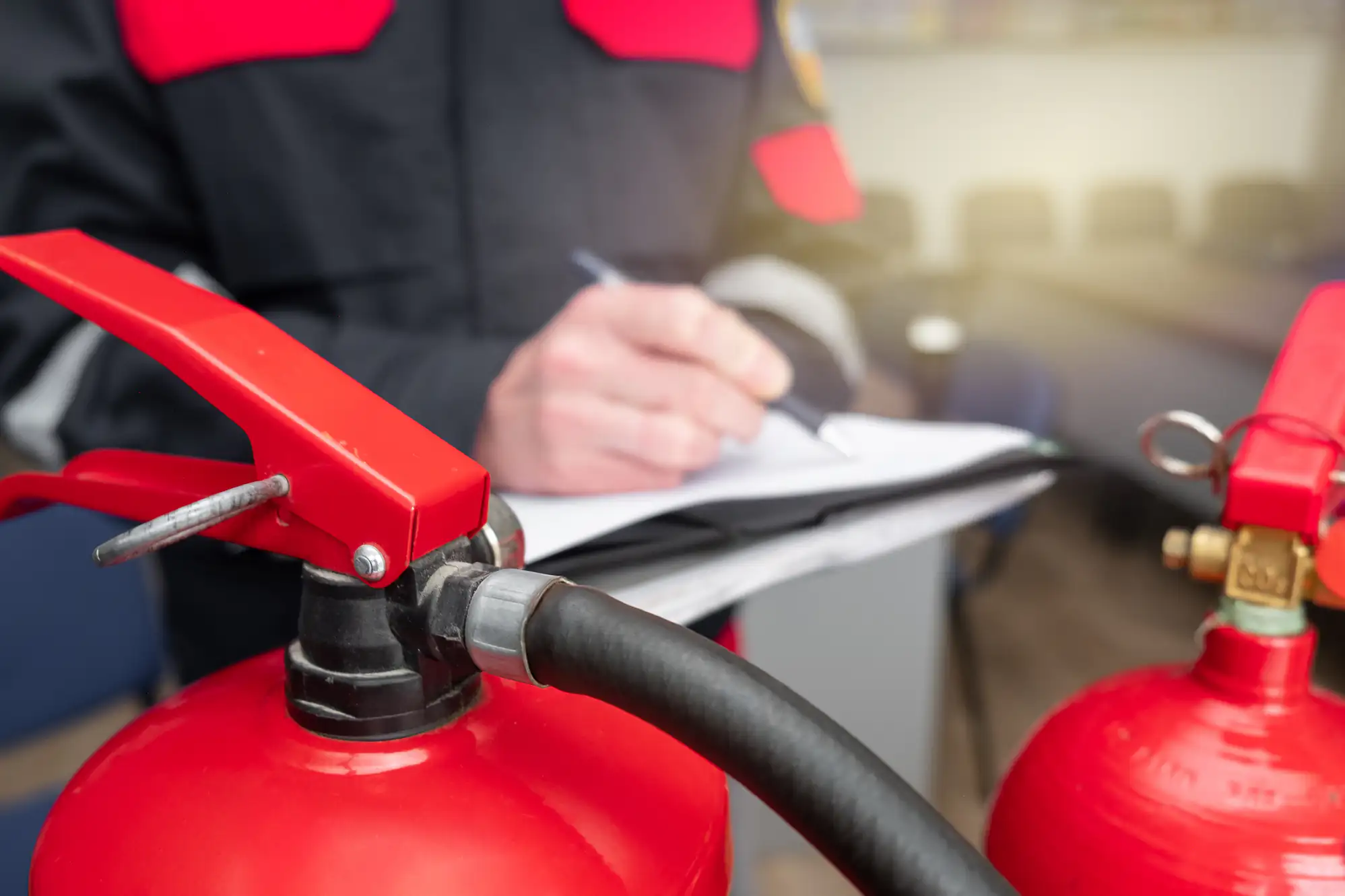
Annual maintenance isn’t optional. Every fire extinguisher in your facility must be inspected by a certified technician at least once per year. That inspection includes checking pressure levels, examining the physical condition of the unit, verifying that the discharge mechanism works, and confirming that the extinguisher is still within its service life. Water extinguishers typically require internal maintenance inspections every five years, while dry chemical units need them every twelve years. Missing these maintenance windows can result in violations, insurance complications, and—most importantly—extinguishers that fail when you actually need them.
Working with a fire protection company that understands Nassau County’s specific requirements saves time and reduces compliance risk. We hold Nassau County licenses 2019AEL75352 and PEL000000259, along with NYS License #12000325006. Our NICET-certified professionals know exactly what local inspectors look for, how to design compliant fire protection systems for complex commercial applications, and how to correct violations quickly if they occur. As an authorized Notifier by Honeywell dealer and member of the New York Fire Alarm Association, we bring both technical expertise and industry connections that matter when you’re designing fire protection for industrial facilities.
Choosing the Right Water-Based Fire Protection for Your Facility
Water fire extinguishers—whether traditional pressurized units or advanced water mist systems—provide effective fire suppression for Class A fires in industrial and commercial environments. The right choice depends on your specific hazards, the presence of sensitive equipment, potential water damage concerns, and Nassau County compliance requirements. Traditional water extinguishers offer powerful, penetrating suppression for ordinary combustibles at a lower cost. Water mist technology provides reduced water damage, electrical fire capability, and versatility that matters in facilities with mixed hazards or sensitive assets.
Getting the selection, placement, and maintenance right isn’t something you want to figure out after a fire starts—or during a Nassau County Fire Marshal inspection. The regulations are specific, the stakes are high, and the wrong approach creates both safety risks and compliance problems. If you’re evaluating fire protection options for your Nassau County facility, we can assess your hazards, recommend appropriate water-based or alternative suppression systems, and ensure you meet all local code requirements with properly licensed, certified installation and maintenance.