Summary:
You probably have fire extinguishers in your building. They’re mounted on walls, tucked in corners, maybe checked off on a monthly walk-through. But when was the last time you thought about what’s actually happening during those annual service visits? If you’re like most Nassau County property owners, the answer is probably never—until a fire marshal shows up, or worse, until you actually need one of those extinguishers to work.
Fire extinguisher servicing isn’t just about keeping a tag current. It’s about making sure the equipment will actually function during an emergency. And in Nassau County, where regulations are strict and fraudulent service providers have become a real problem, understanding what quality servicing looks like isn’t optional anymore.
Here’s what you need to know about fire extinguisher servicing standards, what proper maintenance involves, and how to make sure you’re getting real service—not just a worthless sticker.
What Professional Fire Extinguisher Servicing Actually Includes
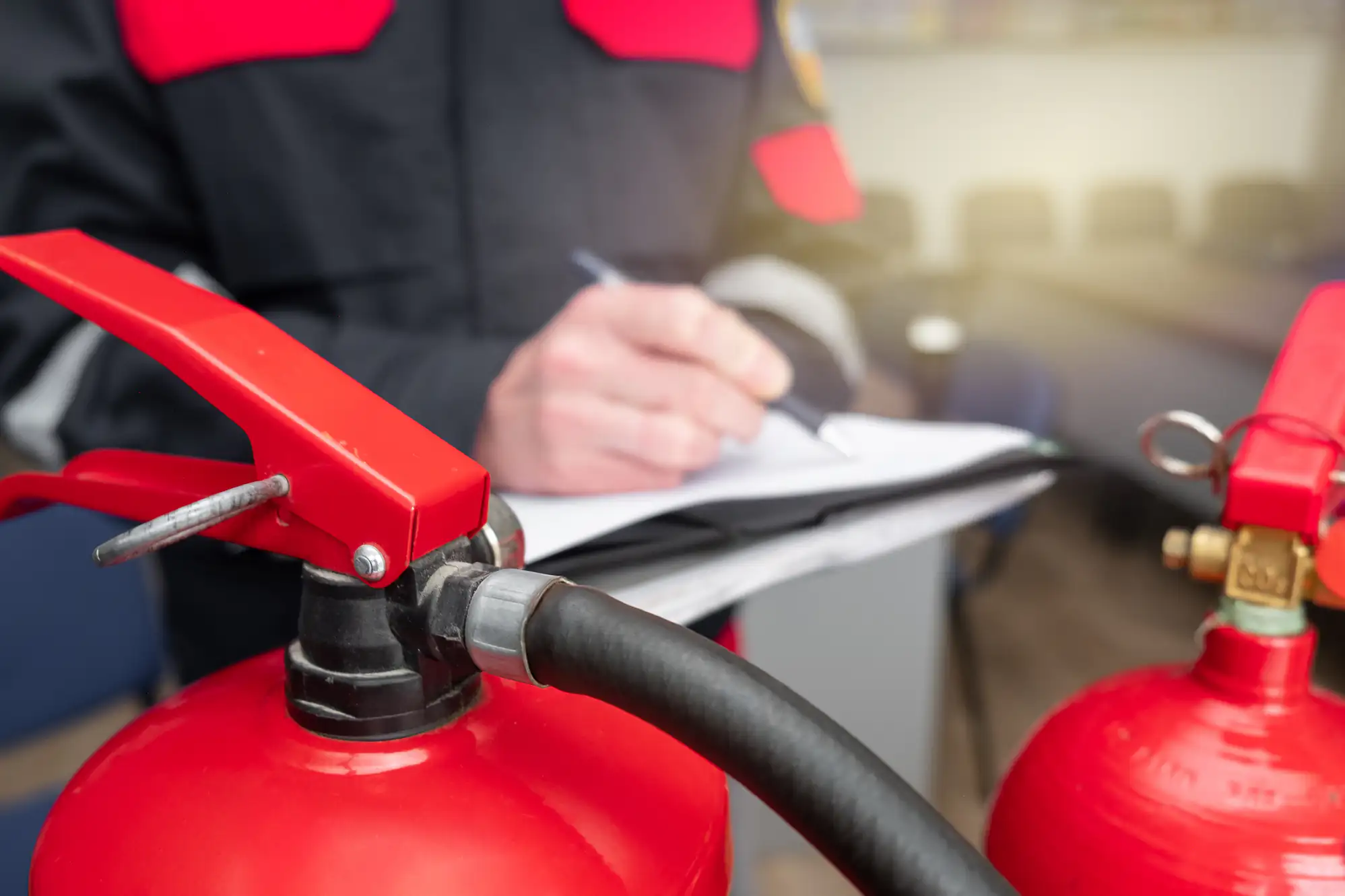
Real fire extinguisher servicing is more involved than most people think. It’s not a five-second glance and a new tag. Professional servicing means a certified technician examines your equipment inside and out, tests critical components, and verifies that everything meets NFPA 10 standards.
The process starts with a visual inspection. The technician checks for physical damage—dents, corrosion, leaks, or anything that could compromise the cylinder’s integrity. They verify the pressure gauge is in the operable range. They make sure the pin and tamper seal are intact.
Then they go deeper. Annual maintenance includes checking all mechanical parts, ensuring operating instructions are legible and facing forward, and confirming the extinguisher is mounted at the correct height. If anything’s wrong, it gets documented and addressed right then.
Fire Extinguisher Recharging and When It's Required
Recharging is one of those terms that gets thrown around, but what does it actually mean? When a fire extinguisher is recharged, it’s being refilled with the extinguishing agent and repressurized to the manufacturer’s specifications. This isn’t something you do yourself with a can of compressed air.
You need recharging any time an extinguisher has been used, even partially. A half-empty extinguisher won’t perform correctly in an emergency. You also need it when the pressure gauge shows the unit is undercharged, or when the annual inspection reveals the pressure has dropped below the operable range.
The recharging process involves completely emptying the extinguisher, inspecting the interior for contamination or damage, refilling it with the appropriate agent—whether that’s dry chemical, CO2, or wet chemical—and then repressurizing it using nitrogen or dry air. After recharging, a new tamper seal gets installed, and the service gets documented with a tag showing the date and technician’s certification number.
Different extinguisher types have different recharge schedules. Stored pressure dry chemical extinguishers need internal examination every six years, which includes a full discharge and recharge. Water, CO2, and wet chemical extinguishers follow different timelines. A qualified service provider tracks all of this for you so you don’t have to remember which unit needs what and when.
Here’s what matters: recharging isn’t optional maintenance. It’s required by NFPA 10 and enforced by local fire marshals. An extinguisher that’s low on pressure or agent won’t work when you need it. And if a fire marshal finds undercharged extinguishers during an inspection, you’re looking at violations that can result in fines ranging from $300 to $1,000 in Nassau County, plus the potential for business disruptions until the issues are corrected.
Hydrostatic Testing Requirements for Fire Extinguishers
Hydrostatic testing sounds technical because it is. This is the process that verifies your fire extinguisher cylinder can still handle the pressure it’s designed to withstand. Over time, normal handling, environmental conditions, and simple aging can weaken a cylinder. A weakened cylinder under pressure is dangerous—it can rupture during use, causing injury.
During hydrostatic testing, the extinguisher is completely emptied and disassembled. The technician inspects the interior for corrosion, pitting, or any structural damage. Then the cylinder gets filled with water and placed in a specialized test chamber where it’s pressurized well above its normal operating pressure—usually 125% to 150% of the service pressure.
The technician monitors for any pressure loss or deformation. If the cylinder holds pressure without leaking or expanding beyond acceptable limits, it passes. If it fails, the extinguisher must be permanently removed from service and replaced. There’s no “fixing” a failed hydro test.
Testing intervals depend on the extinguisher type. Dry chemical extinguishers require hydrostatic testing every 12 years. CO2, water, and Class K extinguishers need it every 5 years. These aren’t suggestions—they’re requirements backed by OSHA and NFPA standards.
Most property owners don’t track hydrostatic test schedules. That’s where working with a professional service provider makes a difference. We maintain records of when each extinguisher was last tested and alert you when testing is due. Missing a hydrostatic test puts you out of compliance, and during a fire marshal inspection, that’s an immediate violation.
The other thing to know: hydrostatic testing requires specialized equipment and training. This isn’t something your maintenance staff can handle in-house. It must be performed by a certified technician with proper testing facilities. Cutting corners here doesn’t just risk compliance—it risks someone’s safety if that extinguisher fails under pressure during an actual fire.
Extinguisher Maintenance Standards Property Owners Should Expect
If you’re paying for fire extinguisher service, you should know what you’re getting. Quality maintenance isn’t a mystery—it follows clear industry standards that every legitimate provider should meet.
First, the service provider must be properly licensed. In Nassau County, that means holding specific county certifications. A company licensed only for NYC can’t legally service your Nassau County property. Verify licensing before anyone touches your equipment.
Second, the technician performing the work should hold a certificate of fitness. This isn’t just a nice-to-have—it’s required. The technician’s certification number should appear on your service documentation. If it doesn’t, that’s a red flag.
Third, you should receive legitimate inspection tags. Recent problems with counterfeit tags have led to stricter regulations in the area. Authentic tags include security features, the inspection date, the technician’s certification number, and the next service due date. These tags are issued by the fire department and can only be purchased by approved companies.
Component Replacement and Internal Examinations
Fire extinguishers have parts that wear out. Seals degrade. O-rings crack. Hoses develop leaks. Proper maintenance means replacing these components before they fail, not after.
Every six years, stored pressure extinguishers that require a 12-year hydrostatic test must undergo internal examination. This is different from the annual visual check. Internal examination means the extinguisher gets completely disassembled so the technician can inspect parts you can’t see from the outside.
They’re looking for internal corrosion, residue buildup, or contamination of the extinguishing agent. They check the condition of the siphon tube, valve stem, and spring. Any defective components get replaced with listed parts that meet manufacturer specifications. You can’t just swap in generic parts and call it good.
After the internal exam, the extinguisher gets refilled with fresh agent, repressurized to the correct PSI—typically 195-205 psi for dry chemical units—and reassembled. A new tamper seal goes on, and the service tag gets updated to show when the internal examination was performed.
Why does this matter? Because internal problems aren’t visible during monthly checks or even annual inspections. Corrosion happening inside the cylinder, a degraded siphon tube, or contaminated agent can all prevent the extinguisher from discharging properly. By the time you discover the problem during an actual fire, it’s too late.
The six-year internal examination catches these issues before they become failures. It’s one of those maintenance requirements that seems like overkill until you understand what it’s preventing. And for property owners in Nassau County, it’s not optional—fire marshals check service records, and missing internal examinations will get flagged during inspections.
How Quality Servicing Extends Equipment Lifespan
Fire extinguishers don’t last forever, but proper servicing significantly extends how long they remain functional and compliant. An extinguisher that receives regular professional maintenance can provide reliable service for 10-12 years or more. One that’s neglected might fail after just a few years.
The key is catching small problems early. A minor pressure loss detected during annual inspection can be corrected with recharging. Ignore it, and the extinguisher becomes unusable. Surface corrosion spotted during a visual exam can be addressed before it causes pitting that requires removing the unit from service. A worn O-ring replaced during the six-year maintenance prevents a future leak.
Professional servicing also means using the correct extinguishing agent and maintaining proper pressure levels. Extinguishers that are overcharged can fail during discharge. Undercharged units won’t expel agent effectively. Both scenarios create safety risks and shorten equipment life.
There’s also the documentation aspect. Proper service records show the complete maintenance history of each extinguisher—when it was installed, every inspection performed, all recharging and testing dates, and any component replacements. This documentation proves compliance during fire marshal inspections and helps predict when units will need replacement.
From a cost perspective, regular maintenance is far cheaper than premature replacement. A well-maintained extinguisher that makes it to its full 12-year lifespan costs significantly less over time than one that fails early due to neglect. Factor in the potential fines for compliance violations and the risk of invalidated insurance claims if your building wasn’t in compliance during a fire, and the value of professional servicing becomes even clearer.
But beyond cost, there’s the reliability factor. When you need a fire extinguisher, it has to work. Proper servicing ensures that when someone pulls that pin during an emergency, the extinguisher will discharge correctly and deliver the agent needed to control the fire. That reliability is what professional maintenance is really about—not just checking boxes for compliance, but ensuring your first line of fire defense actually functions when lives and property are on the line.
Choosing Fire Extinguisher Service That Meets Professional Standards
Fire extinguisher servicing in Nassau County isn’t complicated, but it does require working with qualified professionals who understand the standards and follow them. You need a provider with proper licensing for your jurisdiction, NICET certified technicians who perform thorough inspections, and legitimate documentation that will hold up during fire marshal reviews.
The difference between quality service and inadequate service isn’t always obvious until something goes wrong. That’s why verification matters—checking licenses, confirming certifications, and making sure the tags on your equipment are authentic. These steps protect you from the counterfeit service schemes that have become a real problem in the area.
When your fire extinguishers receive proper annual inspections, timely recharging, required internal examinations, and hydrostatic testing on schedule, you’re not just maintaining compliance. You’re ensuring that your fire protection equipment will actually protect your property and the people in it when an emergency happens.
We provide comprehensive fire extinguisher servicing throughout Nassau County with NICET certified professionals and proper licensing for all local jurisdictions. For property owners who want service that meets professional standards and delivers real protection, contact us to discuss your fire protection needs.