Summary:
If you have a commercial property on Long Island — or locations in both Nassau and Suffolk — you’ve probably assumed the fire code rules are roughly the same across the island. That assumption is one of the most common and costly mistakes we see. The two counties take meaningfully different approaches to fire code enforcement, inspection authority, and contractor licensing. What passed inspection in one county may not pass in the other, and the contractor who legally worked on your building in Suffolk may not be authorized to touch anything in Nassau County. Here’s what you actually need to know.
Fire Code in New York: What the State Sets vs. What the Counties Add
New York State’s Uniform Fire Prevention and Building Code is the floor. Every county in the state builds on top of it — but “building on top of it” looks very different depending on where you are.
Nassau County has its own Fire Prevention Ordinance, enforced by the Nassau County Fire Commission and the Nassau County Fire Marshal’s Office. That means a single, uniform set of standards applies across every municipality in the county — Hempstead, Oyster Bay, North Hempstead, Glen Cove, Long Beach — all of it.
Suffolk County works differently. There’s a county-level fire marshal, but their authority is largely limited to county-owned and county-leased buildings. Private commercial properties fall under the jurisdiction of local fire districts — and Suffolk has 109 independent volunteer fire departments. Individual towns and villages can adopt requirements beyond the state baseline. That decentralized structure is the root cause of most multi-location compliance failures on Long Island.
How Nassau County's Centralized Enforcement Model Affects Your Business
The Nassau County Fire Marshal’s Office has broad authority. They conduct inspections of commercial properties, review and approve plans before work begins, issue violation notices, and collect plan review fees before granting Fire Marshal approval.
If you’re opening a new restaurant on Jericho Turnpike, renovating a retail space on Sunrise Highway, or doing a change-of-use on an older building in Hempstead — all of it goes through the Fire Marshal. One thing that catches business owners off guard: Nassau County requires that any proposed construction be certified by a licensed professional engineer or registered architect confirming it meets the county’s building department regulations. That’s not a formality — it’s a hard requirement before your plans move forward.
If your contractor can’t produce compliant engineering drawings in-house, you’re adding a third party to the process and adding time you may not have.
The upside of Nassau County’s centralized model is predictability. You’re dealing with one enforcement authority, one set of standards, and one approval process. Once you understand the system — or work with someone who does — compliance becomes much more manageable.
The challenge is that the system has real teeth. Violations can result in fines up to $5,000 per offense. And violations don’t only surface during scheduled inspections — they can come up during building sales, insurance audits, or after a complaint. Corporations facing Nassau County fire code violations must appear in court through an attorney; they can’t self-represent.
The age of Nassau County’s building stock adds another layer. The average single-family home in Nassau County is about 73 years old, and commercial properties in older corridors often predate modern fire code requirements entirely. Renovations, tenant build-outs, and change-of-use applications all trigger compliance reviews — and in older buildings, that frequently means upgrading systems that were installed under a completely different standard.
How Suffolk County's Fire District System Changes the Compliance Picture
In Suffolk County, there’s no single enforcement authority for private commercial properties. Your compliance obligations depend on which fire district your property falls under — and with 109 independent volunteer fire departments operating across the county, the rules aren’t uniform.
A building in Babylon may face different requirements than a building in Brookhaven, even if they’re a few miles apart and structurally identical. This matters most for businesses that operate in multiple locations across Suffolk, or that are expanding from Nassau into Suffolk for the first time.
The assumption that what passed in Nassau will pass in Suffolk — or that what passed in one Suffolk district will pass in another — leads to failed inspections, unexpected costs, and compliance gaps that don’t get discovered until the worst possible moment.
The other thing to understand about Suffolk County is that individual towns and villages can layer additional requirements on top of the state baseline. That means the written code isn’t always the whole picture. Local fire marshal interpretation, district-specific documentation expectations, and enforcement intensity can all vary.
Working with a contractor who only knows one district’s norms — or who learned the code in Nassau and assumes Suffolk works the same way — creates real risk. For businesses near the Nassau/Suffolk county line, or those with locations on both sides, the practical question isn’t just “what does the code say?” It’s “who is authorized to do this work here, and do they actually know this district?” Those are different questions, and both matter.
Fire Marshal Inspections: What to Expect in Nassau County
In Nassau County, commercial fire marshal inspections are conducted by the Nassau County Fire Marshal’s Office. Annual professional inspections are mandatory for commercial properties, and proper documentation must be maintained — not just completed, but maintained over time and available for review.
The Fire Marshal checks that your systems were installed by a contractor holding Nassau County-specific credentials, not just a New York State license. In Suffolk County, inspections are handled by the relevant fire district, not a county-wide office. What gets checked, how often, and how strictly it’s enforced can vary significantly by location.
What Does a Nassau County Fire Marshal Inspection Actually Check?
A Nassau County fire marshal inspection covers the full condition of your fire protection systems — not just whether they exist, but whether they’re functioning, properly maintained, and installed to code.
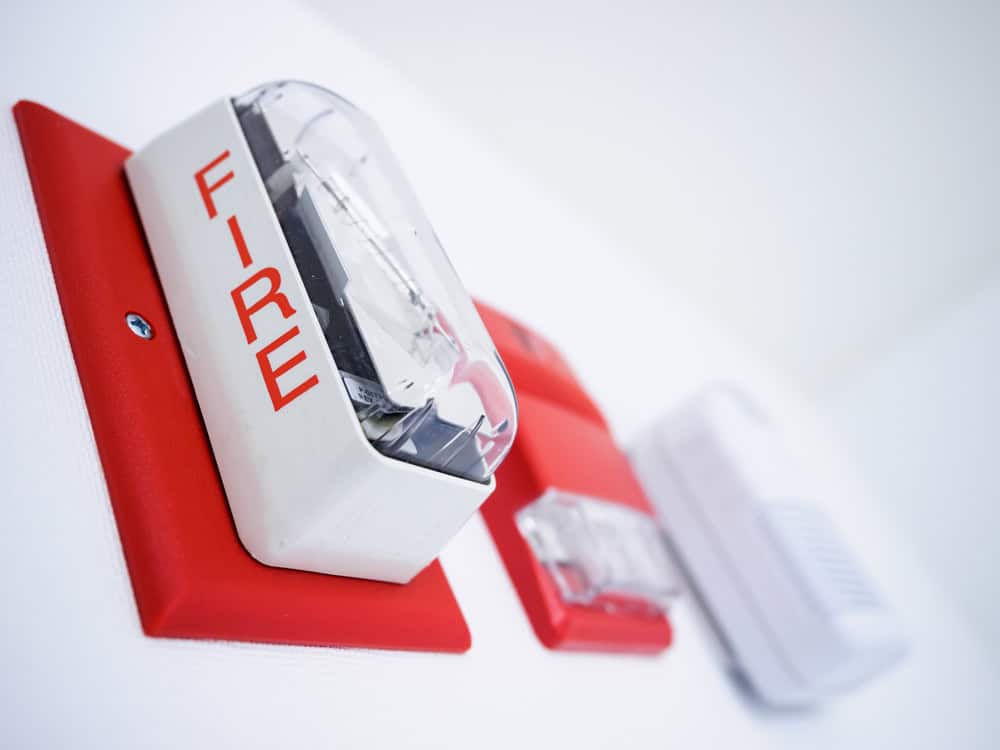
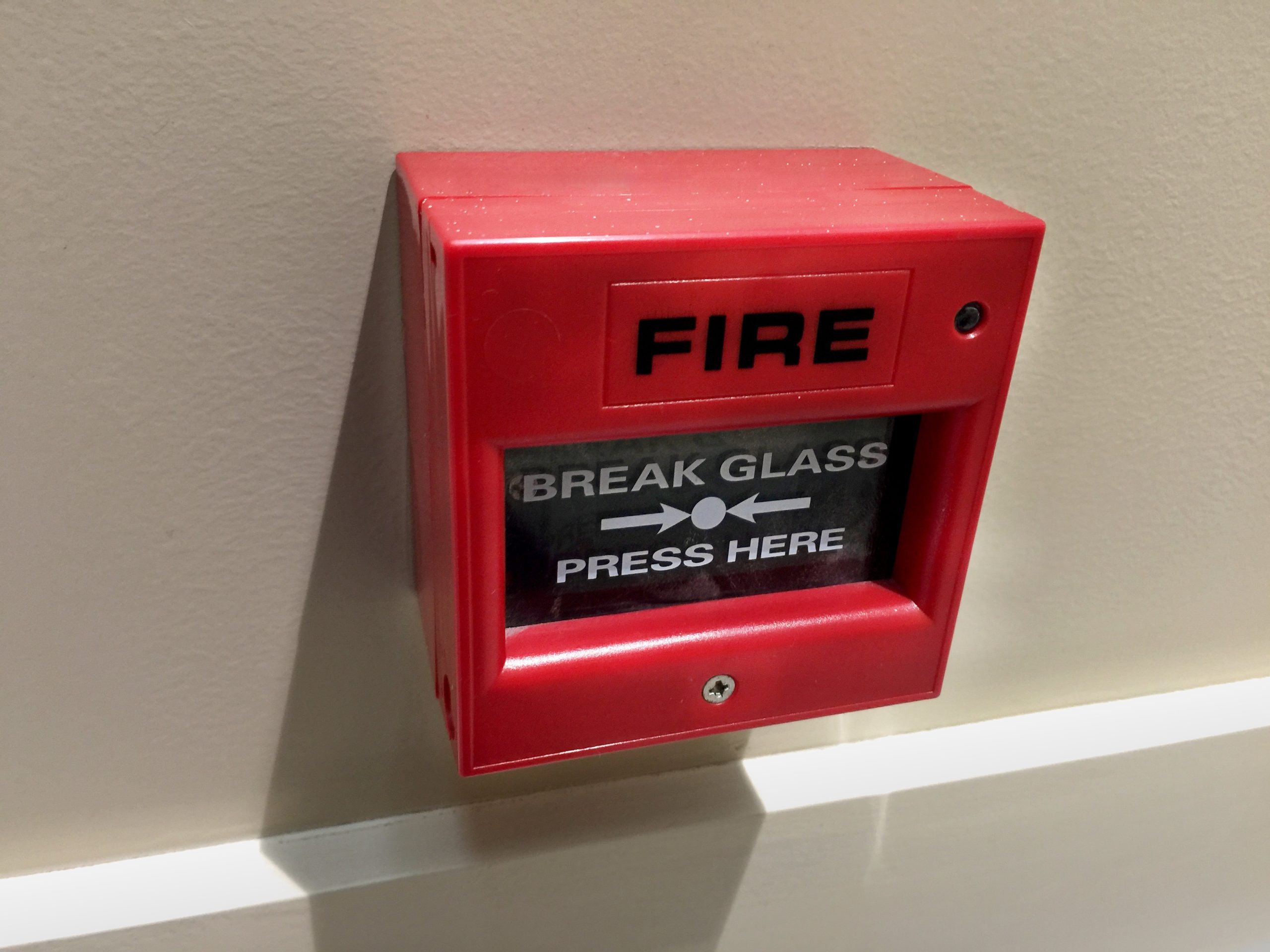
That includes fire alarm systems (detection devices, pull stations, notification appliances, control panels), suppression systems, fire extinguishers, emergency lighting, exit signage, and in commercial kitchens, hood suppression systems.
For fire alarms specifically, inspectors verify that the system was designed and installed to NFPA 72 standards, that testing has been performed and documented, and that any changes to the building layout haven’t created gaps in coverage. Smoke detectors, duct detectors for HVAC systems, and notification appliance coverage are all on the checklist. If your building has a central monitoring connection, that gets verified too.
Fire extinguishers are checked against NFPA 10 requirements — monthly visual checks are the building owner’s responsibility, but annual professional maintenance and periodic hydrostatic testing are required and must be documented. Inspectors want to see the service tags, not just the extinguisher on the wall.
One thing that surprises business owners: the inspection isn’t just about the hardware. It’s about whether the contractor who installed or serviced the system was authorized to do so in Nassau County. A system installed by a contractor holding only a New York State license — without Nassau County-specific licensing — can fail inspection even if the equipment itself is perfectly installed.
The county requires its own contractor credentials on top of the state license. That’s not a technicality; it’s a compliance failure that results in real consequences, including having to redo the work with a properly licensed contractor.
Common Misconceptions About Nassau County Fire Code
One misconception worth addressing: if your building passed inspection under the previous tenant or owner, that doesn’t mean it will pass under you. Change-of-use applications, renovations, and new tenancies all trigger compliance reviews. A restaurant moving into a space that previously operated as retail, for example, will face a full fire code review — and in Nassau County’s older commercial corridors, that frequently surfaces system deficiencies that were grandfathered under the previous use.
Another common mistake: many business owners hire a contractor, confirm they’re “licensed,” and assume that covers it. In Nassau County, the relevant question is whether the contractor holds Nassau County-specific licensing — not just a New York State license. Nassau County license numbers like 2019AEL75352 and PEL000000259 are the credentials that authorize work within the county. A contractor without those credentials cannot legally perform fire alarm work in Nassau County, regardless of what state license they hold.
Finally, Nassau County operates under its own Fire Prevention Ordinance, enforced by the Nassau County Fire Commission and Fire Marshal’s Office. This is separate from New York City fire code, which is administered by the FDNY. If your business operates in both Nassau County and New York City, you’re managing two separate regulatory systems with different approval processes and contractor credentials.
Working With the Right Contractor for Nassau County Compliance
The core takeaway is straightforward: Nassau County and Suffolk County fire codes share a state-level foundation, but the enforcement structures, inspection processes, and contractor licensing requirements are genuinely different. Treating them as interchangeable leads to failed inspections, unexpected costs, and compliance gaps that tend to surface at the worst possible time — during a building sale, an insurance audit, or a violation notice with a tight correction deadline.
If you have commercial property in Nassau County, Suffolk County, or both, the right move is to work with a contractor who holds the specific credentials for each jurisdiction and understands how each county’s enforcement system actually operates — not just what the written code says.
We hold active licenses in both Nassau and Suffolk County, carry NICET-certified technicians on staff, and handle everything from system design and engineering drawings to installation, inspection, and violation correction. If you have questions about where your property stands or what your next compliance step looks like, reach out to Island Fire & Defense Systems directly.