Summary:
Your fire extinguisher sits on the wall looking ready. The pressure gauge points to green. But here’s what most people don’t realize: a gauge in the operable range doesn’t guarantee the extinguisher will work when you need it.
Roughly 30% of fire extinguishers in use aren’t in proper working condition. That’s not a compliance issue—that’s a safety gap that could cost lives and property when every second counts.
Professional fire extinguisher testing uses specific procedures to verify your equipment can actually perform under pressure. These methods go far beyond what a visual inspection can tell you, checking the structural integrity, pressure capacity, and internal condition of each unit. Here’s what proper testing looks like and why it matters in Nassau County, NY.
Fire Extinguisher Testing Procedures and NFPA 10 Standards
Fire extinguisher testing follows a tiered approach based on how deeply you need to examine the equipment. NFPA 10—the national standard for portable fire extinguishers—outlines three distinct levels: monthly visual inspections, annual maintenance checks, and periodic hydrostatic testing.
Each level serves a different purpose. Monthly checks catch obvious problems like physical damage or pressure loss. Annual maintenance digs deeper into mechanical components and operating mechanisms. Hydrostatic testing verifies the cylinder itself can still withstand the pressures it was designed to handle.
The testing you need depends on the extinguisher type, its age, and what you find during inspections. A dry chemical ABC extinguisher follows a different schedule than a CO2 unit. Understanding these differences keeps you compliant and, more importantly, keeps your equipment functional when fire breaks out.
What Fire Extinguisher Checking Involves During Monthly Inspections
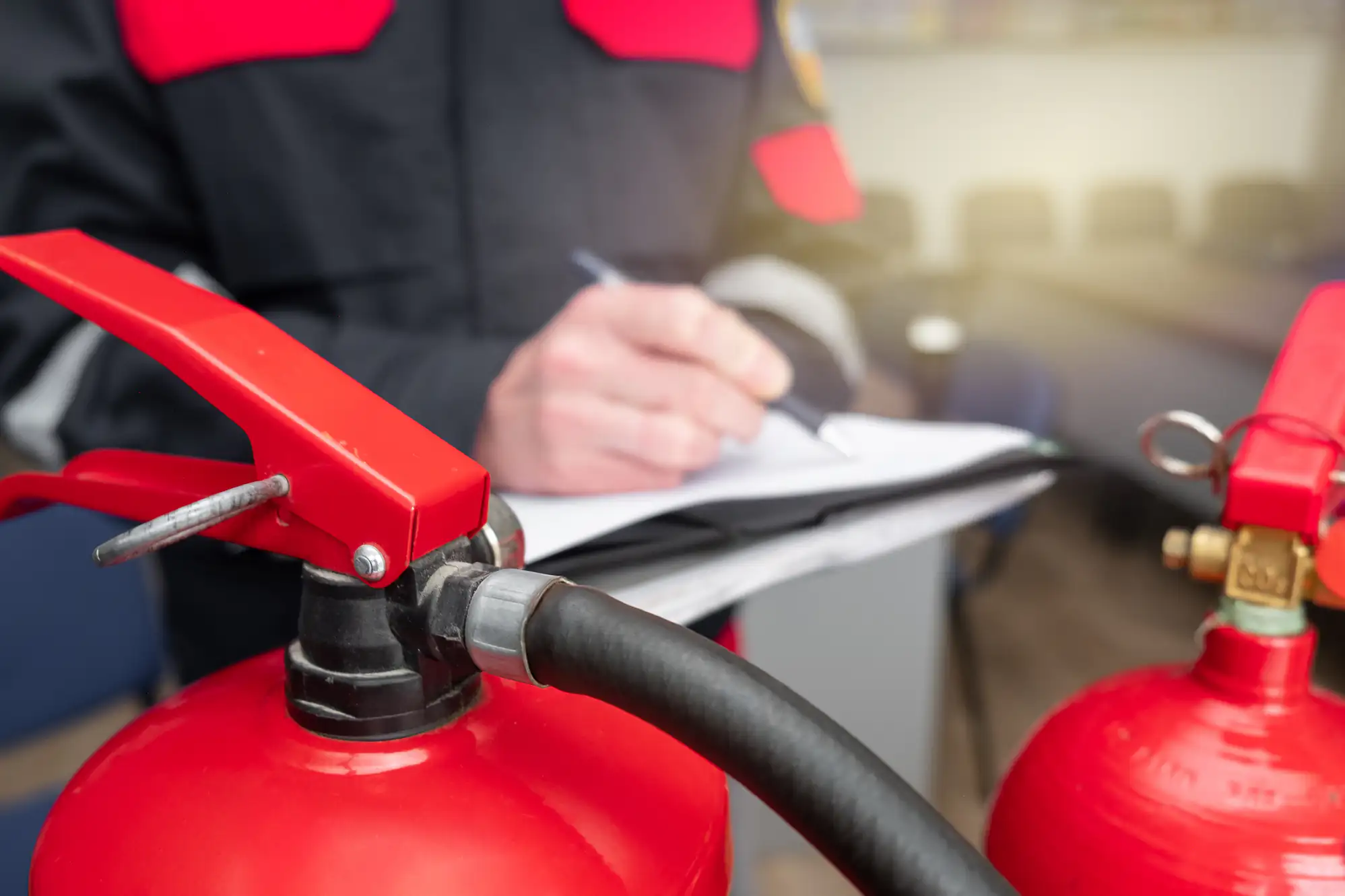
Monthly fire extinguisher checking is the foundation of proper maintenance. This quick visual assessment takes about two minutes per unit, but it catches problems before they become emergencies.
Start by confirming the extinguisher is visible and accessible. Nothing should block it—no boxes, furniture, or equipment. The location should be obvious, and anyone should be able to grab it without moving obstacles first. In Nassau County commercial properties, fire marshals specifically look for obstructed extinguishers during inspections.
Check the tamper seal next. This small plastic or wire device should be intact and holding the pull pin firmly in place. A broken or missing seal means someone may have used the extinguisher, even partially. Partial discharge can leave you with an extinguisher that looks full but won’t deliver enough suppressant to fight a fire.
Examine the pressure gauge. The needle should sit in the green zone. If it’s in the red on either side, the unit needs professional service. Left side means it’s depressurized and won’t discharge properly. Right side indicates over-pressurization, which creates its own safety risks.
Look over the entire exterior for physical damage. Dents, rust, corrosion, leaking, or a clogged nozzle all signal problems. Check that the operating instructions remain legible and face outward. If someone needs to use this extinguisher during a fire, they won’t have time to search for instructions.
Verify the inspection tag shows a recent annual service date. Licensed contractors must inspect extinguishers within 12 months. If that date has passed, you’re out of compliance and your equipment may not be reliable.
After completing your check, initial and date the tag. This creates a documented record that you’re maintaining the equipment properly—something fire marshals and insurance companies want to see.
Annual Maintenance Requirements for Fire Extinguishers
Annual maintenance goes beyond what you can see from the outside. This inspection requires a certified fire extinguisher technician with specialized training and equipment.
The technician performs a thorough examination of all mechanical parts. They test the operating mechanism to ensure it functions smoothly. They check seals, verify pressure levels with calibrated equipment, and inspect components that aren’t visible during monthly checks.
For stored pressure extinguishers—the most common type in commercial buildings—the technician examines the discharge valve, the siphon tube, and the hose assembly. They verify the extinguishing agent hasn’t clumped or degraded. They check that all labels and instructions remain legible and accurate.
If the extinguisher shows proper pressure and passes all checks, the technician installs a new tamper seal and updates the service tag with the inspection date and their credentials. This tag serves as proof of compliance during fire marshal inspections and insurance audits.
When annual maintenance reveals problems—low pressure, damaged components, or signs of corrosion—the extinguisher needs either recharging or removal from service. A certified technician can recharge most rechargeable units on-site or take them to a service facility for more extensive work.
In Nassau County, NY, where annual inspections are mandatory for commercial properties, skipping this service creates both safety and legal problems. Violations can result in fines up to $1,000 per extinguisher, plus potential business interruptions if fire marshals red-tag your property.
The annual inspection also determines whether your extinguishers need additional testing. Six-year maintenance and hydrostatic testing requirements depend on the extinguisher type and manufacturing date. Your technician tracks these intervals and alerts you when more extensive testing comes due.
Fire Extinguisher Checks: Hydrostatic and Pressure Testing Methods
Hydrostatic testing represents the most rigorous fire extinguisher testing method. This procedure verifies that the cylinder can still withstand the pressures it experiences during normal operation without failing or rupturing.
The test interval depends on extinguisher type. Dry chemical ABC extinguishers—the most common in commercial settings—require hydrostatic testing every 12 years. Pressurized water, CO2, and wet chemical extinguishers need testing every five years. These aren’t suggestions. They’re mandatory requirements under NFPA 10 and OSHA standards.
Between hydrostatic tests, stored pressure dry chemical extinguishers need internal examination every six years. This “six-year maintenance” involves discharging the unit, removing the valve, and inspecting the interior for corrosion or contamination that could compromise performance.
How Hydrostatic Testing Works
Hydrostatic testing starts with a comprehensive visual inspection. The technician examines the exterior for any flaws that could compromise the cylinder’s integrity—worn threads, corrosion, large dents, evidence of repairs, or signs of heat exposure. If they find these problems, the extinguisher cannot be safely tested and must be removed from service immediately.
If the exterior passes inspection, the technician discharges the extinguisher completely. They remove the hose and replace it with a specialized adapter designed to capture the extinguishing agent. Once fully discharged, they remove the valve and blow out any remaining traces of agent with compressed air.
Next comes the internal inspection. The technician looks inside the cylinder for pitting, corrosion, or other flaws that could weaken the metal. Any significant pitting means the extinguisher fails and must be condemned. You can’t repair a compromised cylinder—it’s a permanent removal from service.
If the cylinder passes both external and internal visual inspection, it’s ready for the actual hydrostatic test. The technician fills it with water and places it in a protective test cage or behind a safety shield. This protection is critical because the test involves pressurizing the cylinder well above its normal operating pressure.
For most ABC dry chemical extinguishers, that means pressurizing to 300 psi or higher, depending on manufacturer specifications. The technician monitors the test gauge carefully, watching for any drop in pressure. A pressure drop indicates a leak, which means immediate failure. The extinguisher cannot be repaired and must be permanently removed from service.
If the cylinder maintains pressure throughout the test, it passes. The technician drains the water, thoroughly dries the interior, and replaces wear components like the valve stem and O-rings. They refill the cylinder with the appropriate extinguishing agent, repressurize it to operational levels, and install a new tamper seal and service collar.
The completed test gets documented with labels showing the test date, the technician’s credentials, and the next test due date. This documentation proves compliance with NFPA 10 standards and protects you during fire marshal inspections.
Internal Examination and Six-Year Maintenance Procedures
Six-year maintenance sits between annual inspections and full hydrostatic testing. In New York State, stored pressure fire extinguishers must be emptied and undergo internal examination every six years. This requirement applies even if the extinguisher hasn’t reached its hydrostatic test interval yet.
The procedure resembles hydrostatic testing in its early stages. The technician discharges the extinguisher, removes the valve, and inspects the interior for problems. They look for corrosion, contamination, or chemical buildup that could prevent proper operation.
For dry chemical extinguishers, the agent can sometimes cake or clump at the bottom of the cylinder. This happens gradually over years of sitting in one position. When you need the extinguisher, that clumped chemical might not discharge properly, leaving you with incomplete suppression when you need maximum effectiveness.
The six-year maintenance addresses these issues. The technician empties the cylinder completely, inspects all internal surfaces, and replaces any components showing wear. They clean the interior if needed, install new seals and O-rings, and refill with fresh extinguishing agent.
This maintenance doesn’t replace hydrostatic testing—it supplements it. Think of it as a mid-life checkup that catches problems before they compromise the extinguisher’s ability to function. For a dry chemical extinguisher manufactured in 2020, you’d perform six-year maintenance in 2026 and hydrostatic testing in 2032.
The six-year requirement often surprises property owners who assume annual inspections cover everything. They don’t. Annual maintenance checks external components and basic functionality. Six-year maintenance opens up the extinguisher to verify internal condition. Both are mandatory for NFPA 10 compliance.
In Nassau County commercial properties, fire marshals check service tags during inspections. If your extinguisher is past due for six-year maintenance, you’re out of compliance even if annual inspections are current. That creates citation risk and, more importantly, leaves you with potentially unreliable fire protection.
Professional fire protection companies track these intervals for you. We maintain records of each extinguisher’s age, type, and service history, then alert you when six-year maintenance or hydrostatic testing comes due. That removes the burden of tracking multiple deadlines across dozens or hundreds of extinguishers.
Maintaining Fire Extinguisher Testing Compliance in Nassau County
Fire extinguisher testing isn’t complicated, but it is specific. Monthly checks keep you aware of obvious problems. Annual maintenance verifies mechanical function and compliance. Six-year maintenance and hydrostatic testing ensure structural integrity over the equipment’s lifetime.
Each testing level serves a purpose. Skip one, and you create gaps in your fire protection—gaps that might not matter until the moment you need that extinguisher to work. Properly maintained equipment can reduce fire damage by up to 80% when used in the first few minutes of an incident. That’s the difference between a contained situation and a catastrophic loss.
In Nassau County, NY, where fire code enforcement is strict and violations carry significant penalties, working with certified professionals makes sense. Look for NICET-certified technicians, proper state and local licensing, and companies that understand the specific requirements of your jurisdiction. We bring that expertise to commercial properties throughout Nassau, Suffolk, and NYC, with the credentials and experience to keep your fire protection systems fully compliant and genuinely reliable.