Summary:
If you manage a commercial building in Nassau County, fire safety probably sits somewhere between “handled” and “I hope we’re covered.” You passed the last inspection. The extinguishers have tags. The alarm panel isn’t showing any faults. That should be enough, right?
Not always. Nassau County operates under a layered code environment — the New York State Uniform Fire Prevention and Building Code, the Nassau County Fire Prevention Ordinance, and NFPA standards all apply simultaneously, and when they conflict, the stricter standard wins. That’s a lot of moving parts for one building manager to track.
These seven tips are designed to help you stay ahead of it.
Fire Safety Checklist: What Nassau County Building Managers Are Actually Responsible For
Most building managers know they need a working fire alarm and a few extinguishers on each floor. What surprises people is how many other systems fall under their watch — and how specific Nassau County’s requirements are about each one.
A complete fire safety checklist for a Nassau County commercial building covers fire alarm systems, sprinkler systems, fire extinguishers, emergency lighting, exit signage, fire doors, suppression systems, and documentation for all of the above. Each system runs on its own inspection schedule. Each has its own code citation. And the Fire Marshal’s Office checks all of them.
The documentation piece is where a lot of buildings quietly fail. A system can be fully functional and still generate a violation if the service records are missing, outdated, or don’t reflect the correct inspection frequency. That’s not a technicality — it’s the standard.
How Often Does Each System Actually Need to Be Inspected?
This is one of the most common questions we hear from building managers in Nassau County, and the honest answer is that it depends on the system — and the answer isn’t always intuitive.
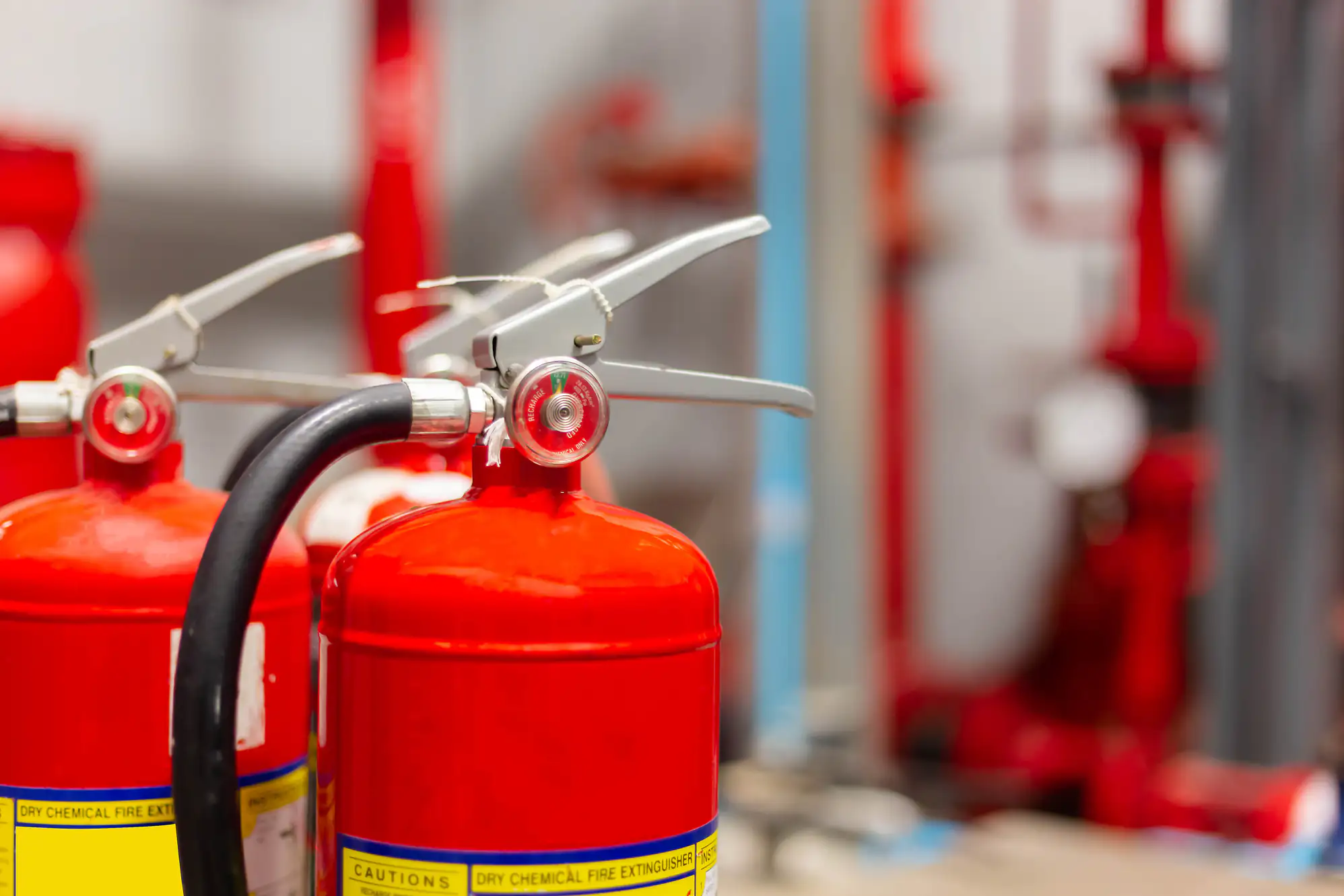
Fire extinguishers require a monthly visual inspection, which under NFPA 10 and OSHA standard 29 CFR 1910.157 is the building manager’s personal responsibility, not the fire protection company’s. That means someone on your staff needs to be physically checking every extinguisher in the building every month and keeping a record of it. Annual professional maintenance is separate and required on top of that. Hydrostatic testing is required every six or twelve years depending on the extinguisher type.
Sprinkler systems are more involved. Under NFPA 25, they require inspections at weekly, monthly, quarterly, annual, and five-year intervals — each level checking different components. Nassau County adds a specific layer here: the county requires quarterly sprinkler servicing by a contractor holding a valid Type 2 License issued by the Nassau County Fire Marshal’s Office, and the technician must hold a Certificate of Fitness. This isn’t a state requirement — it’s a Nassau County requirement, and it’s stricter than what many other jurisdictions mandate.
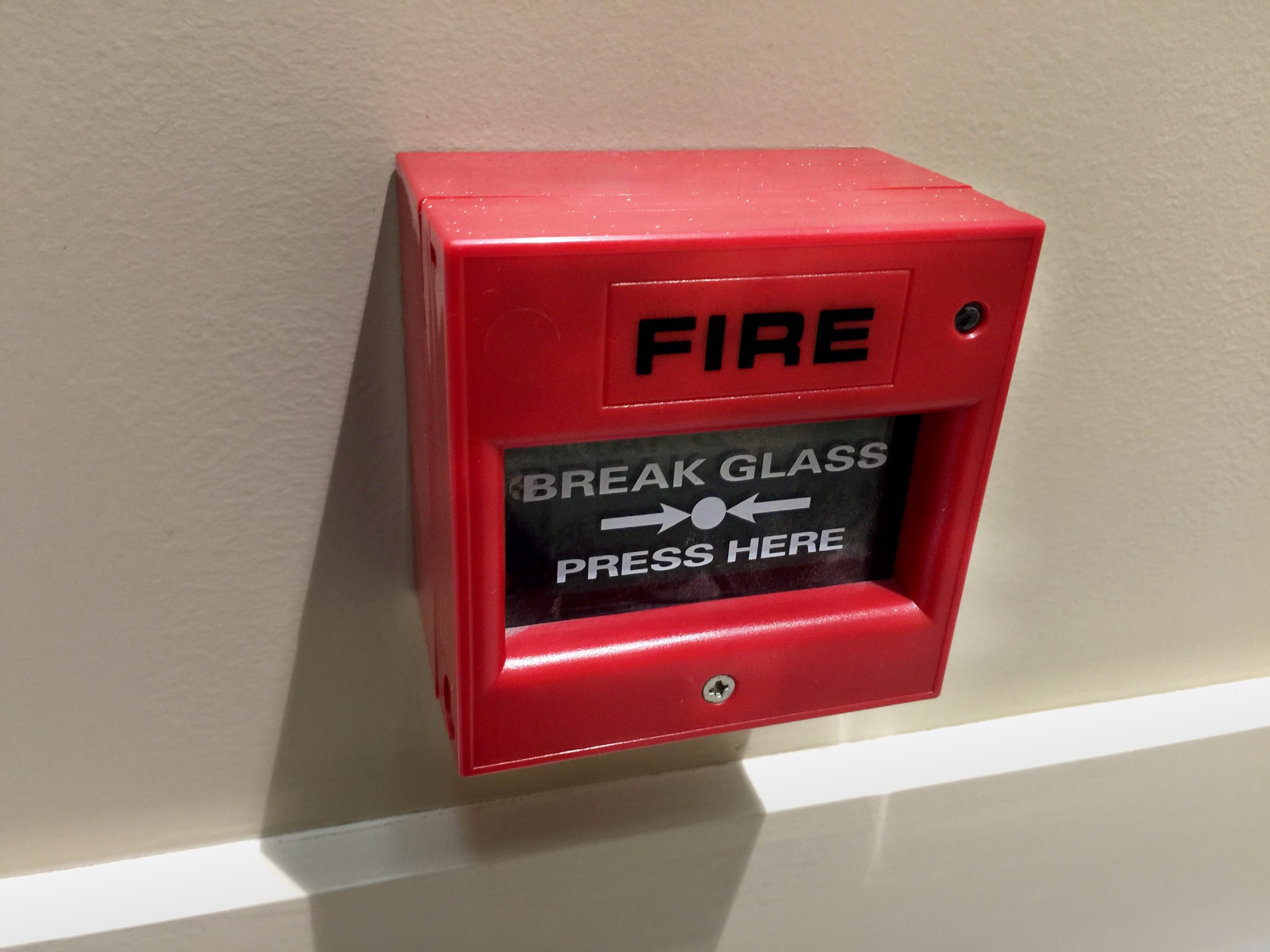
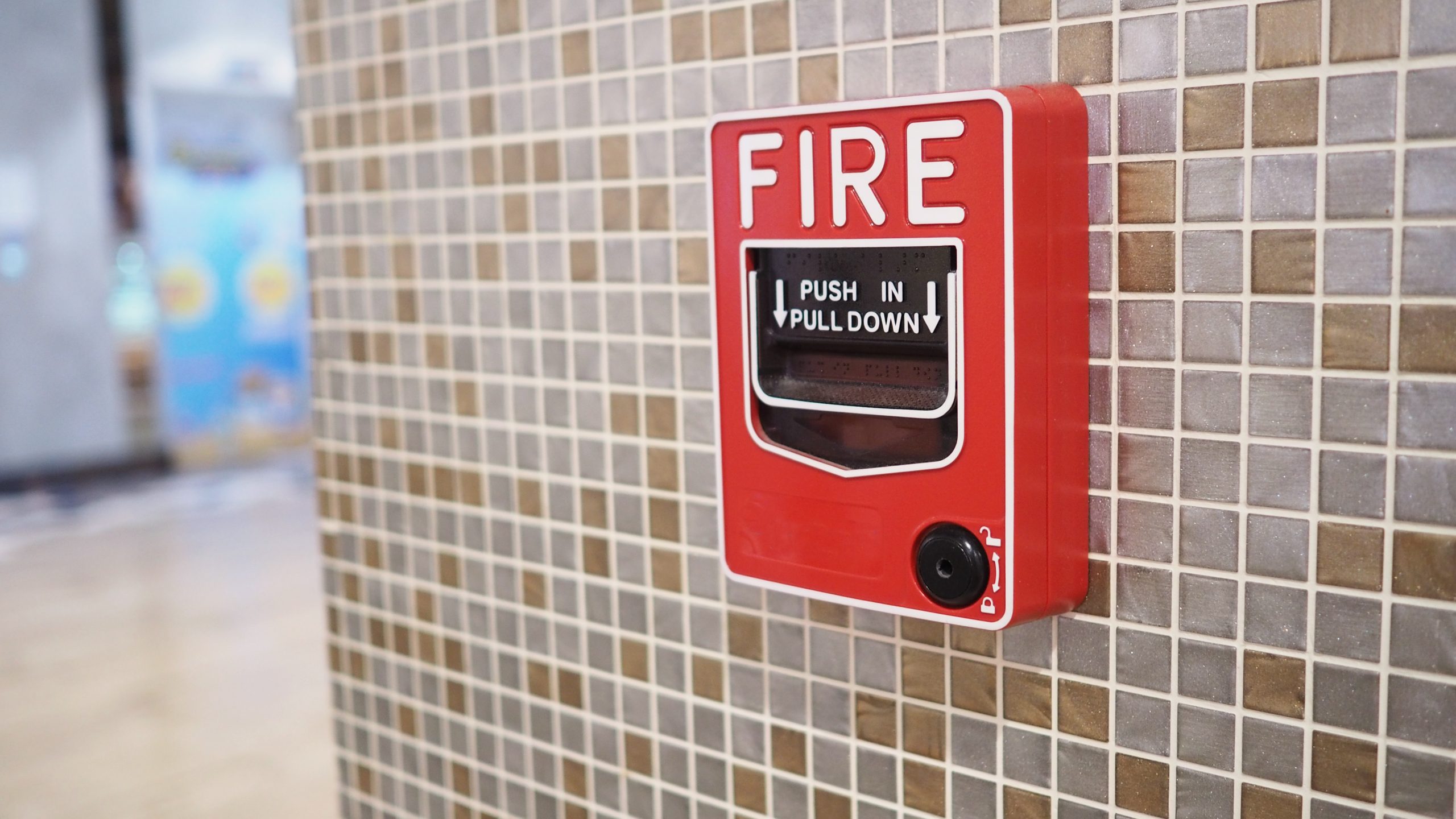
Fire alarm systems require monthly panel checks, semi-annual duct detector testing, and annual full system testing under NFPA 72. Emergency lighting requires a monthly 30-second function test and an annual 90-minute full-duration test. Fire doors require annual inspection under NFPA 80.
Running all of these on separate calendars, with separate vendors, and separate documentation formats is genuinely difficult. It’s also the most common reason buildings that have functioning systems still end up with violations — not because anything broke, but because the scheduling or paperwork slipped.
Nassau County Fire Code Has Specific Rules Most Building Managers Don't Know About
Beyond the inspection schedules, Nassau County’s Fire Prevention Ordinance includes a handful of requirements that catch building managers off guard because they aren’t always covered in general fire safety guidance.
Extension cords are prohibited as a substitute for permanent wiring in any commercial premises in Nassau County. This comes up constantly during Fire Marshal inspections, particularly in older buildings where tenants have run extension cords to compensate for insufficient outlets. It’s a straightforward violation — and an easy one to miss if you’re not specifically looking for it.
Storage restrictions are another one. Nassau County code prohibits storing anything in boiler rooms or within 36 inches of any heat-producing appliance. In buildings with tight utility spaces, this is often violated unintentionally. Maintenance staff store supplies in boiler rooms because it’s convenient. The Fire Marshal doesn’t accept “we didn’t know” as a response.
The older commercial building stock in Nassau County makes both of these issues more common. Many buildings across the county were constructed in the 1970s and 1980s, when electrical layouts and storage practices were different. What was acceptable then doesn’t necessarily meet today’s standards, and the Nassau County Fire Prevention Ordinance applies regardless of when the building was built.
The broader point is that Nassau County’s code environment is layered and specific. The county’s centralized Fire Commission model creates consistent enforcement standards across municipalities — which means what applies in Garden City applies in Mineola and everywhere else in Nassau County. There’s no room to assume that a less-scrutinized location gives you more flexibility.
Fire Safety Regulations in Nassau County: The Compliance Gap That Creates the Most Violations
There’s a misconception that runs through a lot of commercial buildings: if the system looks fine and passed the last inspection, it’s probably still compliant. That’s not how Nassau County fire safety regulations work.
Compliance isn’t a status you achieve and hold. It’s a continuous obligation. Systems change, codes update, and documentation requirements evolve. A building that was fully compliant two years ago may have gaps today — not because anything broke, but because the standards moved and the building didn’t move with them. The Fire Marshal’s Office doesn’t grade on a curve.
What Happens When You Fail a Nassau County Fire Marshal Inspection?
The Nassau County Fire Marshal’s Office has direct authority to shut down operations in a commercial building that fails inspection. That’s not a worst-case scenario — it’s the actual enforcement mechanism. A failed inspection can halt your operations, trigger fines, void your insurance coverage, and create personal liability exposure for the building manager if a fire occurs and a compliance gap is later discovered.
The insurance angle matters more than most people realize. Many commercial property insurance policies include provisions that allow the insurer to reduce or deny a claim if the building was not in compliance with applicable fire codes at the time of the loss. NFPA 25 specifically notes that failure to maintain wet sprinkler systems above 40°F can void coverage — and that’s just one of dozens of maintenance requirements that tie directly to insurance validity.
For building managers, the personal liability piece is significant. You are responsible for the safety of the people in your building. If a fire causes injury and an investigation reveals that a system wasn’t maintained, that the documentation was incomplete, or that a violation was outstanding, the exposure doesn’t stop at the property. That’s the reality of the role, and it’s why treating fire safety as a continuous obligation rather than an annual event is the only approach that actually protects you.
The good news is that most violations are preventable. They stem from documentation gaps, missed inspection intervals, unlicensed contractors who didn’t pull permits, or systems that were installed correctly but never updated to reflect code changes. None of those are inevitable — they’re manageable with the right systems and the right service partner.
Fire Safety Check vs. Full Inspection: What's the Difference and When Do You Need Each?
Building managers sometimes use these terms interchangeably, but they describe different things — and confusing them can leave real gaps in your compliance record.
A fire safety check is a routine, visual review of accessible fire protection equipment. It’s what a building manager or designated staff member performs monthly on fire extinguishers — confirming the unit is in its designated location, the pressure gauge reads in the operable range, the pin and tamper seal are intact, and there’s no visible damage or obstruction. It’s documented on a tag or log and kept on file. This is a building management responsibility under NFPA 10 and OSHA. It does not replace professional service.
A full inspection is performed by a licensed fire protection contractor and goes significantly deeper. For a fire alarm system, that means testing every initiating device, every notification appliance, every control function, and every interface with the building’s suppression and monitoring systems — documented in a formal test report that gets filed with the Fire Marshal’s Office. For a sprinkler system, it means pressure testing, flow testing, valve inspections, and verification of freeze protection measures. For extinguishers, it means internal examination, pressure recharge if needed, and a dated service tag signed by a certified technician.
In Nassau County, the contractor performing these inspections must hold the appropriate license from the Nassau County Fire Marshal’s Office. A contractor licensed in New York State but not specifically licensed in Nassau County cannot legally perform this work here and cannot guarantee that the inspection will satisfy the Fire Marshal. This distinction matters when you’re vetting vendors — ask specifically about Nassau County licensing before signing any service agreement.
We hold Nassau County license 2019AEL75352 / PEL000000259, and our technicians are NICET certified, which means the people doing the work have passed the industry’s recognized credentialing standard for fire alarm system design and inspection — not just a manufacturer training course.
How to Stay Ahead of Fire Safety Compliance in Nassau County
The building managers who pass inspections consistently aren’t the ones who scramble before the Fire Marshal shows up. They’re the ones who treat compliance as an ongoing process — with documented monthly checks, a licensed contractor on a regular service schedule, and clean records they can produce on request.
Nassau County’s layered code environment makes this harder than it sounds. Between the state code, the county ordinance, and NFPA standards, there’s a lot to track. The consequences of getting it wrong — violations, shutdowns, insurance exposure, personal liability — are significant enough that “close enough” isn’t a viable strategy.
If you’re not confident your building is fully covered, or if you’re managing multiple systems with multiple vendors and the paperwork is starting to slip, that’s worth addressing before the next inspection. We work with commercial building managers across Nassau County to handle fire alarms, suppression systems, sprinkler inspections, extinguisher service, and the documentation that ties it all together. Reach out for a free estimate and we’ll take a clear look at where your building stands.