Summary:
A fire marshal does not care that your extinguishers were looked at. What matters is who looked at them, what the tag says, and if anyone has walked the floor since. If you run a business in Suffolk or Nassau County, that is where most violations start: a tag from the wrong kind of vendor, or a monthly check nobody realized was their responsibility.
This guide covers who can legally service your extinguishers on each side of the county line, what you still owe between annual visits, and how extinguishers fit alongside your alarm and suppression setup. First, the licensing question, because it trips up more employers than anything else.
Fire Extinguisher Licensing Requirements In Suffolk & Nassau County
Three layers of rules apply to your extinguishers at once. The Fire Code of New York State requires them to be selected, installed and maintained under NFPA 10. OSHA makes you, the employer, responsible for inspecting and maintaining the ones you provide for your staff. And on Long Island, the county you are in decides who is allowed to service them.
That last layer catches people off guard. Suffolk and Nassau each run their own licensing for extinguisher contractors, so a company that is fully legal in one county is not automatically legal in the other. Your village or town fire marshal may also be the one reading your tags, so it is worth confirming what they expect on a visit.
Everything below comes back to one question: when an inspector looks at your extinguisher, will the paperwork hold up?
Who Can Legally Service Fire Extinguishers In Suffolk County?
Suffolk County created its Portable Fire Extinguisher and Automatic Fire Extinguishing Systems Licensing Board in 2004, and it sits under the Fire Marshal Office in Fire, Rescue and Emergency Services. The setup has two parts. Each technician who services or installs extinguishers needs their own Suffolk County license, and the company that employs them needs a Certificate of Registration.
Registered companies also carry $1 million per occurrence and $2 million aggregate in liability insurance, with the county listed as certificate holder, plus workers compensation. You can see all of this on the tag. A Suffolk service record tag has to include the technician county license number. If the tag on your extinguisher has no number, or a handwritten scrawl where one should be, that is your first red flag.
Local fire marshals say this plainly. The Village of Port Jefferson own FAQ states that annual extinguisher inspections must be done by a contractor licensed by Suffolk County, not by the Fire Marshal office. If you are in Smithtown, Port Jefferson, or anywhere else in Suffolk County, that is the standard you will be held to.
Before you hire anyone, ask for their Suffolk registration and technician license number, and verify both with the county. We are glad to be asked. Do the same with the insurance certificate. A legitimate vendor hands it over without a pause.
Nassau County Fire Extinguisher Licensing And FDNY Approval
FDNY approval does not count in Nassau or Suffolk County. FDNY has its own tag system and its own Certificate of Fitness, and both are built for New York City. Being FDNY-approved does not authorize anyone to service extinguishers in Suffolk or Nassau County, and a general New York State license does not either.
Nassau runs its own system. Its Fire Prevention Ordinance requires portable extinguishers to be maintained, serviced and inspected annually by a contractor licensed by the Fire Marshal. Automatic extinguishing systems, like the hood system over a restaurant line, get inspected every six months by a Fire Marshal-licensed contractor. Those tags cannot be red, and they need the contractor name, address, phone and license number printed on them.
The county line is where this gets practical. Say you have a shop in Hicksville and a second location in Suffolk, or you are moving a business from Garden City out east. You need a vendor credentialed on both sides, or you end up with two vendors and two calendars. We hold Nassau County 2019AEL75352 / PEL000000259, Suffolk County 180 and New York State Lic# 12000325006, so one visit schedule can cover both. We work with Nassau County businesses in places like Hempstead, Garden City, Mineola, Oyster Bay, Hicksville and Westbury.
You do not have to take our word for any of it. Ask any provider for their license number and check it with the county.
What Your Business Owes Between Annual Fire Extinguisher Inspections
The annual visit gets all the attention, but it covers only one of four layers. Your own staff owes a visual check every month. A qualified servicer does the annual maintenance check and records the date. Stored-pressure dry chemical units also need an internal examination every six years. Hydrostatic testing comes around every five years for CO2, water-type and wet chemical units, and every twelve years for stored-pressure dry chemical.
Add employee training at hire and once a year after that, and it is easy to see why this slips. Nobody job description says extinguisher program. So the monthly walk does not happen, the six-year date passes quietly, and the first you hear about it is a citation.
Monthly Fire Extinguisher Inspections And OSHA Compliance
Yes, trained employees can handle the monthly visual inspection. OSHA allows it, and for most Suffolk and Nassau County businesses that is the sensible way to do it. Your person is checking that each unit is where it belongs, nothing is blocking it, it is mounted, and it shows no obvious damage. Then they initial and date a tag or log.
What staff cannot do is the rest. Annual maintenance, the six-year internal exam and hydrostatic testing need a qualified servicer, and in Suffolk and Nassau County that means one with the county credentials we covered above. We leave you a written report listing every unit and its condition, so you have something to hand an inspector.
When OSHA or a fire marshal does visit, the findings that come up most are missing proof of monthly inspections, blocked or unmounted extinguishers, no annual maintenance record, no training, and units past their hydro date. Notice that most of those are record problems, not equipment problems. The extinguisher may be fine, but you cannot show it.
Training is the one people forget. OSHA expects employees to be trained at hire and annually. We lead customized employee training, and it works best when it is tied to your actual space: where the units are, what is near them, and when to walk out instead of fighting. NFPA is blunt on that last point. Use an extinguisher only if the fire is small and not growing, everyone is out, the fire department has been called, and the room is not filling with smoke. Otherwise, leave.
Choosing The Right Fire Extinguisher For Your Suffolk Or Nassau County Business
Match the extinguisher to what can burn. ABC units cover general use in offices, shops and warehouses. CO2 suits electrical and server rooms, where dry chemical residue causes its own damage. Anywhere there is commercial cooking, you need Class K, and NFPA 10 sets the travel distance at 30 feet from the cooking equipment. For comparison, OSHA travel limits are 75 feet for Class A hazards and 50 feet for Class B.
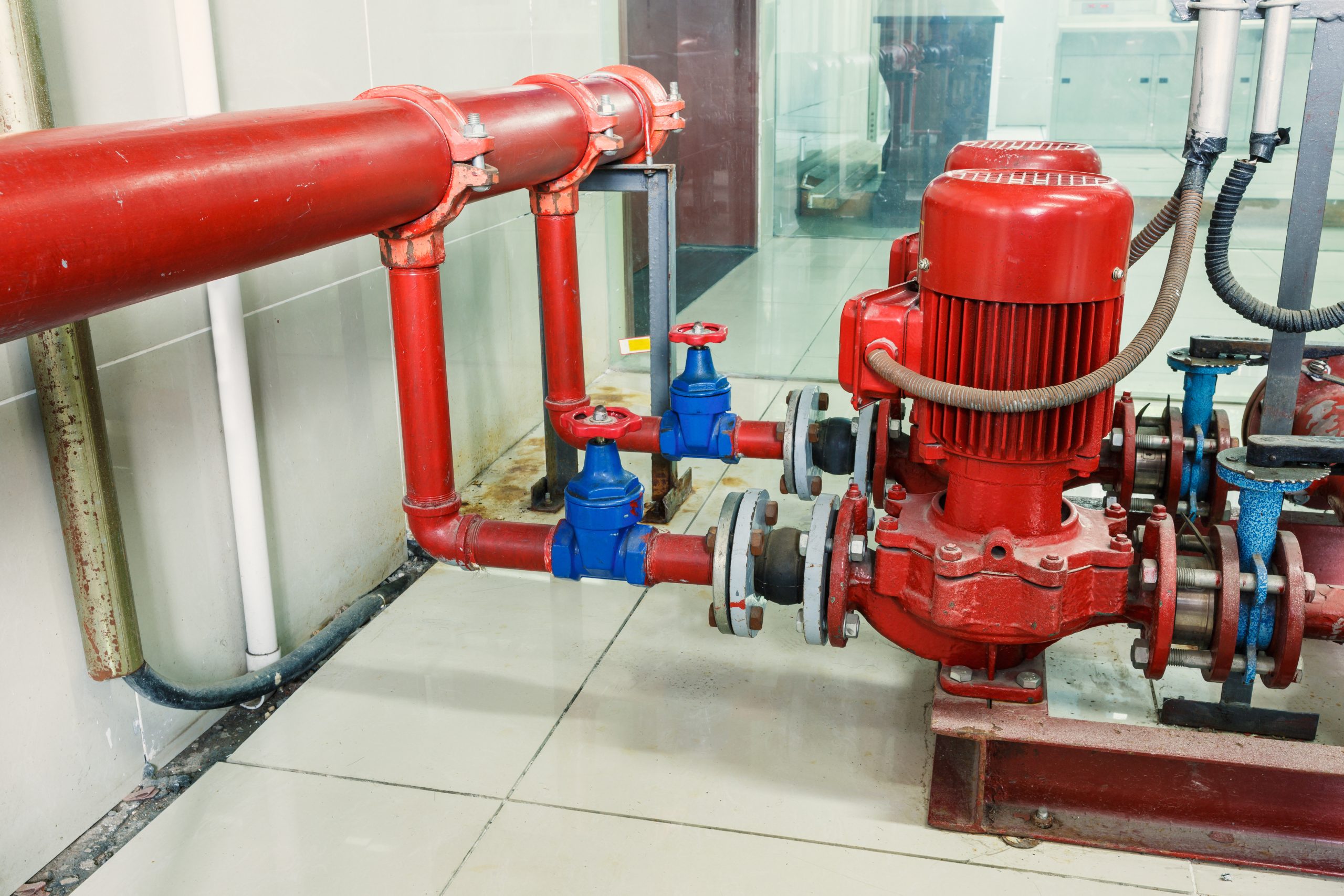
Kitchens deserve extra attention. The USFA names cooking as the leading cause of nonresidential building fires, which is why a hood suppression system and a Class K extinguisher work as a pair. In Nassau County, that suppression system gets inspected every six months by a Fire Marshal-licensed contractor. Seasonal restaurants in Suffolk and Nassau County should have all of it checked before opening night, not after.
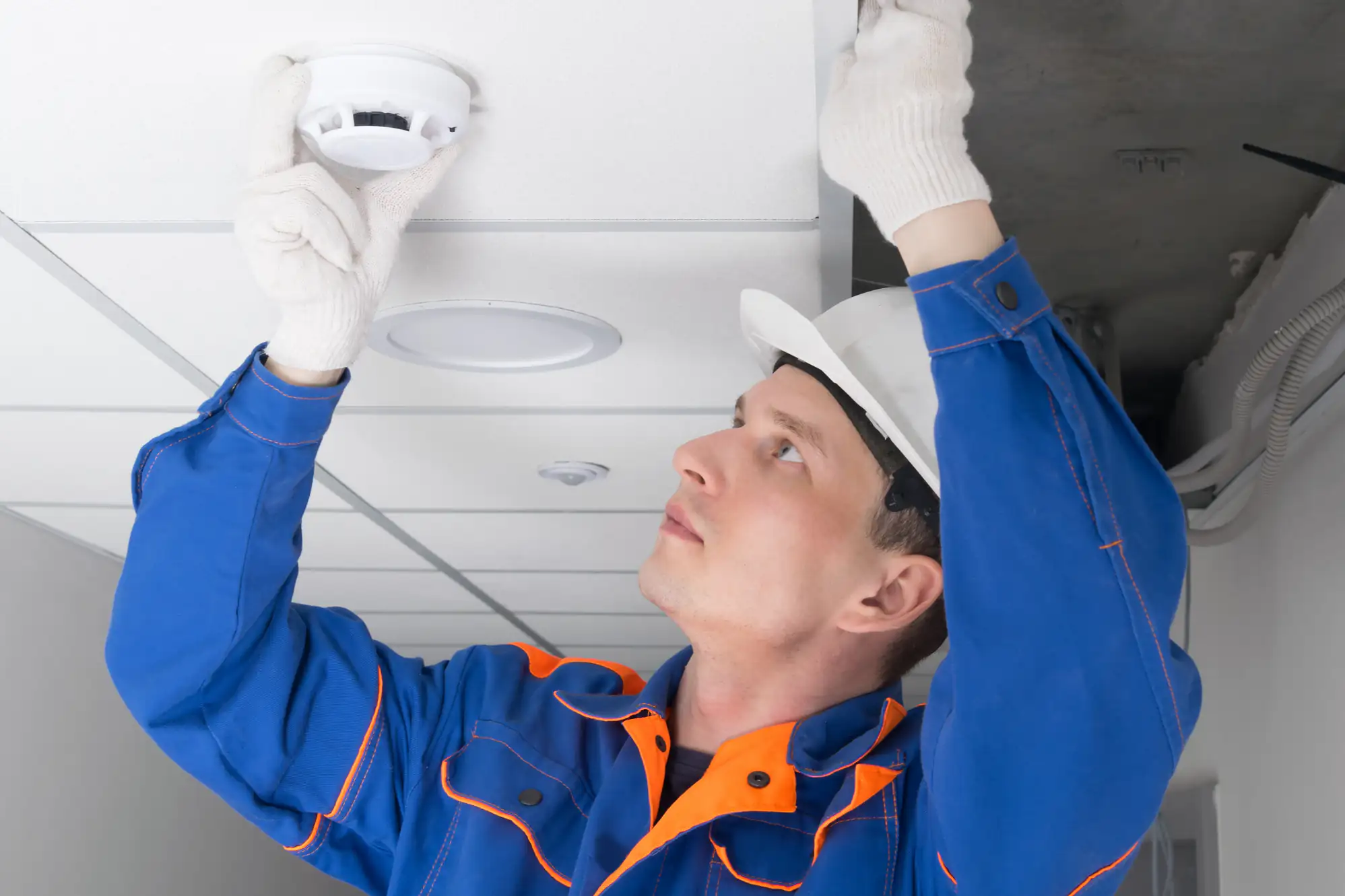
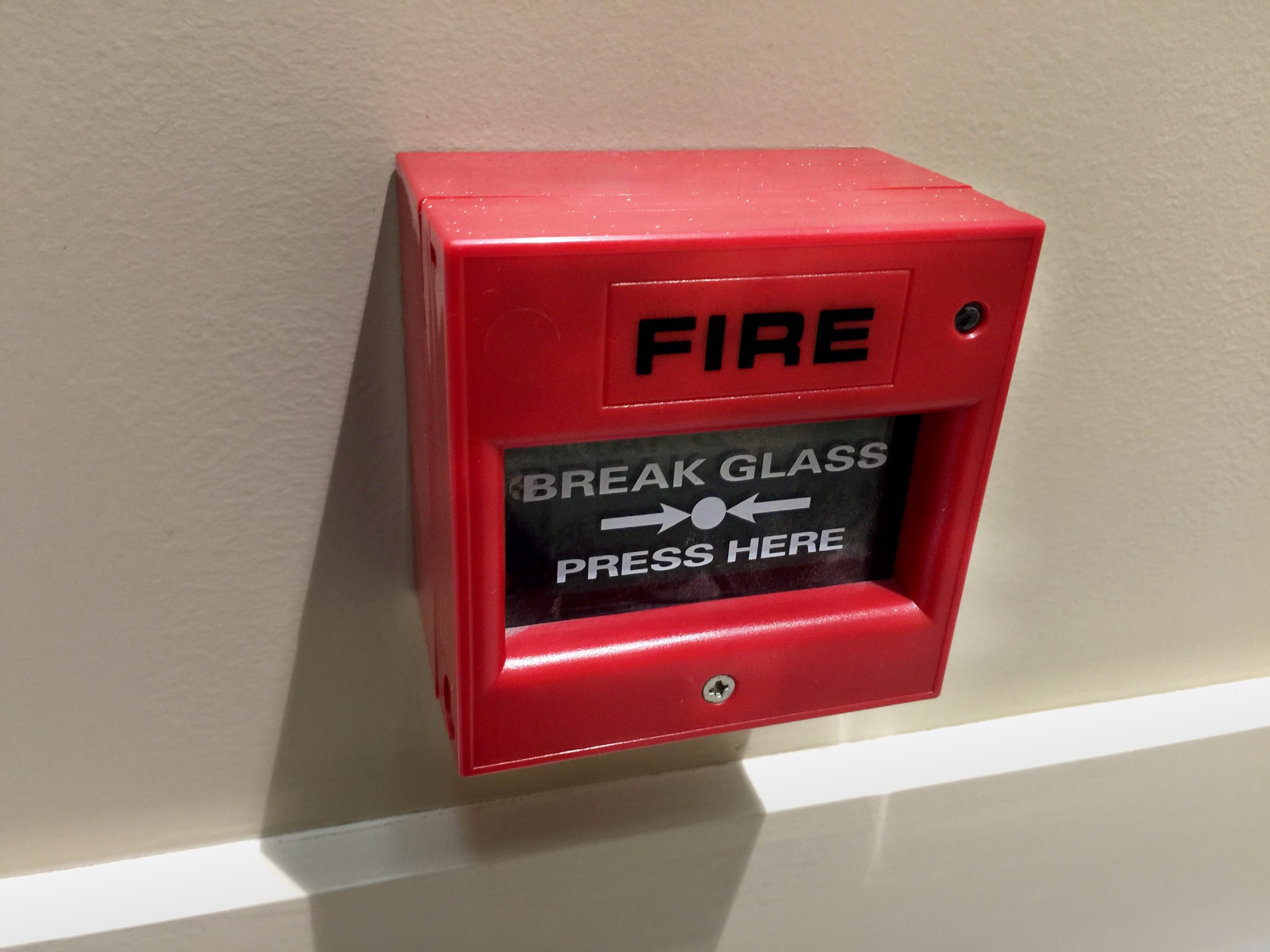
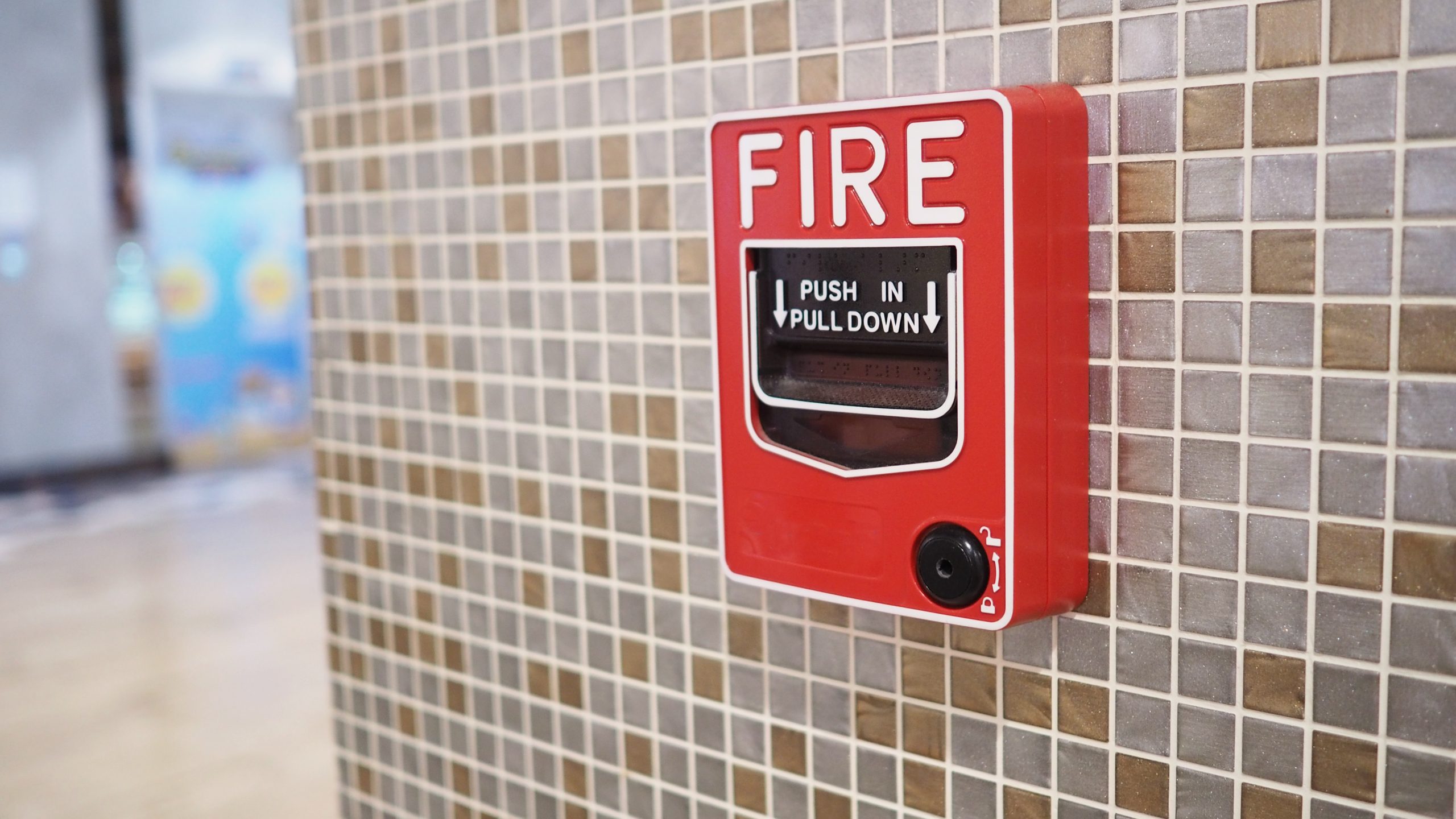
An extinguisher is also one layer, not the whole plan. Alarms and detectors get people moving, suppression handles the hazard over the stove, and sprinklers are their own required system that does not make extinguishers optional. We handle the extinguisher, alarm, detection, monitoring and kitchen suppression side, including drawings and filings. One Smithtown business that needed an alarm company at the last minute left a review saying we handled the drawings, filings and communication seamlessly. That is the one-calendar setup most owners are really after.
Next Steps For Fire Extinguisher Compliance In Suffolk & Nassau County
Here is the short version. Make sure whoever tags your extinguishers holds the right credentials for the county you are in, and that the tag shows it. Put the monthly check, training and the six-year and hydro dates on someone’s actual calendar. And treat extinguishers as one layer next to your alarm, detection and kitchen suppression.
If you would rather hand that calendar to us, Island Fire & Defense Systems can look at your units, tell you what is current and what is not, and put it in writing. Our team is NICET certified, we have earned 30+ five-star reviews, and the estimate is free. Contact Island Fire & Defense Systems today to schedule your comprehensive fire extinguisher compliance review.