Explore firsthand accounts of our exceptional service and dedication to safety through the glowing testimonials from our satisfied clients.
Your insurance company stops calling. Your annual inspection becomes a formality instead of a nightmare. And when a fire marshal shows up unannounced, you’re not sweating it.
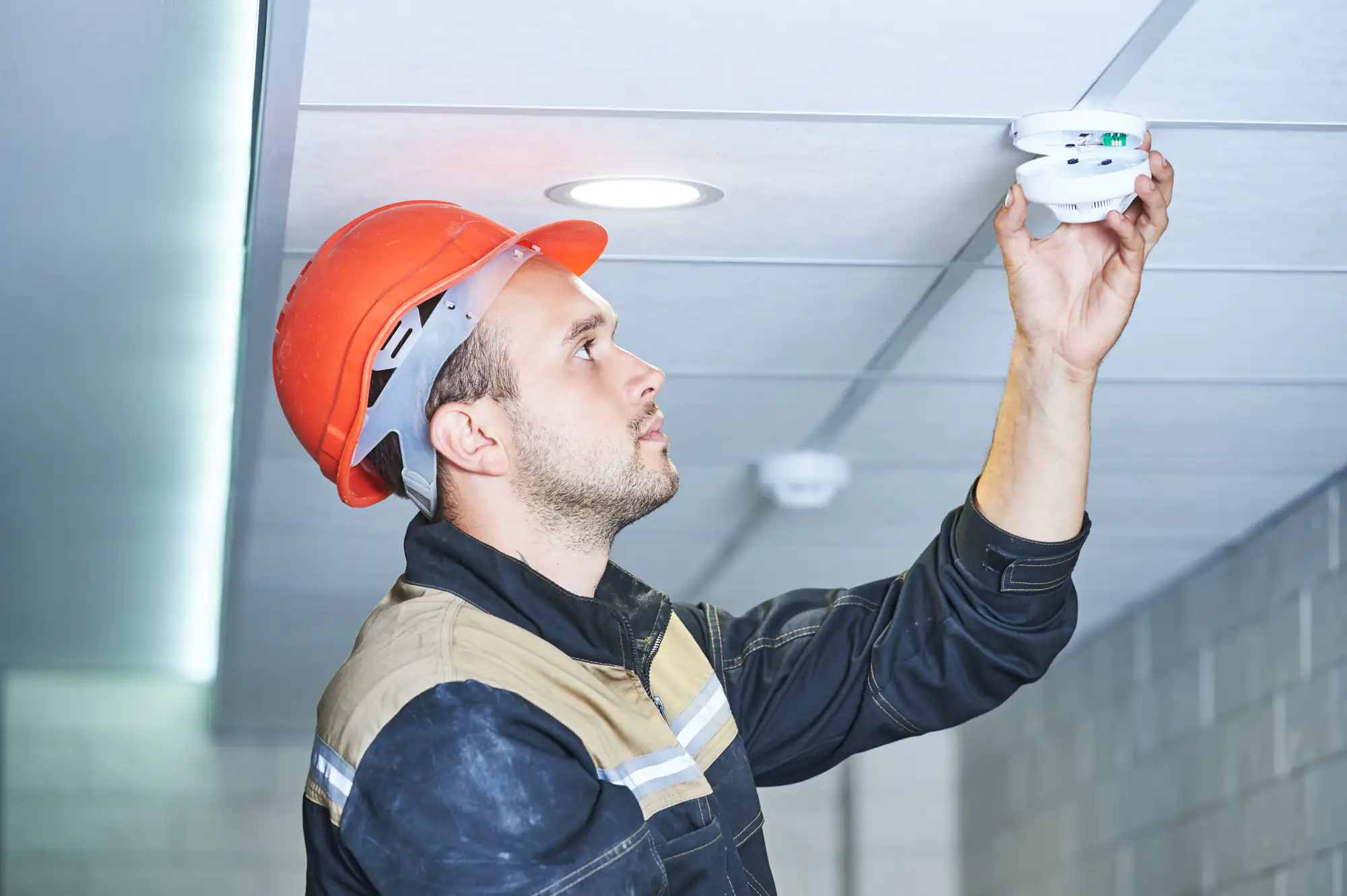
That’s what proper fire detector installation gets you. Not just hardware on the ceiling, but a system designed around Suffolk County’s fire codes, installed by NICET certified technicians who know the difference between passing inspection and barely scraping by.
You’re not dealing with violations that cost $800 to $5,000 per incident. You’re not explaining to your insurance carrier why your premiums jumped. You’re running your business or managing your property while your fire detection system does exactly what it’s supposed to do—sit there quietly until it needs to save lives.
We hold NYS License #12000325006 and Suffolk County License 180 because fire alarm work in this county isn’t something you wing. We’re NICET certified, factory-trained on Notifier by Honeywell systems, and we’re members of the New York Fire Alarm Association.
That matters in East Patchogue because Suffolk County has 109 independent fire departments, each with their own interpretation of state codes. What passes in Patchogue might not fly in Holbrook. We know the local requirements because we’ve been installing and servicing fire detection systems across Suffolk, Nassau, and NYC long enough to know which fire marshals care about what.
You’re not getting a one-size-fits-all system. You’re getting a fire alarm installation that accounts for your building type, occupancy, and the specific fire district you’re in.
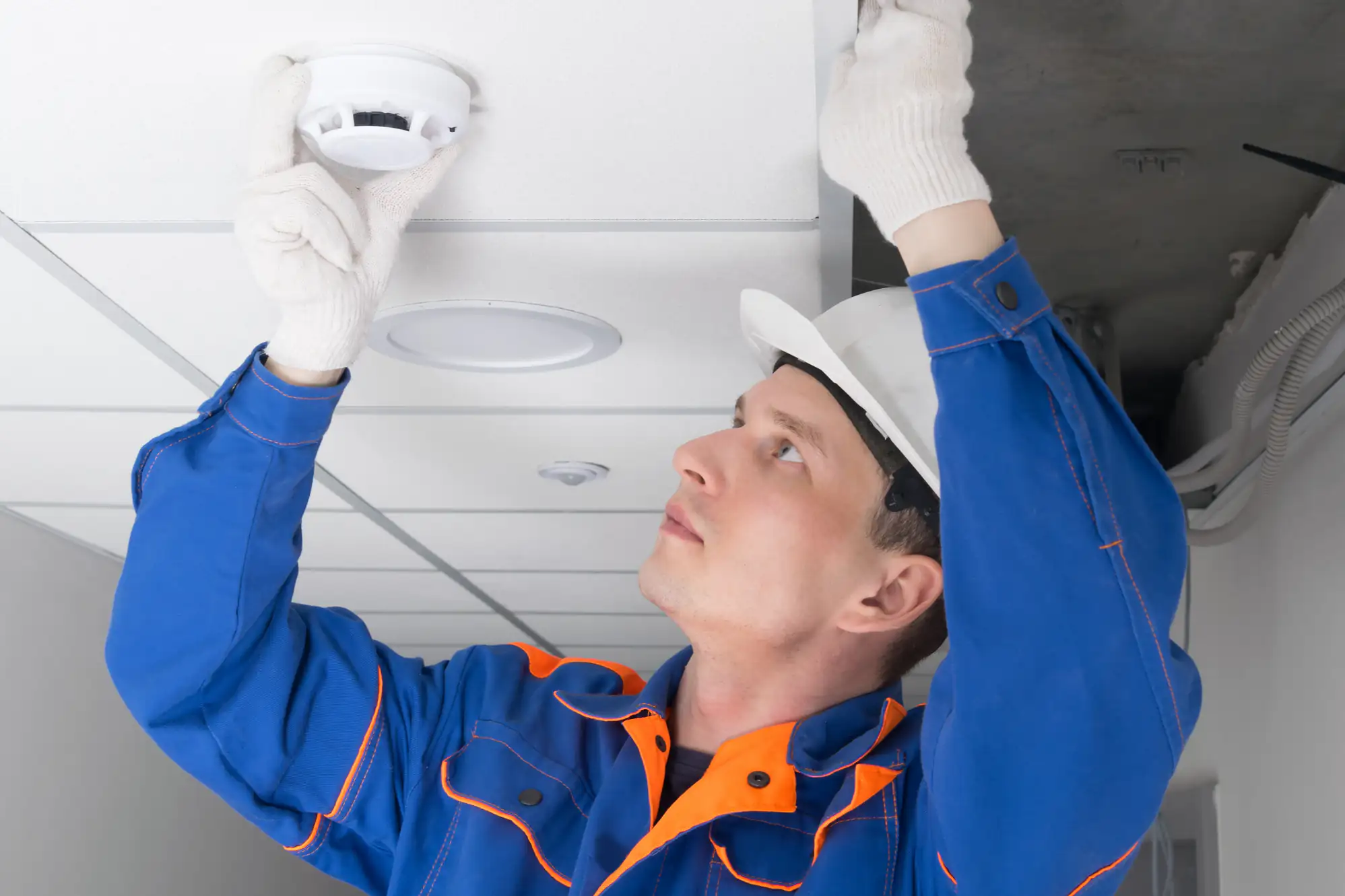
First, we assess your building. That means looking at square footage, occupancy type, existing wiring, and what your local fire code actually requires—not what some generic checklist says.
Then we design a system that fits. Smoke detectors go where they’ll actually detect smoke, not just where they’re easy to install. If you need a combo smoke and CO alarm setup for residential units or a full addressable fire detection system for a commercial building, we spec it correctly the first time.
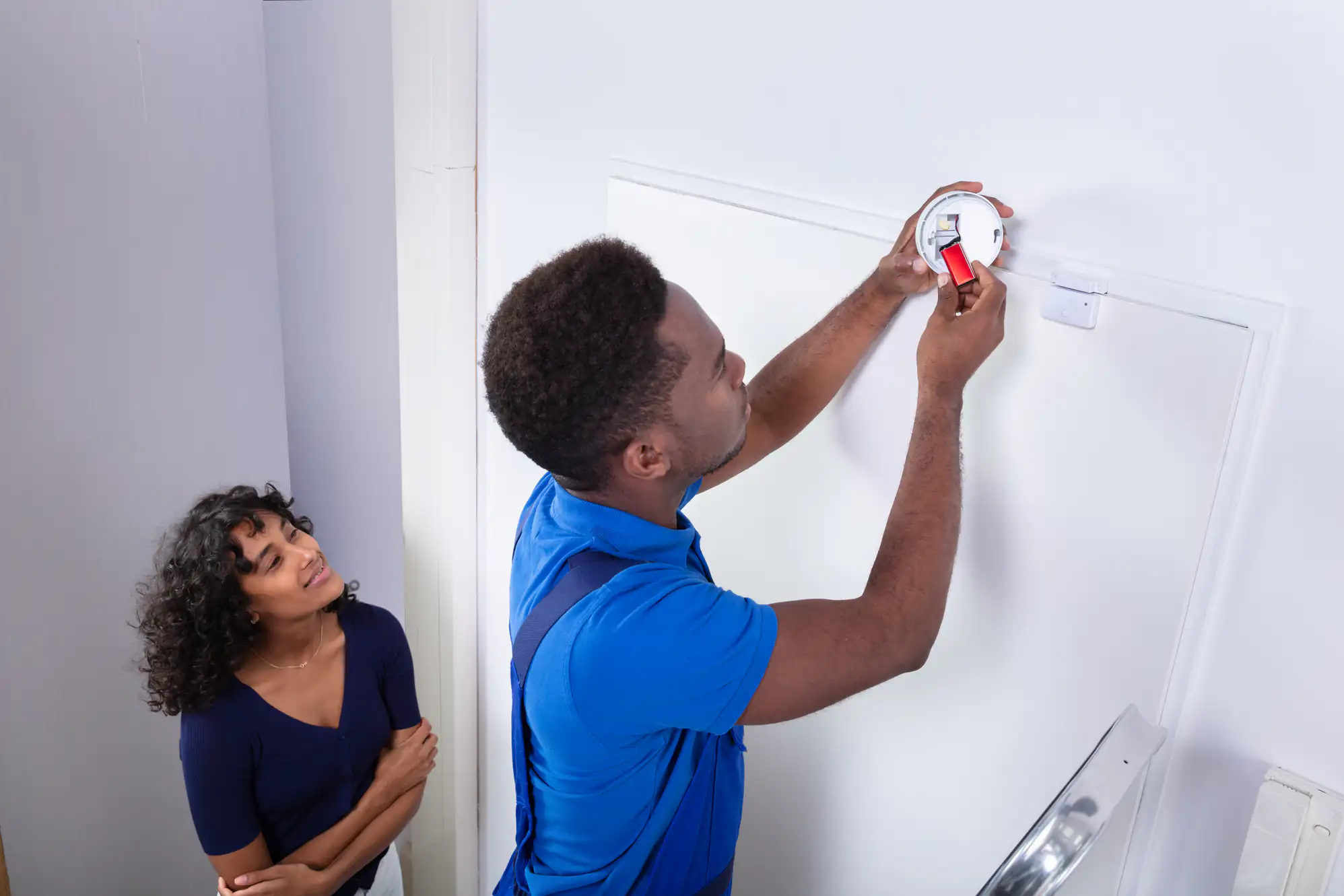
Installation happens with licensed technicians who pull permits, follow NFPA 72 standards, and don’t leave until the system is tested and functional. We’re not subbing this out to whoever’s available. It’s our crew, our responsibility.
After installation, we handle the inspection process. That includes coordinating with your local fire department, making sure all documentation is filed, and addressing any last-minute adjustments before the final sign-off. You get a system that’s ready to go, not one that needs three follow-up visits to pass.
Ready to get started?
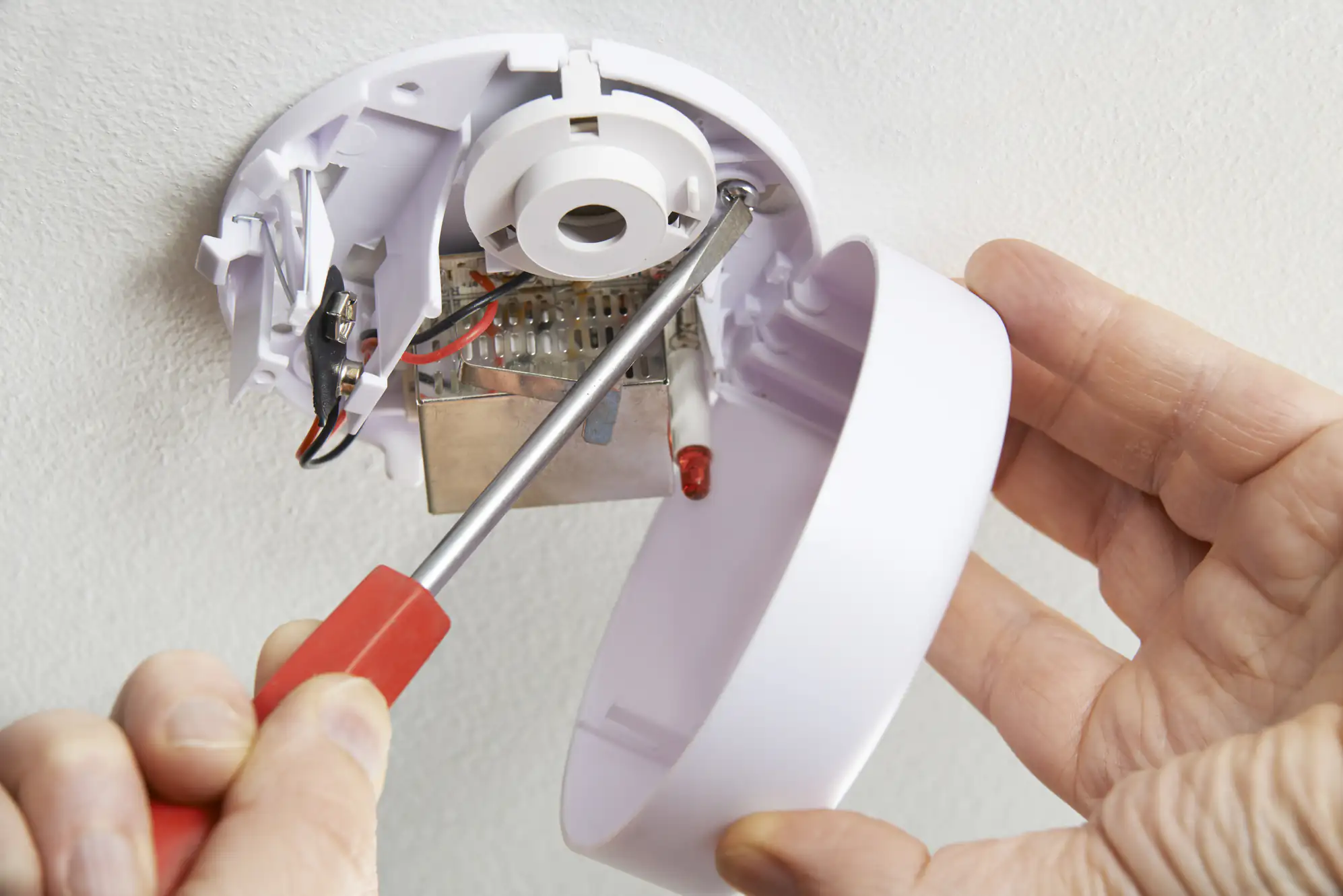
You’re getting more than smoke detectors on the ceiling. A complete fire detector installation includes device placement based on NFPA standards, proper wiring or wireless integration depending on your building, control panel programming, and connection to monitoring if you need it.
We install everything from basic smoke alarm replacement in residential properties to full fire detection systems in commercial buildings. That includes heat detectors for kitchens, Kidde carbon monoxide alarms where required by New York’s stricter CO detection laws, and Nest fire alarm integration if you want smart monitoring.
In Suffolk County, commercial properties need annual inspections that cost anywhere from $300 for small setups to $7,000+ for large facilities. A system installed correctly from the start cuts down on those recurring violation corrections. You’re also looking at potential insurance savings of 15-25% when your carrier sees UL-listed equipment and professional installation records.
East Patchogue properties—especially older buildings near Montauk Highway or around the Sunrise Highway corridor—often need retrofits to meet current codes. We handle that without tearing apart your entire electrical system. You get compliant fire protection without a full building renovation.
For commercial properties, expect $0.50 to $1.00 per square foot for basic fire alarm systems, with equipment costs adding another $1 to $2 per square foot. Complex installations with addressable systems, voice evacuation, or integration with existing building controls can run $3 to $6 per square foot.
A small commercial building might see a total system cost between $2,000 and $8,000. Larger facilities—warehouses, multi-tenant buildings, restaurants with commercial kitchens—can easily hit $20,000 or more depending on detection zones, notification devices, and monitoring requirements.
Residential smoke alarm replacement or adding combo smoke and CO alarms is significantly less, usually a few hundred dollars per unit unless you’re upgrading an entire multi-family building. The real cost comes from doing it wrong the first time—fire code violations in Suffolk County start at $800 and climb to $5,000 for repeat offenses, and that’s before you factor in insurance complications or business shutdowns.
You’re dealing with New York State Uniform Fire Prevention and Building Code as the baseline, but Suffolk County’s 109 independent fire departments add their own local requirements. East Patchogue falls under specific district oversight, and what they enforce can differ from neighboring towns.
NFPA 72 governs fire alarm installation and inspection standards across the board. That means annual inspections are mandatory for commercial systems, and any modifications require permits and re-inspection. New York also has stricter carbon monoxide detection laws than the International Fire Code, so commercial buildings need CO alarms in more situations than you’d see in other states.
If you’re in a commercial space, your fire marshal cares about device spacing, notification appliance coverage, control panel programming, and whether your system connects to monitoring. Residential properties need working smoke detectors in every bedroom and outside sleeping areas at minimum, with CO detectors required near fuel-burning appliances. Get it wrong and you’re looking at violation notices that don’t go away until a licensed professional corrects them.
Smoke detectors have a 10-year lifespan from the manufacture date, not the install date. If your building still has detectors from 2014, they’re due for replacement regardless of whether they’re “working.” The sensors degrade over time and stop reliably detecting smoke.
Carbon monoxide alarms typically last 5 to 7 years depending on the model. Kidde CO alarms and similar units have expiration dates printed on the back—once they hit that date, they need to come down. This isn’t optional if you want to stay code-compliant.
Commercial fire detection systems have longer equipment lifespans, but individual devices still need replacement on a schedule. Heat detectors, pull stations, and notification devices can last 15-20 years, but control panels and older technology eventually become obsolete. If your system uses parts that manufacturers no longer support, you’re risking failed inspections when something breaks and replacement parts don’t exist. Regular inspections catch this before it becomes an emergency replacement situation.
In New York, any fire alarm system connected to a control panel or monitoring service requires a licensed installer. That includes commercial fire detection systems, multi-unit residential buildings, and any setup that goes beyond basic battery-operated smoke alarms.
You can replace a standalone smoke detector in your single-family home without a license. But the moment you’re dealing with hardwired smoke alarm installation, interconnected devices, or anything that ties into a building’s electrical or fire alarm system, you need someone with a NYS fire alarm license and the proper county credentials.
Suffolk County enforces this strictly. If you’re a business owner or property manager and you try to DIY a fire alarm installation, you’ll fail inspection and end up paying a licensed contractor to rip it out and start over anyway. Worse, if there’s a fire and the system doesn’t work because it wasn’t installed correctly, your insurance company will have questions you don’t want to answer. Licensed installation isn’t just about passing inspection—it’s about liability protection when something goes wrong.
Smoke detectors are individual devices that sound an alarm when they sense smoke. You see these in homes—battery-operated or hardwired units that beep loud enough to wake people up. They’re standalone and don’t communicate with anything else.
Fire detection systems are networked setups with multiple devices reporting to a central control panel. That includes smoke detectors, heat detectors, pull stations, notification appliances like strobes and horns, and sometimes sprinkler system integration. When one device triggers, the whole system responds according to how it’s programmed—sounding alarms, notifying monitoring services, activating ventilation controls, or unlocking exit doors.
Commercial buildings need fire detection systems because you’re protecting larger spaces with more occupants. A restaurant kitchen might have heat detectors that won’t false alarm from cooking smoke, while the dining area has standard smoke detectors. The system knows the difference and responds appropriately. Residential properties can get by with individual smoke alarms in most cases, but larger multi-family buildings often require monitored fire alarm systems that alert the fire department automatically. The equipment cost and complexity are higher, but so is the level of protection.
Yes, but only if they’re installed correctly and documented properly. Insurance carriers offer premium reductions of 15-25% for buildings with UL-listed fire detection systems, professional installation records, and proof of annual inspections.
The savings come from reduced risk. A monitored fire alarm system that alerts the fire department immediately means faster response times and less damage. Insurers know this translates to smaller claims, so they adjust premiums accordingly. Add in sprinkler systems and you’re looking at even better rates.
But here’s the catch—if your system has violations or hasn’t been inspected in years, your insurance company can increase your premiums or exclude fire coverage entirely. A lapsed inspection or unresolved fire code violation is a red flag that tells insurers you’re not maintaining the property. Get a violation notice from the fire marshal and don’t fix it? Your carrier will find out, and your renewal won’t be pretty. Proper fire detector installation and maintenance isn’t just about compliance—it’s about keeping your insurance costs under control.
Other Services we provide in East Patchogue