Summary:
You walk past your fire extinguishers every day. They’re mounted on the wall, the gauge looks fine, and you assume everything’s handled. Then a fire marshal shows up and writes you a violation for an expired inspection tag you didn’t even know existed. Or worse, your insurance company questions your coverage because you can’t produce monthly inspection records.
Monthly fire extinguisher inspections aren’t a suggestion in Nassau County, NY. They’re a legal requirement under NFPA 10 standards and local fire codes. The good news? Once you understand what’s actually required, staying compliant is straightforward. This guide walks you through the monthly inspection process, proper documentation requirements, and how to avoid the violations that catch most businesses off guard.
What NFPA 10 Requires for Monthly Fire Extinguisher Inspections
NFPA 10 is the national standard that governs portable fire extinguisher installation, inspection, and maintenance. It’s not optional reading for business owners in Nassau County, NY. Local fire codes adopt these standards, which means fire marshals enforce them during inspections.
The standard is clear: fire extinguishers must be visually inspected when initially placed in service and at least monthly thereafter, at minimum 30-day intervals. These aren’t deep technical examinations. They’re quick visual checks designed to confirm your extinguishers are accessible, charged, and ready if someone needs them.
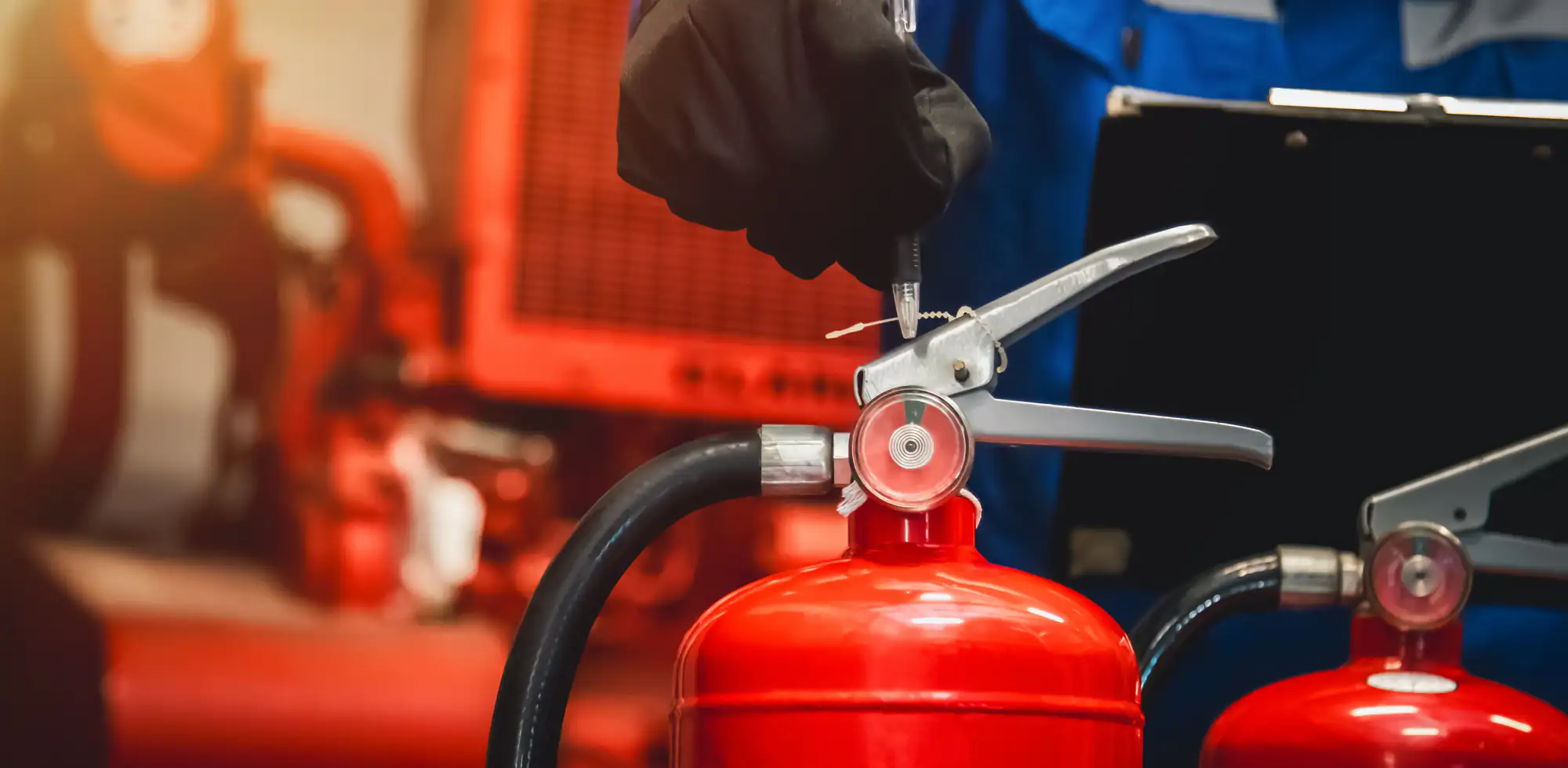
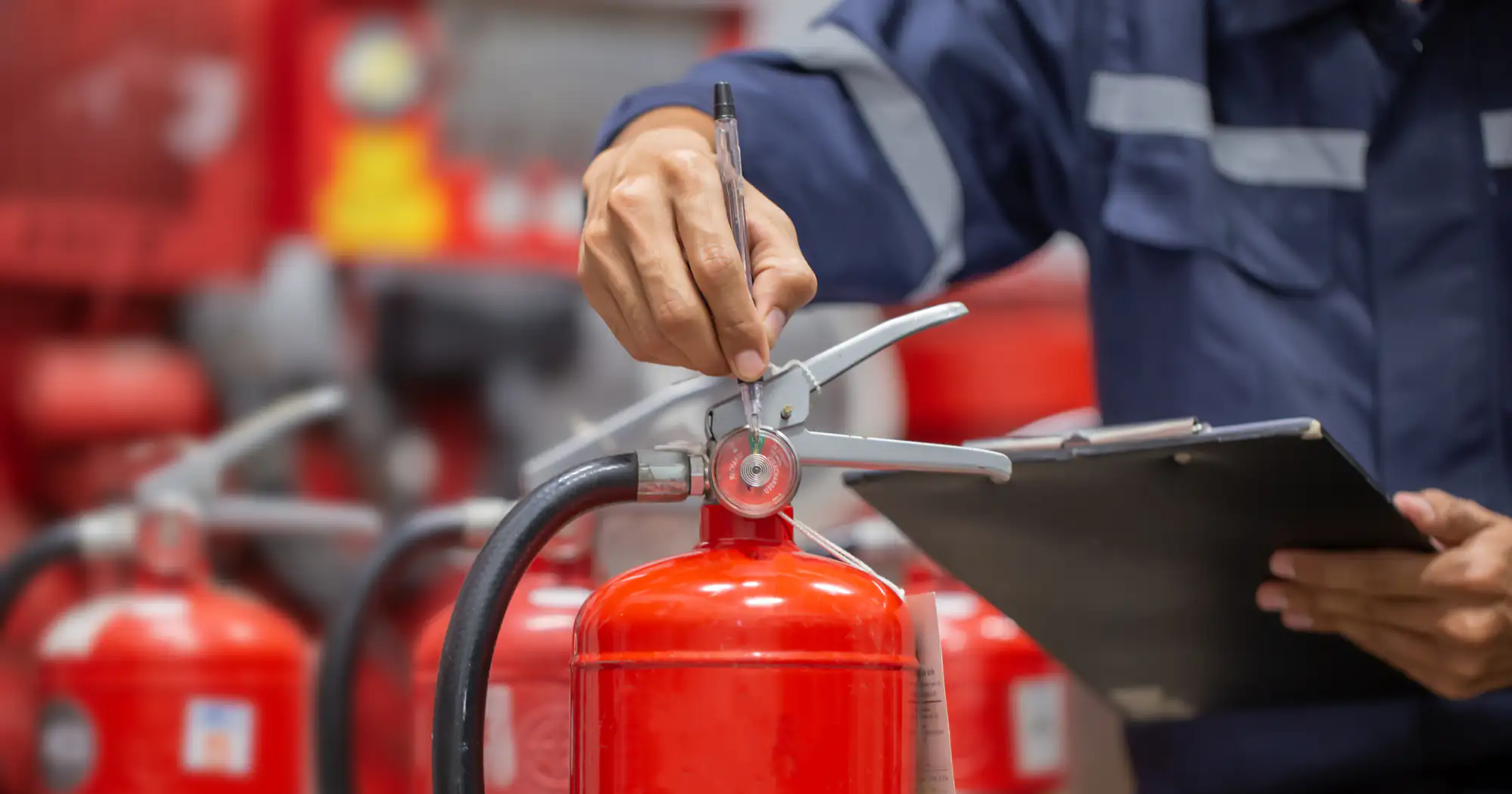
Here’s what matters during a monthly inspection. You’re verifying the extinguisher is in its designated location and not blocked by boxes, furniture, or equipment. You’re checking that the pressure gauge needle sits in the operable range, usually marked green. You’re confirming the tamper seal is intact and the safety pin is in place. You’re looking for obvious physical damage like dents, rust, corrosion, or a clogged nozzle.
Who Can Perform Monthly Inspections
One of the most common questions business owners ask: do I need a certified technician for monthly inspections? The answer is no. NFPA 10 allows facility staff to perform monthly visual checks. You don’t need specialized fire protection training or certification to walk around once a month and verify your extinguishers look ready to use.
What you do need is someone who understands what they’re looking for and actually completes the checks consistently. Skipped inspections are one of the top compliance failures fire marshals cite. It’s easy to let monthly checks slide when operations get busy, but that’s exactly when problems develop unnoticed.
The person conducting monthly inspections should know what an operable pressure gauge looks like. Green zone means good. If the needle sits in the red, that extinguisher needs professional service. They should recognize a broken tamper seal, which indicates someone may have used the extinguisher without reporting it. They need to understand that “accessible” means someone can reach it within seconds during an emergency, not buried behind storage or locked in a closet.
Monthly inspections take minutes per extinguisher. You’re not opening it up or testing the discharge mechanism. You’re doing a visual once-over and documenting what you see. The documentation part is where many businesses fail, which brings us to inspection tags.
Documentation isn’t just good practice. It’s required. When a fire marshal inspects your property, they’re checking whether you can prove you’ve been conducting monthly inspections. Without documentation, you have no proof of compliance, even if you’ve been checking extinguishers religiously.
Monthly Inspection Tags and Proper Documentation
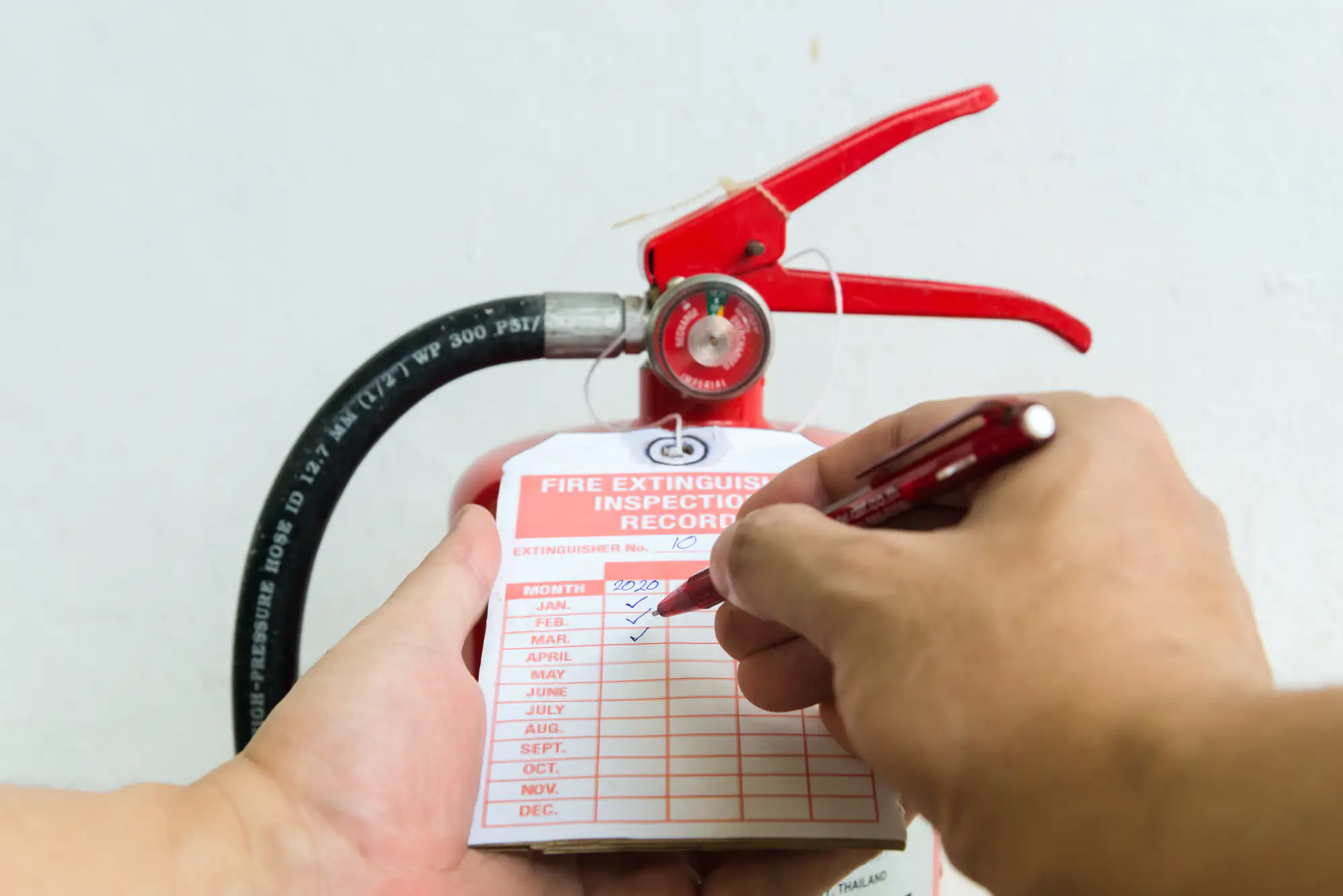
Fire extinguisher inspection tags serve as your compliance record. Most tags are two-sided. The front typically shows information about annual professional inspections, while the back contains a grid for monthly inspection documentation.
For monthly checks, you’re recording the date and your initials on the tag’s back side. Some tags have pre-printed months and years where you punch or mark the corresponding month. Others provide blank spaces where you write the date and initial. Either system works, as long as it creates a clear record showing monthly inspections occurred at proper intervals.
Nassau County, NY businesses need to understand that inspection tag requirements can vary by jurisdiction. New York City requires special FDNY-issued serialized tags with security features like holograms and QR codes. These became mandatory in 2018 to prevent fraud after investigations uncovered unlicensed companies using fake inspection tags. Nassau County follows different requirements under the county fire prevention ordinance, but the principle remains the same: your tags must provide verifiable proof that inspections happened.
What happens if your tag is missing, damaged, or expired? You’re out of compliance, even if the extinguisher itself is in perfect working condition. Fire marshals don’t just look at the equipment. They examine the documentation that proves you’ve been maintaining it properly. A missing tag or one that shows the last monthly check was four months ago creates an immediate violation.
The documentation requirement extends beyond just having tags. You should maintain a separate inspection log as backup. This can be a simple spreadsheet or logbook that records when inspections occurred, who performed them, and whether any issues were found. If a tag gets damaged or falls off, your backup records demonstrate you’ve been maintaining compliance even when the physical tag isn’t available.
Some businesses use digital inspection tracking systems that send reminders when monthly checks are due and store records electronically. These systems can be helpful, especially for properties with dozens of extinguishers across multiple locations. The key is having a system that ensures inspections happen consistently and documentation is maintained.
Commercial Fire Extinguisher Inspection Requirements in Nassau County
Nassau County, NY operates under a centralized fire code enforcement model through the Nassau County Fire Commission and Fire Marshal’s Office. This creates uniform fire safety standards across the county, unlike Suffolk County’s decentralized approach where individual fire districts may have varying requirements.
The Nassau County Fire Prevention Ordinance establishes regulations for fire hazard control and enforcement. It adopts the New York State Uniform Fire Prevention and Building Code as baseline, then adds county-specific requirements. For commercial properties, this means your fire extinguisher compliance obligations come from multiple sources: NFPA 10 national standards, NYS fire code, and Nassau County ordinance provisions.
Violations aren’t minor inconveniences. The county fire prevention ordinance allows fines up to $5,000 per offense. A single inspection that finds multiple extinguishers out of compliance can result in citations totaling tens of thousands of dollars. Beyond the immediate financial hit, violations create operational problems.
What Fire Marshals Check During Inspections
When a Nassau County fire marshal inspects your commercial property, they’re checking the same basic elements every time: documentation, accessibility, physical condition, pressure levels, and proper placement.
Documentation comes first. They want to see current inspection tags showing both monthly checks and annual professional service. They’ll look at the dates to verify inspections happened at required intervals. If your last monthly check was six weeks ago instead of 30 days, that’s a violation. If your annual inspection is even one day expired, that’s another violation.
Accessibility is non-negotiable. Extinguishers must be visible and reachable without moving obstacles. The fire marshal isn’t interested in hearing that you only stack boxes there occasionally or that employees know where to find the extinguisher behind the equipment. If someone can’t access it immediately during an emergency, it fails inspection.
Physical condition matters. They’re looking for damage, corrosion, leaking, clogged nozzles, or any sign the extinguisher might not function properly. They check that pressure gauges show operable range. They verify tamper seals are intact and safety pins are in place.
Proper placement follows NFPA 10 guidelines. For Class A fire hazards (ordinary combustibles like wood, paper, cloth), extinguishers must be positioned so the travel distance to reach one doesn’t exceed 75 feet. For Class B hazards (flammable liquids), that distance drops to 50 feet. Extinguishers should be mounted with the top no higher than 5 feet from the floor and the bottom at least 4 inches off the floor.
Fire marshals also verify you have the right type and size of extinguishers for your specific hazards. A restaurant kitchen needs different fire protection than an office building or warehouse. If your property has special hazards, like flammable liquid storage or electrical equipment rooms, those areas may require additional or specialized extinguishers.
The inspection isn’t adversarial, but it is thorough. Fire marshals are checking whether your first line of fire defense would actually work during an emergency. They’re also verifying you’ve been maintaining proper documentation, which demonstrates ongoing attention to fire safety rather than last-minute compliance efforts.
Annual Professional Inspections vs. Monthly Visual Checks
Understanding the difference between monthly visual inspections and annual professional inspections prevents confusion and compliance gaps. They’re not the same thing, and you can’t substitute one for the other.
Monthly visual inspections, as we’ve covered, can be performed by your staff. They’re quick external checks that verify extinguishers appear ready for use. No special tools required. No certification needed. Just consistent attention and proper documentation.
Annual professional inspections must be conducted by certified technicians from licensed fire protection companies. These are comprehensive examinations that go well beyond visual checks. The technician inspects all mechanical parts, examines the extinguishing agent, and tests the expelling mechanism to certify the extinguisher is in good working order.
During annual maintenance, the technician checks internal components you can’t see during monthly inspections. They verify the extinguisher’s weight or internal pressure to confirm it’s fully charged. They examine hoses, nozzles, and discharge mechanisms for wear or damage. They check the condition of the extinguishing agent itself, which can degrade over time.
After completing annual maintenance, the technician installs a new tamper seal and updates the inspection tag. The tag must show the service date, the servicing company’s information, and the technician’s certification credentials. This documentation proves a qualified professional examined your equipment and certified it meets safety standards.
Beyond annual inspections, fire extinguishers require additional service at longer intervals. Stored-pressure dry chemical extinguishers need internal examination and servicing every six years. Hydrostatic testing, which pressure-tests the cylinder’s integrity, is required every 5 to 12 years depending on the extinguisher type. Some extinguishers must be removed from service after 12 years from the date of manufacture.
These requirements stack up. Your monthly visual checks don’t replace annual professional service. Annual service doesn’t eliminate the need for monthly checks. Six-year maintenance doesn’t reset your annual inspection schedule. Each requirement exists for a specific reason, and all must be met to maintain full compliance.
For Nassau County, NY businesses, this means establishing relationships with licensed fire protection companies who understand local requirements and can provide timely service. The company should hold proper licenses for Nassau County operations. Not all fire extinguisher service companies are licensed in every jurisdiction. Nassau County, Suffolk County, and New York City each require separate licenses, so verify your service provider can legally work in your location.
When choosing a fire protection company, look for specific credentials. NICET certification demonstrates specialized fire protection training. NYS licensing and Nassau County permits prove authorization to work in your area. Membership in professional organizations like the New York Fire Alarm Association indicates commitment to industry standards. Partnerships with major manufacturers, such as being a Notifier by Honeywell authorized dealer, suggest working with quality equipment and maintaining technical expertise.
Response time matters too. Fire safety equipment can fail unexpectedly. If an extinguisher fails a monthly inspection or gets used during an incident, you need a company that can respond quickly to maintain your compliance status. We offer comprehensive fire protection services with the expertise to handle violation corrections and emergency situations, which becomes critical if a fire marshal issues a citation requiring immediate remediation.
Staying Compliant With Fire Extinguisher Inspection Requirements
Monthly fire extinguisher inspections aren’t complicated, but they require consistency and proper documentation. Conduct visual checks at 30-day intervals. Document each inspection with dates and initials on your tags. Maintain backup records. Schedule annual professional service with a licensed, certified company. Address any issues immediately rather than waiting until the next scheduled inspection.
The stakes are real. Fire code violations in Nassau County, NY can result in thousands of dollars in fines, insurance coverage issues, and operational disruptions. More importantly, properly maintained fire extinguishers can reduce fire damage by up to 80% in the first few minutes of an incident. That’s not about compliance. That’s about protecting people and property when seconds matter.
If you’re facing fire marshal violations, dealing with expired inspection tags, or just want to establish a reliable compliance system, we provide comprehensive fire protection services throughout Nassau County, Suffolk County, and NYC. Our certified technicians understand local requirements and can help you avoid the violations that catch most businesses off guard.