Summary:
You’re running a business in Nassau County, which means you’re dealing with one of New York’s most structured fire safety systems. The Nassau County Fire Commission oversees everything centrally, which should make compliance straightforward. But if you’re reading this, you probably know it doesn’t always feel that way.
Maybe you received a violation notice. Maybe you’re planning a renovation and want to get it right the first time. Or maybe you just want to understand what’s actually required before an inspector shows up. Whatever brought you here, you’re in the right place. This guide covers Nassau County’s fire code requirements in plain terms, what triggers violations, and how to stay compliant without the confusion.
Nassau County Fire Protection Requirements
Nassau County takes a different approach than neighboring Suffolk County. Everything runs through the Nassau County Fire Commission and the Fire Marshal’s Office, which means you’re dealing with uniform regulations across the entire county. No guessing which village has which rules.
The Nassau County Fire Prevention Ordinance works alongside the New York State Uniform Fire Prevention and Building Code. When there’s a conflict, the stricter requirement wins. That’s important because it means you can’t assume state minimums are enough.
Your business needs fire detection and suppression systems that match your property type and use. A restaurant has different requirements than a warehouse. An office building faces different standards than a retail shop. The Fire Marshal’s Office conducts regular inspections to verify you’re meeting county-specific regulations on top of state codes.
Fire Safety Consulting for Code Compliance
Here’s where most business owners hit a wall. You know you need to comply, but figuring out exactly what that means for your specific property gets complicated fast. That’s where fire safety consulting actually earns its keep.
A qualified consultant doesn’t just tell you what’s wrong. We walk through your property, identify what you need based on your occupancy type and square footage, and explain the permit process before you start any work. We know Nassau County’s system because we work with the Fire Marshal’s Office regularly.
This matters more than you might think. Install the wrong type of fire alarm system and you’ll be ripping it out and starting over. Miss a sprinkler head requirement in a specific zone and your final inspection fails. Use equipment that doesn’t meet Nassau County standards and you’re buying everything twice.
Good consultants also know the timeline. Nassau County has specific permit processes and inspection schedules. If you’re renovating or building out a new space, those timelines affect your opening date. Missing a step means waiting weeks for the next available inspection slot.
The return shows up in what doesn’t happen. No surprise violations. No delayed openings. No expensive rework because someone guessed at requirements instead of knowing them. You’re paying for local expertise that prevents problems rather than fixing them after the fact.
Fire Code Violations Prevention Guide
Nassau County doesn’t mess around with fire code violations. You’re looking at fines up to $5,000 per offense, and that’s just the financial part. Violations can shut down your operations until you fix the problem, which costs you a lot more than the fine.
The most common violations are almost embarrassingly simple. Blocked exits and hallways top the list. Someone leaves delivery boxes in a corridor for a few hours, an inspector walks through, and you’ve got a violation. Fire doors propped open with a wedge? Violation. Exit signs with burned-out bulbs? Violation.
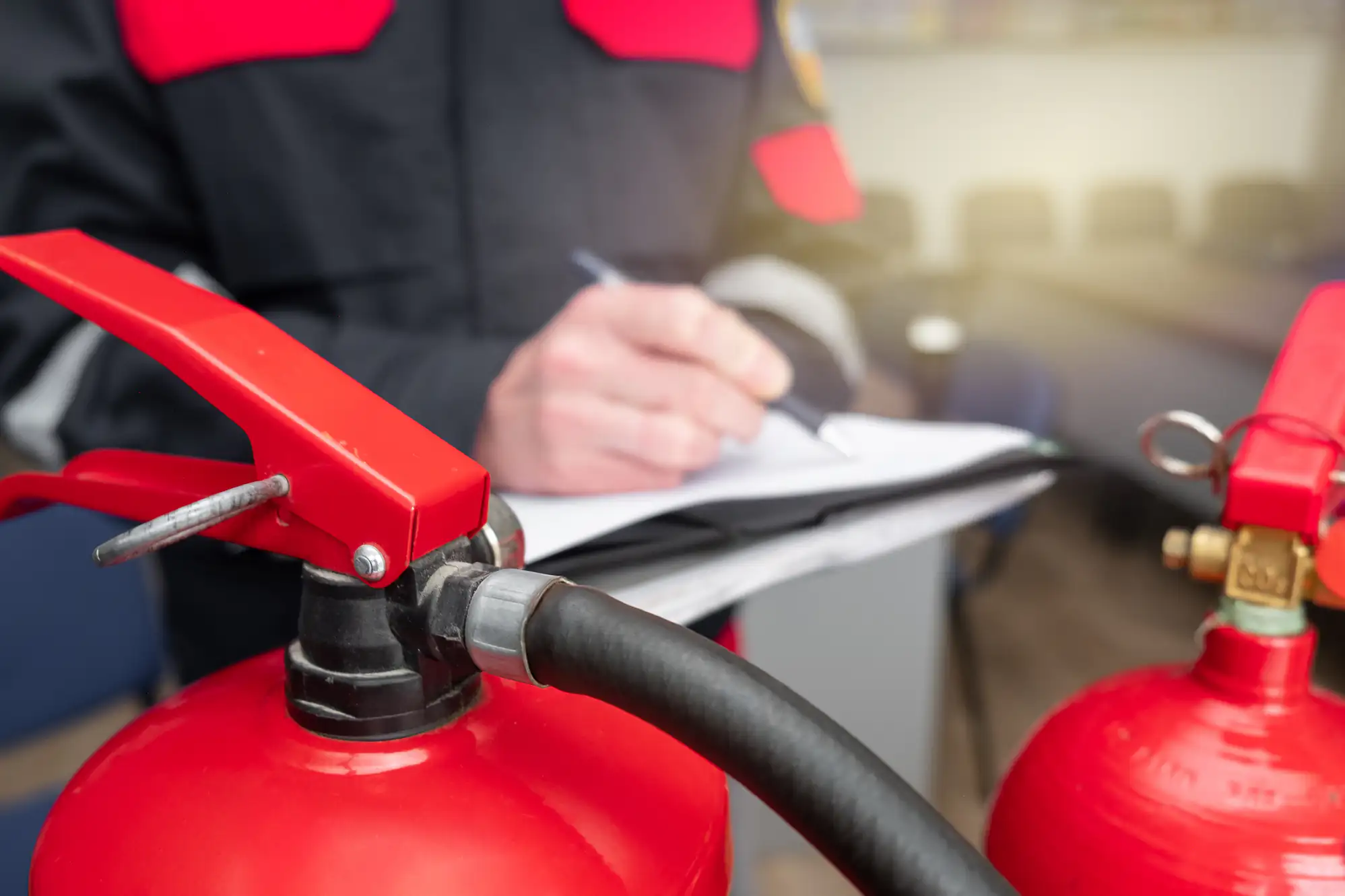
Fire extinguishers cause constant issues. They need annual inspections and proper mounting. If an inspector finds one that’s expired, missing, or tucked behind a stack of inventory, that’s a citation. Same with fire alarm systems and smoke detectors. Dead batteries or disconnected units trigger violations immediately.
Sprinkler systems get flagged when businesses change their use but don’t update the system. You take over a space that used to be a different type of business, and the existing sprinklers might not meet code for what you’re doing now. The Fire Marshal won’t care that you inherited the problem.
Here’s what actually prevents violations: regular internal checks before the official inspection. Walk your own property monthly. Check exit paths, test smoke detectors, verify fire extinguisher tags, make sure sprinkler heads aren’t blocked or painted over. Fix small issues immediately instead of waiting for them to become expensive problems.
Keep documentation of everything. Inspection reports, maintenance records, system tests. When the Fire Marshal asks for proof of compliance, you hand over a folder instead of scrambling to remember when you last had something serviced. That documentation also protects you if there’s ever a dispute about timing or requirements.
Business Type Fire Code Requirements
Not all businesses face the same fire code requirements. What you need depends on your occupancy classification, building size, and what you’re actually doing in the space.
Restaurants and food service operations have the most complex requirements. You need kitchen suppression systems for cooking equipment, proper ventilation, fire-rated walls between the kitchen and dining areas, and sometimes specialized fire alarm systems that account for normal cooking smoke. The Fire Marshal pays close attention to these spaces because kitchen fires are common and dangerous.
Retail and office spaces need fire alarm systems, proper exit signage with emergency lighting, fire extinguishers based on square footage and travel distance, and sometimes sprinkler systems depending on building size and age. Multi-tenant buildings add another layer because you’re responsible for common areas even if individual tenants handle their own spaces.
Warehouses and industrial facilities face requirements based on what you’re storing and how high you’re stacking it. Combustible materials, flammable liquids, and hazardous substances all trigger additional requirements. The Nassau County Fire Prevention Ordinance has specific articles covering storage and handling of these materials.
What Fire Code Violations Could Result in Fines or Business Closure
The violations that get businesses shut down aren’t usually the minor stuff. They’re the ones that create immediate life safety risks or show a pattern of ignoring requirements.
Blocked or locked exits during business hours will get you closed. If occupants can’t get out quickly in an emergency, the Fire Marshal has authority to shut you down on the spot. No debate, no grace period. Same with completely non-functional fire alarm systems or sprinkler systems that have been shut off or bypassed.
Illegal occupancy violations are serious. Converting a basement into workspace without proper permits, adding bedrooms to a commercial space, or changing your business use without updating your certificate of occupancy all fall into this category. These violations often come with the highest fines because they show intentional non-compliance.
Repeat violations escalate fast. First-time violations might get you a warning with a correction deadline. Miss that deadline or get cited for the same issue multiple times, and fines jump significantly. The county keeps records, so claiming ignorance doesn’t work the second or third time around.
Storage of flammable materials without proper permits and containment can trigger immediate closure, especially if you’re storing quantities that require special licensing. The Fire Marshal’s Office takes these violations seriously because the risk extends beyond your property to neighboring businesses and residences.
The pattern that leads to closure usually looks like this: violation issued, deadline missed, follow-up inspection shows no correction, additional violations found during follow-up, fines issued, still no correction, closure order. Breaking that pattern means taking the first violation seriously instead of hoping it goes away.
When Should I Hire a Fire Safety Consultant
You don’t need a consultant for everything, but certain situations make it worth the investment. Knowing when to bring in professional help saves you money compared to guessing and getting it wrong.
New construction or major renovations are the clearest cases. Before you submit plans to the Fire Marshal’s Office, having a consultant review them catches issues early. We know what Nassau County looks for and what triggers additional requirements. This prevents the back-and-forth of plan rejections and resubmissions that delay your project.
Change of use situations almost always benefit from consulting. You’re taking over a space that had a different business, and the fire protection systems might not meet requirements for what you’re planning. A consultant identifies gaps before you sign a lease or start investing in buildout.
If you received a violation you don’t understand or disagree with, a consultant can review the citation and explain your options. Sometimes violations are legitimate and you need to fix the issue. Other times there’s room for interpretation or alternative compliance methods. Having someone who speaks the Fire Marshal’s language helps resolve disputes faster.
Properties with complex systems benefit from ongoing consulting relationships. Large buildings with multiple fire protection systems, facilities with special hazards, or businesses that regularly modify their space need someone who understands how changes affect compliance. This prevents the situation where small modifications accumulate into major violations.
The cost of consulting is typically a fraction of what you’d spend fixing violations, redoing failed installations, or dealing with business interruption from closure orders. You’re buying expertise that keeps you compliant from the start rather than paying to fix problems after they’re already expensive.
Staying Compliant with Nassau County Fire Codes
Nassau County’s centralized fire code system should work in your favor. Uniform regulations mean you’re not guessing about local variations, and the Fire Marshal’s Office provides clear standards. The challenge is understanding what those standards mean for your specific business and staying ahead of inspections.
Most violations are preventable with regular attention and proper maintenance. Check your property monthly, keep systems serviced on schedule, and document everything. When you’re unsure about requirements, ask before you install or modify anything. The cost of getting it right the first time is always less than fixing it after a violation.
If you’re dealing with fire code compliance in Nassau County and want professional guidance, we work with businesses throughout the county. We understand Nassau County’s requirements, hold the proper local licenses, and can help whether you’re preventing violations or correcting existing ones.