Summary:
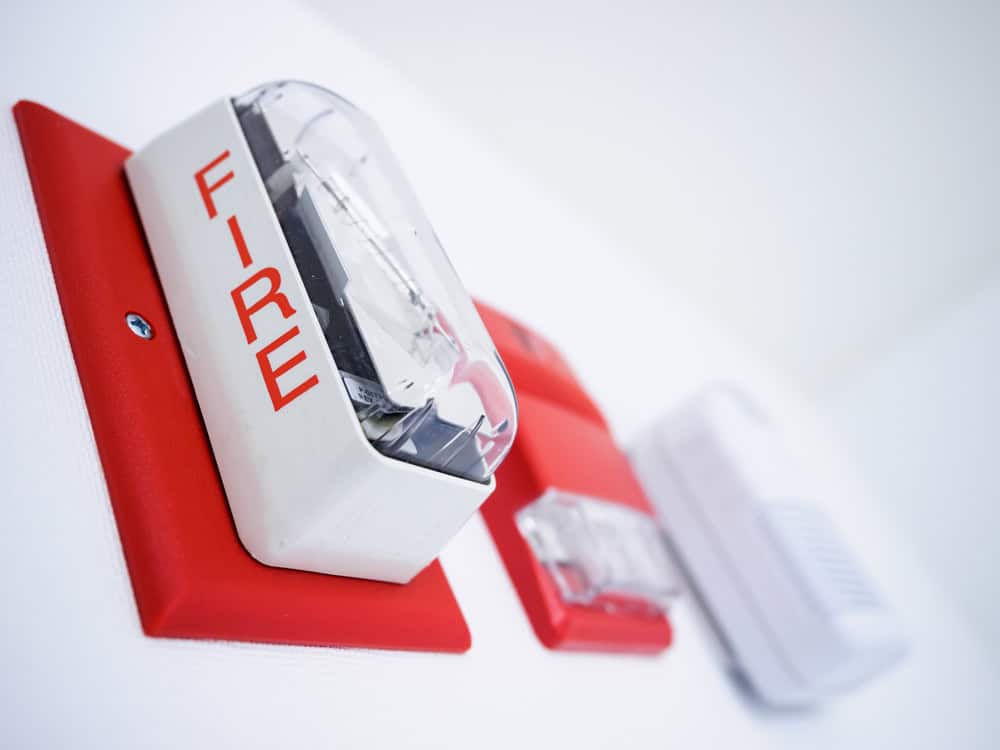
Here’s a scenario that plays out more often than most people realize. A fire starts in a Nassau County commercial building at 2 AM on a Saturday. The alarm sounds. Strobes flash. And then — nothing. No one calls 911. No fire truck shows up. Because no one was there to hear it, and no one was watching.
That’s not a fringe case. That’s exactly what happens when a fire alarm system isn’t connected to a monitored central station. If you’ve been operating under the assumption that having an alarm installed is the same as being protected, this page is going to be useful to you.
How a Monitored Fire Alarm System Actually Works
A monitored fire alarm system is a setup where your building’s fire alarm panel is connected — through a cellular or IP communication path — to a staffed central station that operates around the clock. When your alarm triggers, the signal travels to that station in seconds. A trained operator receives it, assesses it, and contacts emergency services and your designated contacts immediately.
That’s the key distinction. The alarm doesn’t just sound on-site and wait for someone nearby to react. The response is automatic, regardless of what time it is, whether the building is occupied, or whether anyone in the vicinity happens to call 911.
Under NFPA 72 — the national fire alarm code — alarm signals are required to reach the supervising station within 90 seconds of activation. From there, the fire department must be notified without delay. That’s the standard. An unmonitored system simply cannot meet it.
What Happens Step-by-Step When a Monitored Alarm Triggers
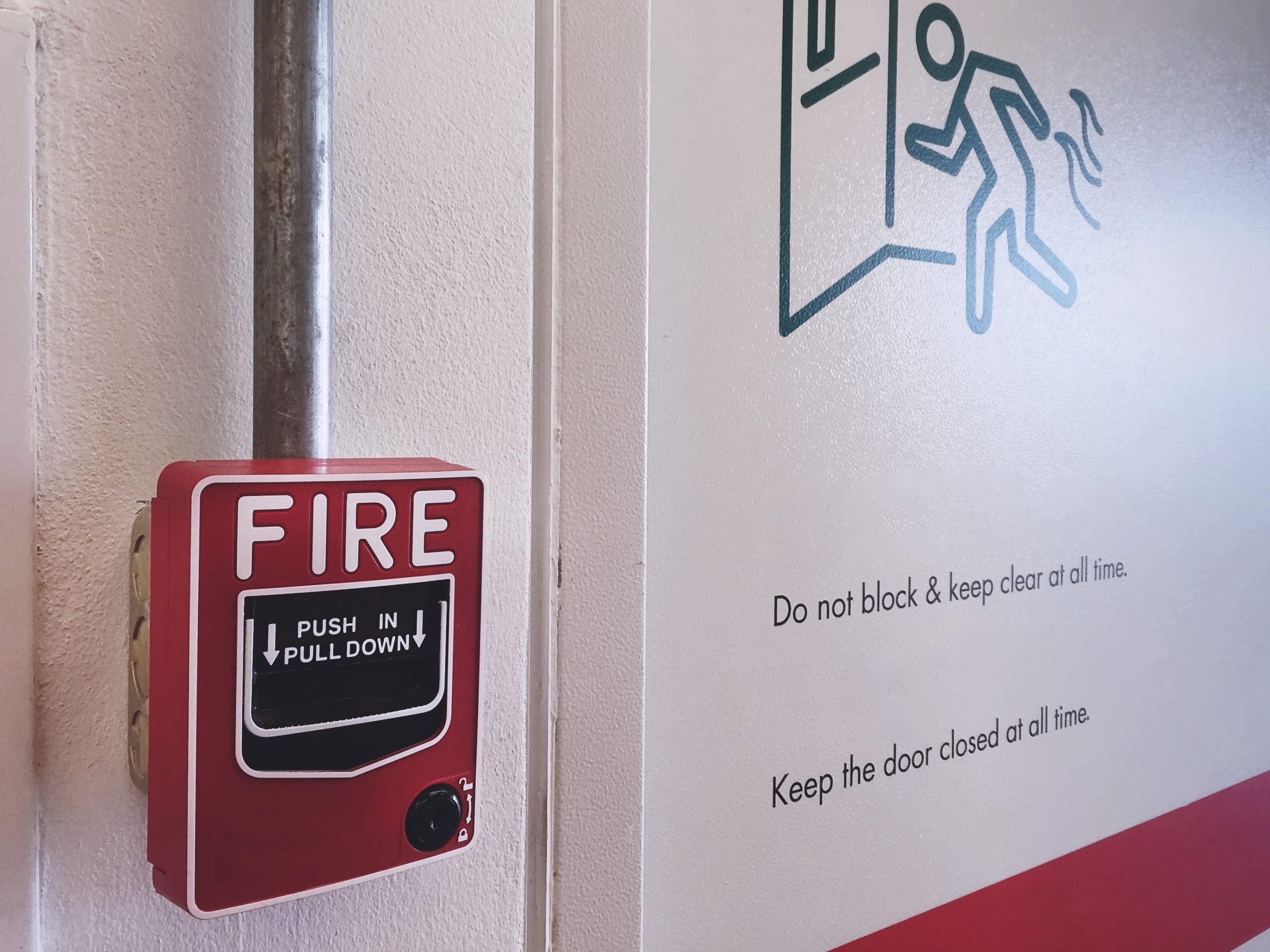
When a detector in your building picks up smoke, heat, or a manual pull station is activated, the signal travels from your fire alarm panel to the central station — typically within 30 seconds of the initial activation. The operator on duty receives the alert, pulls up your account information, and begins the response protocol.
If the alarm appears valid, emergency services are dispatched immediately. At the same time, your designated contacts — a property manager, building owner, or on-call staff — are notified so someone can respond on-site. The operator stays on the line with emergency services and logs the event in detail, creating a record that can be referenced for insurance and compliance purposes later.
If the signal looks like a potential false alarm — a pattern the system can often detect — the operator may attempt to verify before dispatching, which protects you from unnecessary false alarm fees and keeps your relationship with local fire departments intact. Nassau County takes false alarms seriously, and repeated unverified dispatches can result in fines.
There’s also a supervisory function that most people don’t think about. A monitored system can alert the central station when something is wrong with the system itself — a low battery, a communication failure, a tampered device. That means problems get caught and corrected before they become violations or leave you unprotected without knowing it. An unmonitored system offers none of this. If something goes wrong with the panel or a detector fails, you won’t know until an inspector tells you — or until it matters.
Not All Monitoring Is Created Equal
This is where a lot of building owners in Nassau County get caught off guard. Not all monitoring is equal, and the word “monitored” on a contract doesn’t automatically mean you’re receiving the highest tier of service.
NFPA 72 defines three types of supervising station service: remote supervising station, proprietary supervising station, and central station service. Central station service is the most comprehensive — and the most regulated. It includes not just monitoring and alarm retransmission, but also formal record-keeping, testing coordination, and maintenance obligations, all governed by a contract that meets specific code requirements. Central station providers must be listed under UL 827, which means they undergo mandatory annual audits to maintain that listing.
Remote station service, by contrast, has significantly lower requirements. Many building owners believe they have central station monitoring when they’re actually receiving remote station service — a meaningful difference in terms of what the provider is accountable for and what your insurer expects.
When evaluating any fire alarm monitoring company, the right question isn’t just “are you monitored?” It’s “is your central station UL 827-listed?” If the answer is vague or the provider doesn’t know what UL 827 means, that’s a signal worth paying attention to.
We operate through an FDNY-approved central station — a credential that reflects a higher compliance standard than most local providers can point to. For Nassau County properties that also have exposure to New York City regulatory requirements, or for building owners who simply want to know they have the real thing and not a lesser version of it, that distinction matters.
Fire Alarm Monitoring Cost vs. the Cost of Going Without It
The monitoring cost objection comes up constantly, and it’s worth addressing honestly. Commercial fire alarm monitoring typically runs in the range of $50 to $100 per month depending on the size of the property, the number of alarm points, and what’s included in the service agreement.
For most Nassau County commercial property owners, that’s a manageable line item. But the more important number is what you stand to lose without it — and that calculation looks very different once you factor in insurance, compliance, and liability exposure.
How Unmonitored Fire Alarms Affect Your Insurance Coverage
Insurance companies that write commercial property policies in New York operate under a specific assumption: that your fire alarm system is code-compliant. If your system isn’t monitored and a fire occurs, your insurer has grounds to deny the claim on the basis that the system didn’t meet the requirements they were pricing the policy around.
That’s not a hypothetical. It’s a documented risk that property owners discover at the worst possible moment — after a loss, when the claim is already in process.
On the flip side, a UL 827-listed monitored system qualifies many commercial properties for insurance premium reductions between 5% and 20% with participating carriers. Run the math on your own premiums. For a building carrying $10,000 a year in fire insurance costs, a 10% reduction saves $1,000 annually — more than enough to offset a monitoring fee entirely.
Beyond claim denial, there’s the liability exposure to consider. If a fire causes injury or significant property damage and it’s later determined that the absence of monitoring contributed to a delayed response, building owners can face negligence claims. Nassau County’s density — the shared walls, the adjacent structures along commercial corridors on Hempstead Turnpike and Sunrise Highway, the mixed-use buildings where ground-floor commercial space sits below residential units — means that a fire in one space rarely stays there. The downstream consequences of a delayed response compound quickly in that kind of built environment.
Fire Alarm Monitoring Companies in Nassau County: What to Look For
Nassau County has its own licensing requirements for fire alarm contractors, and those credentials are verified at the permit stage. If a contractor can’t pull a permit in Nassau County, they can’t legally do the work — and any installation they complete without one creates problems that land on the property owner, not the contractor.
When you’re evaluating fire alarm monitoring companies in Nassau County, licensing is the first filter. Look for contractors who hold active Nassau County credentials — not just a state license, which is a lower bar. We hold Nassau County licenses 2019AEL75352 and PEL000000259, and we’re approved by the Nassau County Fire Marshal. Those aren’t decorative details. They’re what allow us to pull permits, coordinate inspections, and get the documentation filed correctly with local authorities.
Beyond licensing, look for full-service capability. The monitoring contract is only part of the picture. Annual inspections are required under NFPA 72, and when violations come up — and they do — you want a provider who can correct them without you having to manage a second or third vendor. We handle design, installation, monitoring, inspection, and violation correction in-house, including direct coordination with the Fire Marshal’s office. If something needs to be corrected and re-inspected, we manage that process from start to finish.
Our team is NICET certified, which means the technicians designing and installing your system have passed a nationally recognized competency exam — not just a state licensing test. We’re also a Certified Notifier by Honeywell dealer and a member of both NFPA and the New York Fire Alarm Association. Those affiliations keep us current on code changes that affect Nassau County properties, which is important in an enforcement environment that’s getting more active, not less. Compliance tracking tools are increasingly being adopted by municipalities, and what slipped through unnoticed a few years ago is now showing up on inspection records.
Do You Actually Need a Monitored Fire Alarm System in Nassau County?
For virtually all commercial occupancies, the answer under NFPA 72 is yes — monitoring isn’t optional. Nassau County law requires fire alarms in all new construction and renovations, and the code that governs those systems requires signal transmission to an approved supervising station. An alarm that only sounds locally and waits for a passerby to call 911 doesn’t meet that standard.
If you’re not sure whether your current system qualifies, or you’ve never had a clear conversation with your provider about what tier of monitoring you actually have, that’s worth sorting out before your next inspection — not after.
Island Fire & Defense Systems serves Nassau County and the broader Long Island area with licensed, NICET-certified fire alarm installation, FDNY-approved central station monitoring, and full compliance support from permit to re-inspection. If you want a straight answer about where your system stands, reach out and we’ll take a look.