Summary:
Most restaurant owners in Nassau County think about fire protection the same way they think about their health insurance — something they have, something they’ve checked off, something they don’t need to think about again. Then the fire marshal walks in, or the suppression system activates, or an insurance renewal comes up requiring proof of a current inspection — and suddenly it’s very much on their mind.
The truth is, commercial kitchen fire protection isn’t one system. It’s three, and they have to work together. If you’ve never had anyone explain that clearly, this is a good place to start.
Commercial Kitchen Fire Safety Requirements in Nassau County
Nassau County permits more than 5,700 food service establishments — restaurants, delis, school cafeterias, hospital kitchens, catering halls — and every single one of them is subject to the same fire code requirements. The Nassau County Fire Prevention Ordinance layers on top of New York State code, and when the two conflict, the stricter one wins. That’s not a technicality. It’s the rule, and the Nassau County Fire Commission enforces it uniformly across every municipality in the county.
What that means practically is that there’s no gray area, no variance by town, and no leniency for systems that were compliant five years ago but haven’t been touched since. Compliance in Nassau County is ongoing — not a one-time installation event.
The Three Systems Every Nassau County Commercial Kitchen Needs
Here’s where most restaurant owners have a blind spot. They know they need a suppression system — the wet chemical unit mounted under the hood that activates when temperatures spike over the cooking equipment. What they often don’t realize is that a suppression system alone doesn’t make a kitchen compliant.
Under NFPA 96, which Nassau County has formally adopted as its governing standard for commercial cooking operations, a complete kitchen fire protection setup involves three distinct components. First, the wet chemical suppression system itself — designed specifically for the equipment it protects, whether that’s a bank of fryers, a char-broiler, a flat-top grill, or some combination. The system has to be engineered around your actual cook line, not a generic layout.
Second, an integrated fire alarm panel. When the suppression system activates, it must simultaneously trigger the building’s fire alarm and shut off the fuel supply — gas or electric — to the cooking equipment. These aren’t optional add-ons. They’re code requirements, and they have to be connected and tested together.
Third, a portable Class K fire extinguisher within reach of the cooking area. This is the one your staff can grab in the first seconds of a fire before the suppression system takes over, and it has to be the right type.
That last point matters more than people expect. A Class K extinguisher uses a wet chemical agent specifically designed to suppress and chemically neutralize burning cooking oils and fats. An ABC extinguisher — the kind you’d find in a dining room or office — can actually make a grease fire worse by causing the burning oil to splatter. The distinction is critical, and it’s one of the things kitchen staff need to be trained on, not just told about.
The reason this three-system picture matters is that most fire protection companies focus on one piece. A hood company installs the suppression system. An alarm company handles the panel. Someone else sells the extinguishers. When three different vendors are responsible for three different systems, the integration — the part where everything fires together correctly — often falls through the cracks. And that’s exactly where inspections fail.
How Often Does a Commercial Kitchen Fire Suppression System Need to Be Inspected?
Every six months. That’s the NFPA 96 requirement, and it’s not a suggestion. An inspection tag older than six months is a violation — the kind that shows up on a fire marshal’s report and can result in a notice of correction or, in more serious cases, a temporary shutdown order.
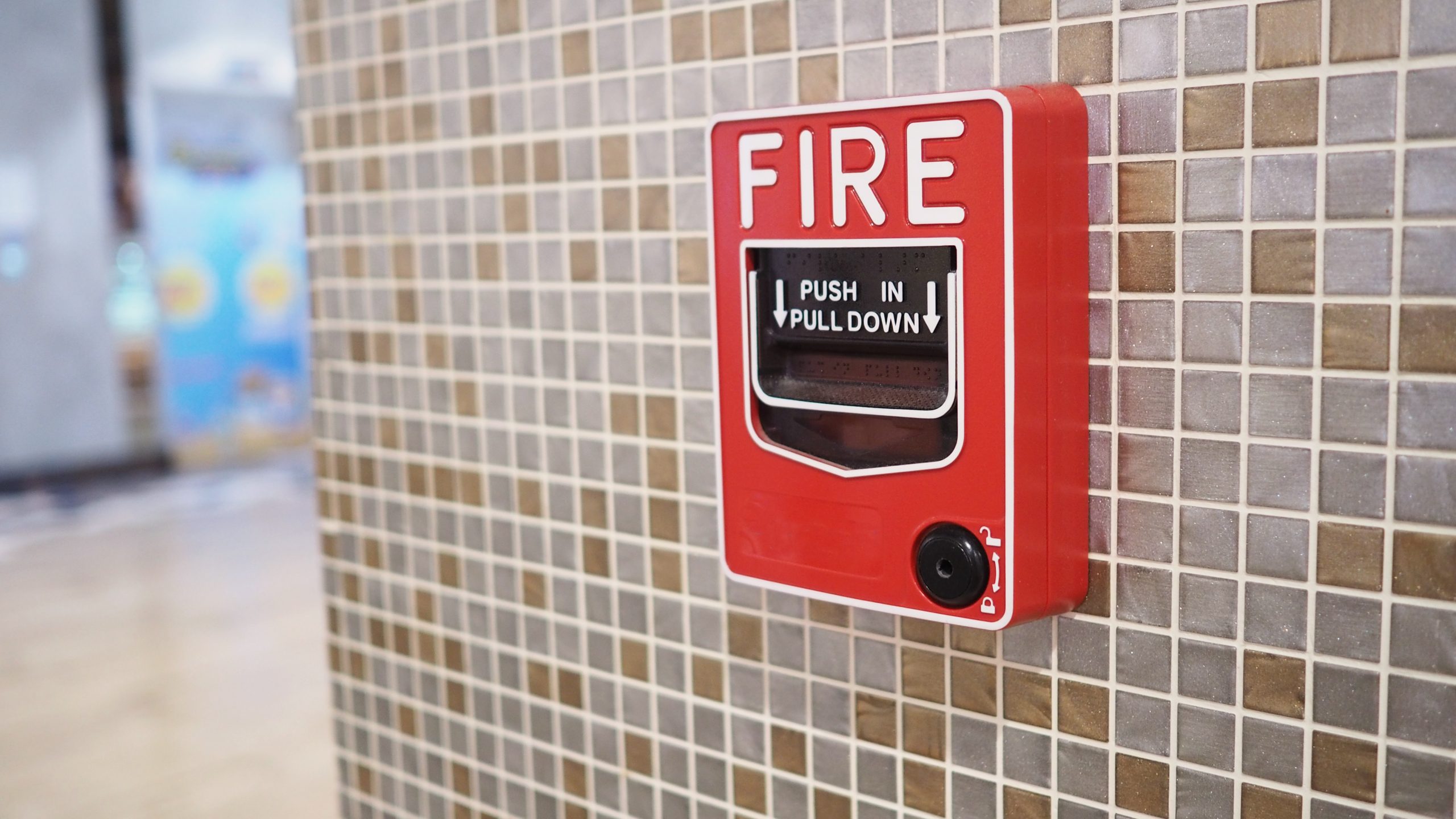
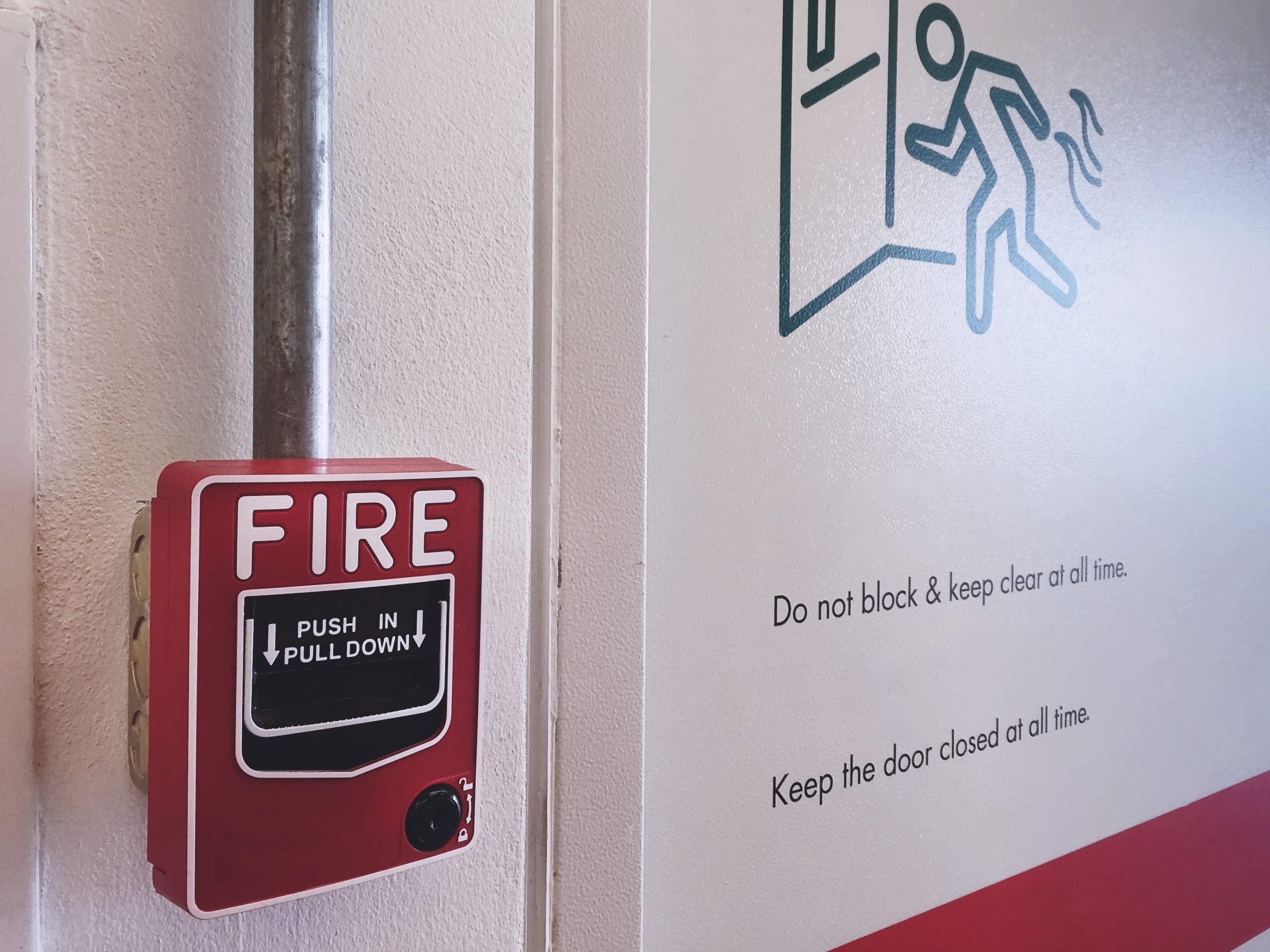
What the semi-annual inspection actually covers is more involved than most owners realize. A certified technician checks the suppression agent levels, inspects all nozzles for blockage or corrosion, tests the fusible links and manual pull station, verifies the fuel shutoff valve operates correctly, and confirms the system is still properly configured for the cooking equipment underneath it.
That last part is important: if you’ve added a fryer, replaced a grill, or reconfigured your cook line since the system was last inspected, the existing system may no longer provide adequate coverage. NFPA 96 requires the system to be redesigned around any significant equipment changes — and that triggers a new permit and a re-inspection by the Nassau County Fire Marshal’s office.
There’s also a UL 300 compliance issue that catches a lot of restaurant owners off guard. Since November 21, 1994, all commercial kitchen fire suppression systems have been required to meet UL 300 standards — a certification that tests whether a system can actually prevent re-ignition of modern cooking oils, which burn at higher temperatures than the animal fats used in older kitchens. Pre-1994 dry chemical systems don’t meet this standard. And as of the 2025 edition of NFPA 96, the grandfather clauses that once protected those older systems have been eliminated. If your kitchen is still running a dry chemical hood system, your insurance carrier may deny fire-related claims — even if the system technically activates during a fire. That’s a risk most restaurant owners don’t know they’re carrying.
Beyond the semi-annual professional inspection, the monthly visual check is something every kitchen manager should be doing. Check that nozzle caps are in place, that the pull station is accessible and unobstructed, and that nothing has been stored in a way that blocks the suppression system’s coverage area. It takes five minutes and it’s the kind of thing a fire marshal notices when they walk in unannounced.
What a Complete Fire System for a Restaurant Looks Like in Practice
The clearest way to understand what a fully compliant restaurant fire system looks like is to think about what happens when something goes wrong. The suppression system activates. The wet chemical agent discharges over the cooking equipment. Simultaneously, the fuel supply cuts off and the fire alarm sounds, alerting staff and triggering a notification to a central monitoring station.
Staff grab the Class K extinguisher as a backup if needed. The fire is contained.
That sequence only works if the systems are integrated correctly — designed, installed, and tested together. When they’re not, you get scenarios where the suppression system activates but the gas doesn’t cut off, or the alarm doesn’t sound, or the monitoring station never gets notified.
What Happens After a Kitchen Fire Suppression System Discharges?
This is the question almost nobody asks until they’re standing in a kitchen covered in wet chemical agent with a line of customers outside. Once a suppression system discharges — whether from an actual fire or an accidental activation — the kitchen cannot legally resume operation until the system has been recharged and recertified by a licensed technician. That means the agent tank is refilled, all nozzles are inspected and replaced if necessary, the fusible links are replaced, and the system is tested to confirm it’s fully operational again.
In Nassau County, reopening after a discharge also typically involves a re-inspection by the Fire Marshal’s office before the kitchen can resume operation. The timeline depends on how quickly a licensed provider can respond, complete the recharge, document the work, and coordinate the re-inspection. This is not the moment to discover that your fire protection company doesn’t answer the phone after hours.
The documentation piece matters here too. Every service call — installation, inspection, recharge, or violation correction — should produce a written report that you can present to the fire marshal, your insurance carrier, and your landlord. Providers who don’t deliver written documentation after every visit are leaving you exposed. If the fire marshal asks for your inspection history and you can’t produce it, the absence of paperwork is treated the same as the absence of service.
Grease buildup in the exhaust system is a major contributing factor in kitchen fires, and it’s also a separate compliance obligation. Studies show that 20 to 25 percent of kitchen fires involve inadequate hood and duct cleaning as a factor. The threshold that triggers a code violation is a grease depth of one-eighth of an inch — roughly the thickness of a dime. That’s not a lot. High-volume kitchens can reach that threshold faster than owners expect, which is why cleaning frequency has to match actual cooking volume, not just a calendar schedule.
Fire Extinguisher Facts Nassau County Restaurant Owners Should Know
The portable fire extinguisher is the most overlooked piece of commercial kitchen fire protection, and it’s the one most likely to be wrong. Not missing — wrong. Many kitchens have extinguishers that were placed there years ago, may be past their inspection date, and may not be the right type for a commercial cooking environment.
NFPA 10 requires that a Class K extinguisher be mounted within 30 feet of commercial cooking equipment — specifically the high-temperature, high-volume equipment like fryers and open-flame grills. This is separate from the ABC extinguishers that should be placed throughout the rest of the facility. Both types need to be inspected annually by a certified technician, with a more thorough internal inspection on a longer cycle depending on the extinguisher type and manufacturer specifications.
What the annual inspection actually covers: the technician checks the pressure gauge, inspects the cylinder for corrosion or damage, verifies the pin and tamper seal are intact, confirms the label is legible, and documents the inspection with a dated tag. An extinguisher without a current inspection tag is a violation — and it’s the kind of thing a health department inspector or fire marshal will flag immediately.
For Nassau County restaurants, there’s a practical advantage to sourcing and maintaining extinguishers through the same provider handling the suppression system and alarms. It means one inspection schedule, one set of documentation, and one point of contact when something needs attention. We’re an authorized Amerex and Badger extinguisher dealer, which means we supply, install, inspect, and recharge — and we keep records that hold up when the fire marshal or your insurance carrier asks for them.
Even a discharged extinguisher that “worked” needs to be recharged and reinspected before it can be considered compliant again. A used extinguisher sitting back on the wall bracket is not a compliant extinguisher. This is one of the more common violations we see during inspections — not because owners are careless, but because nobody told them.
Working With a Nassau County Fire Protection Company That Knows the Code
Nassau County’s fire code enforcement isn’t going to get more lenient. The Fire Commission enforces NFPA 96 uniformly across the county, and the Fire Marshal’s office conducts inspections without much warning. For restaurant owners, that means the question isn’t whether to get compliant — it’s whether you’re working with someone who can actually keep you that way.
The difference between a provider who installs a system and disappears and one who handles suppression, alarms, extinguishers, inspections, and violation correction under one roof is the difference between a compliance headache and a compliance record that holds up. If your inspection tag is overdue, your equipment has changed, or you’ve never been completely sure your systems are integrated correctly, that’s the right place to start.
Island Fire & Defense Systems is licensed in Nassau County, NY, approved by the Nassau County Fire Marshal, and has handled commercial kitchen fire protection for clients ranging from local restaurants to NYU Langone. We’ll give you a straight answer about where you actually stand.