Summary:
October hits and most facility managers are juggling budget submissions, lease renewals, and a to-do list that keeps growing. Fire code compliance usually sits somewhere near the bottom — not because it isn’t important, but because it doesn’t feel urgent until it suddenly is.
Here’s the thing: in Nassau County, the December 31 deadline for annual fire code requirements is real. Miss it, and you’re not just behind on paperwork — you’re out of compliance, potentially facing fines, and dealing with a re-inspection scramble that nobody has time for in January.
This post covers exactly what needs to happen before year-end, why Nassau County’s rules are stricter than most people realize, and where the compliance gaps most commonly show up.
Nassau County Fire Code Requirements: What's Actually on the Clock
Nassau County operates under its own Fire Prevention Ordinance — most recently amended by Ord. No. 59-2024, effective April 1, 2024 — which works alongside the New York State Uniform Fire Prevention and Building Code. When the two conflict, the stricter requirement wins. That’s not a technicality; it’s a rule that catches a lot of building owners off guard, especially those who manage properties across county lines or who’ve been told that passing a state-level inspection means they’re covered.
It doesn’t. Nassau County has its own enforcement structure through the Nassau County Fire Commission and Fire Marshal’s Office, and the requirements they enforce go beyond what Albany mandates. Knowing which clock you’re actually on is the first step to closing out the year without a violation notice landing on your desk.
What the Nassau County Fire Marshal Checks During Year-End Inspections
When a Fire Marshal walks through a commercial property in Nassau County, they’re not just looking at whether a fire alarm panel is mounted on the wall. They’re checking whether the system has been inspected within the past twelve months, whether the inspection was performed by a contractor holding the right county-specific credentials, and whether the documentation is current and complete.
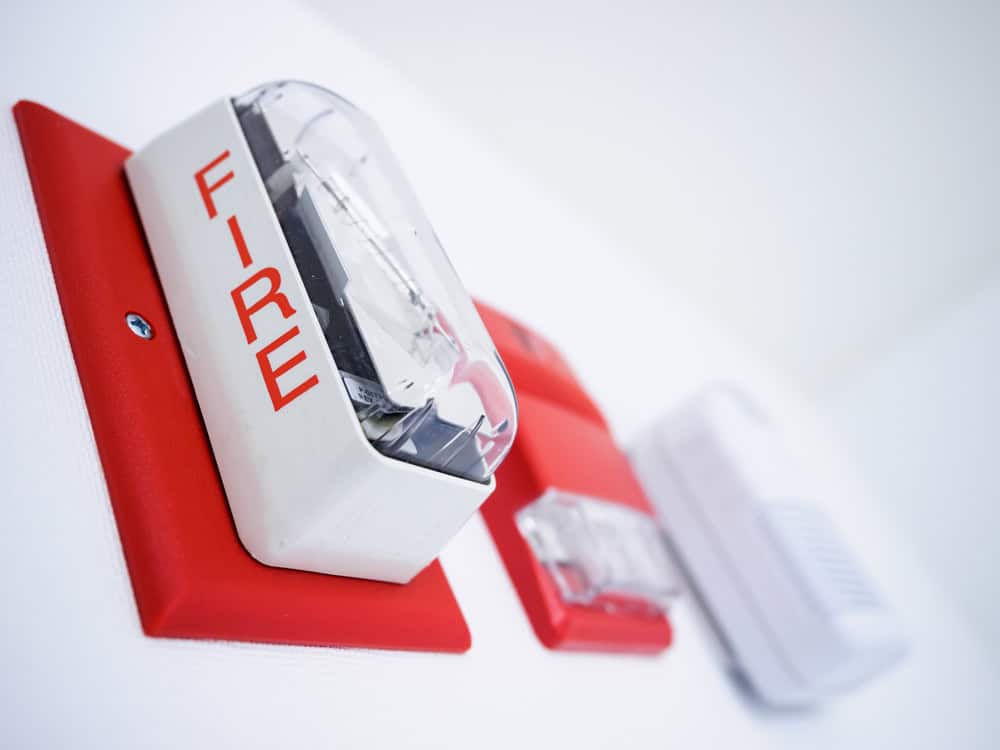
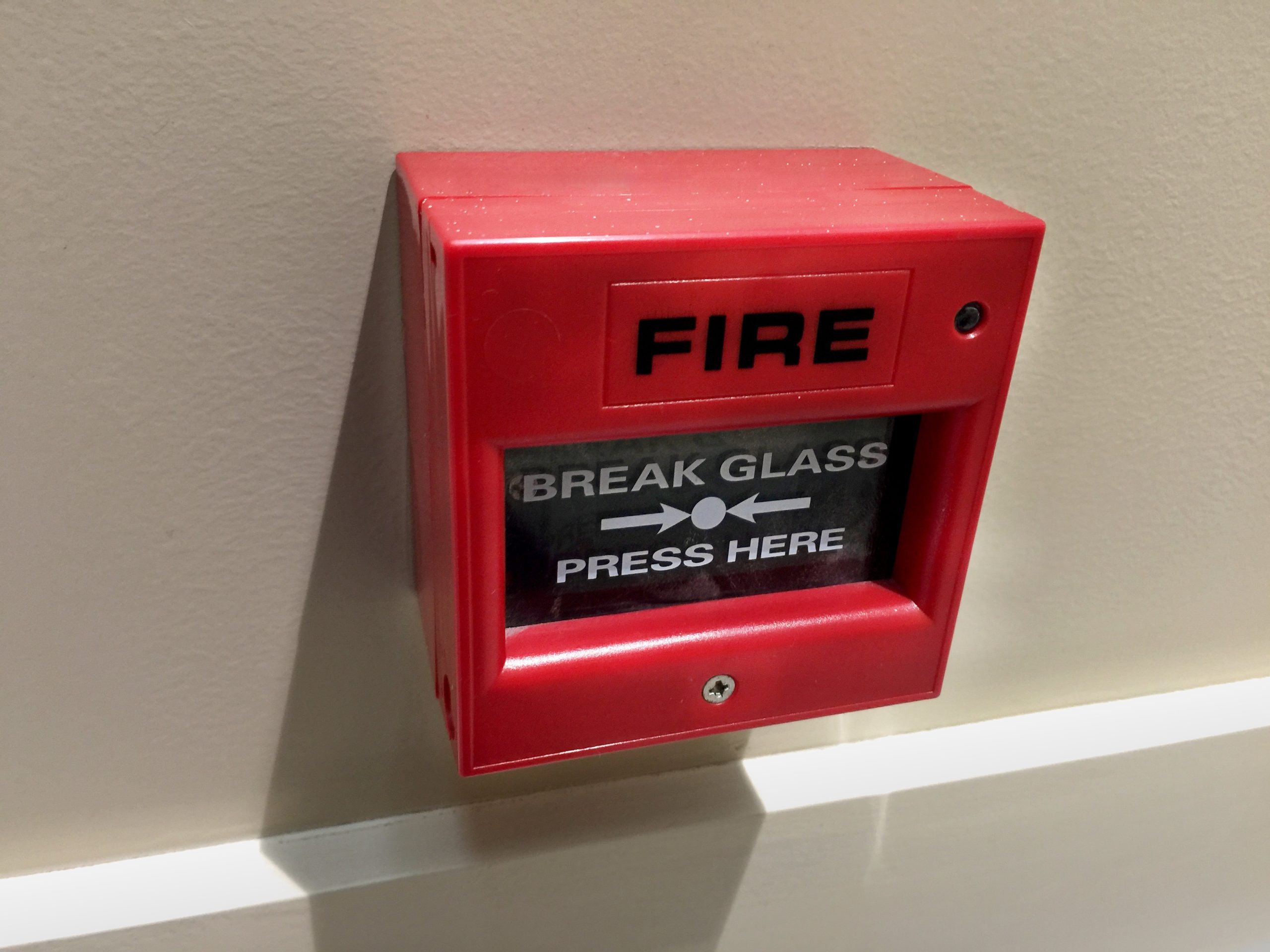
Under NFPA 72 — the National Fire Alarm and Signaling Code — annual inspection and testing of the entire fire alarm system is mandatory. That means every pull station, every smoke detector, every notification appliance. On top of that, smoke detectors require a sensitivity and functionality test every two years. Every single one of those tests needs to be documented. Not just completed — documented. The paperwork is what the Fire Marshal audits, and it’s what your insurance carrier will ask for at renewal.
Fire extinguishers are a separate line item entirely. The New York State Fire Code adopts NFPA 10, which requires every commercial extinguisher to receive a documented annual inspection by a qualified person. The certification tag on the side of the extinguisher is the single most-checked item during a fire marshal walkthrough. An expired tag — or a missing one — is the fastest way to fail an inspection, get fined, or void an insurance claim after a loss.
A single expired tag can trigger an OSHA fine of up to $16,550. That’s not a hypothetical; it’s a documented penalty.
Then there’s sprinkler service. Nassau County’s Mercantile Regulations require fire sprinkler systems to be serviced quarterly — not annually — by a contractor holding a valid Type 2 License for Inspection, Testing and Maintenance from the Nassau County Fire Marshal’s Office. The technician must also hold a Certificate of Fitness for the same. State licensing alone doesn’t satisfy this requirement.
If the contractor you’ve been using doesn’t hold Nassau County-specific credentials, the quarterly service records they’ve been providing you may not hold up during a formal inspection.
The Documentation Gap That Gets Buildings Cited
Here’s what most people don’t expect: the majority of fire code violations issued in Nassau County aren’t about missing equipment. They’re about missing or expired documentation. The system might be installed correctly. The extinguishers might be fully charged. But if the inspection certificate is expired, the test records aren’t on file, or the maintenance log has gaps, the building is out of compliance — and the Fire Marshal will cite it accordingly.
FDNY issued over 22,000 violations for fire code infractions in 2024 alone, with fines ranging from $500 to $5,000 per violation. The dismissal rate for those violations is roughly 12%, which means most of them stick. If a building receives a repeat violation within 18 months of the first one at the same premises, the fines escalate significantly and can result in building closure orders.
Violations also appear in property records, which can affect sales, refinancing, and Certificates of Occupancy — consequences that go well beyond the fine itself.
The fix isn’t complicated, but it requires getting ahead of the deadline. Annual inspections need to be scheduled and completed before December 31. Quarterly sprinkler service records need to be current. Extinguisher certification tags need to be valid. And all of it needs to be documented in a format the Fire Marshal will actually accept — which means the contractor producing those records needs to be credentialed in Nassau County specifically.
This is why the Q4 window matters so much. Buildings on a calendar-year inspection cycle have a hard deadline, and contractors who serve Nassau County get booked out as that deadline approaches. Waiting until mid-December to schedule an annual fire alarm inspection is a gamble that doesn’t always pay off.
NFPA 72 and Nassau County: Where the Two Overlap — and Where Nassau County Goes Further
NFPA 72 sets the national baseline for fire alarm system installation, testing, inspection, and maintenance. It’s the standard that governs what needs to be tested, how often, and by whom. Most commercial building owners have at least heard of it. What fewer people realize is that Nassau County’s local ordinance layers additional requirements on top of it — and in any case of conflict, Nassau County’s stricter standard applies.
Understanding where those two frameworks intersect is important for any facility manager trying to close out the year without surprises. NFPA 72 gives you the floor. Nassau County’s ordinance, enforced by the Fire Marshal’s Office, tells you what the actual ceiling looks like in this market.
Fire Safety Regulations: What NFPA 72 Actually Requires for Commercial Buildings
NFPA 72 establishes a tiered inspection schedule that most commercial building owners aren’t fully aware of. It’s not just an annual visit from a technician. The standard calls for weekly and monthly visual checks that facility staff can perform themselves, quarterly testing of specific components including waterflow switches and supervisory devices, and a comprehensive annual professional inspection that must be performed by a licensed contractor.
The annual inspection covers the full system: alarm initiating devices, notification appliances, control equipment, power supplies, and interconnected systems. Smoke detectors specifically require a sensitivity test every two years to confirm they’re operating within the manufacturer’s specified range — a test that requires calibrated equipment and a trained technician, not just a visual check.
Documentation requirements under NFPA 72 are equally specific. Every inspection, test, and maintenance activity needs to be recorded with the date, the name of the inspector, the results, and any corrective actions taken. Those records aren’t just good practice — they’re mandatory. And in Nassau County, they’re what the Fire Marshal reviews when they walk through your building.
For buildings that have undergone renovations, tenant build-outs, or system modifications, the compliance picture gets more complex. Changes to the physical layout of a space can affect detector placement, notification appliance coverage, and egress requirements. In those situations, updated fire alarm drawings are often required before the Fire Marshal will sign off on occupancy.
Having a contractor who can produce those drawings in-house — rather than waiting on a third-party engineering firm — can be the difference between meeting a year-end deadline and pushing the project into Q1.
Nassau County vs. New York State Fire Code: Why Local Rules Matter More Than You Think
One of the most common misconceptions among Nassau County facility managers is that compliance with the New York State Uniform Fire Prevention and Building Code is sufficient. It’s not — and the gap between the two can be significant depending on the type of building and its occupancy classification.
Nassau County’s Fire Prevention Ordinance establishes requirements that go beyond the state minimum in several areas. Sprinkler service frequency is the clearest example: while the state code sets a general inspection cadence, Nassau County’s Mercantile Regulations specifically require quarterly service by a contractor licensed by the Nassau County Fire Marshal’s Office. That’s a county-specific requirement that a state-licensed contractor who doesn’t hold Nassau County credentials cannot fulfill.
Emergency lighting adds another layer. Where required, Nassau County mandates that the annual test of the emergency lighting system be witnessed by the Nassau County Fire Marshal — not simply performed and documented by the contractor. That’s a meaningful procedural distinction that affects scheduling, since it requires coordinating with the Fire Marshal’s Office directly rather than just booking a service appointment.
For buildings that span multiple jurisdictions — a property manager overseeing locations in Nassau County, Suffolk County, and New York City, for example — the compliance requirements in each jurisdiction are distinct. Suffolk County operates through a decentralized model with 109 volunteer fire departments, each with its own enforcement approach. Nassau County uses a centralized model through a single Fire Commission, which means there’s one authoritative standard and one set of contractor credentials that must be met. NYC has its own FDNY approval requirements entirely.
Managing compliance across all three requires a contractor who’s credentialed and approved in each — not just the one closest to their home base. We hold Nassau County licenses 2019AEL75352 and PEL000000259, Suffolk County license #180, and NYS License #12000325006, and we’re approved by both the Nassau County Fire Marshal and FDNY. That’s why our inspection documentation holds up when it matters.
Fire Code Compliance Before December 31: Where to Start
If your annual fire alarm inspection hasn’t been scheduled yet, that’s the first call to make. From there, confirm that your extinguisher certification tags are current, that your quarterly sprinkler service records are up to date, and that the contractor performing your inspections holds Nassau County-specific credentials — not just a state license.
The year-end window closes faster than it feels like it will. Contractors who serve Nassau County get booked out in November and December, and buildings that wait too long end up either missing the deadline or rushing through an inspection that doesn’t produce documentation the Fire Marshal will accept.
We handle fire alarm inspections, extinguisher service, suppression system maintenance, and fire safety consulting for commercial properties across Nassau County — with the local credentials, NICET-certified technicians, and in-house engineering capabilities to close out your year-end compliance checklist without the scramble. If you’re not sure where your building stands, reach out and we’ll help you answer that question.