Explore firsthand accounts of our exceptional service and dedication to safety through the glowing testimonials from our satisfied clients.
You’re not looking for the cheapest fire alarm system. You need one that passes inspection the first time, doesn’t pull you away from actual work with false alarms every other week, and keeps your insurance rates where they should be.
That’s what a properly installed fire detection system does. It meets New York fire code requirements without the back-and-forth with inspectors. It integrates with your building’s existing setup without requiring a complete overhaul. And when there’s an actual emergency, it alerts the right people immediately while giving everyone inside enough time to get out safely.
Buildings without working commercial fire alarm systems often pay 50% more for property insurance. That’s not a scare tactic—that’s what underwriters charge when they see gaps in your fire protection. A code-compliant system brings those rates back down and keeps you off the wrong side of liability if something ever does happen.
Island Fire & Defense Systems holds NYS License #12000325006, Nassau County licenses, and Suffolk County license 180. We’re NICET certified, MBE certified, and members of the New York Fire Alarm Association. Those credentials matter because fire alarm work in New York isn’t something you hand off to whoever shows up with a van.
We’re an authorized Notifier by Honeywell dealer, which means you’re getting equipment designed for commercial and industrial use—not residential-grade smoke detectors stretched beyond what they’re built for. Our central station monitoring is UL-listed and FDNY-approved, staffed 24/7 by people trained to handle actual emergencies.
We’ve worked with property managers, restaurant owners, warehouse operators, and facility managers throughout West Sayville, Ronkonkoma, Bohemia, Islandia, and surrounding Long Island communities. Most of them came to us after dealing with systems that failed inspections, monitoring services that didn’t answer, or contractors who disappeared after installation.
We start with a walkthrough of your property to understand your layout, occupancy type, and any existing fire protection equipment. This isn’t a sales pitch—it’s a technical assessment to determine what your building actually needs to meet NFPA 72 and New York fire code requirements.
From there, we design a system that fits your space. That might include smoke detectors, heat sensors, manual pull stations, notification devices, and a fire alarm control panel that ties everything together. If you need a BDA system for emergency responder radio communication, we handle that too. Everything gets mapped out before installation starts so there are no surprises mid-project.
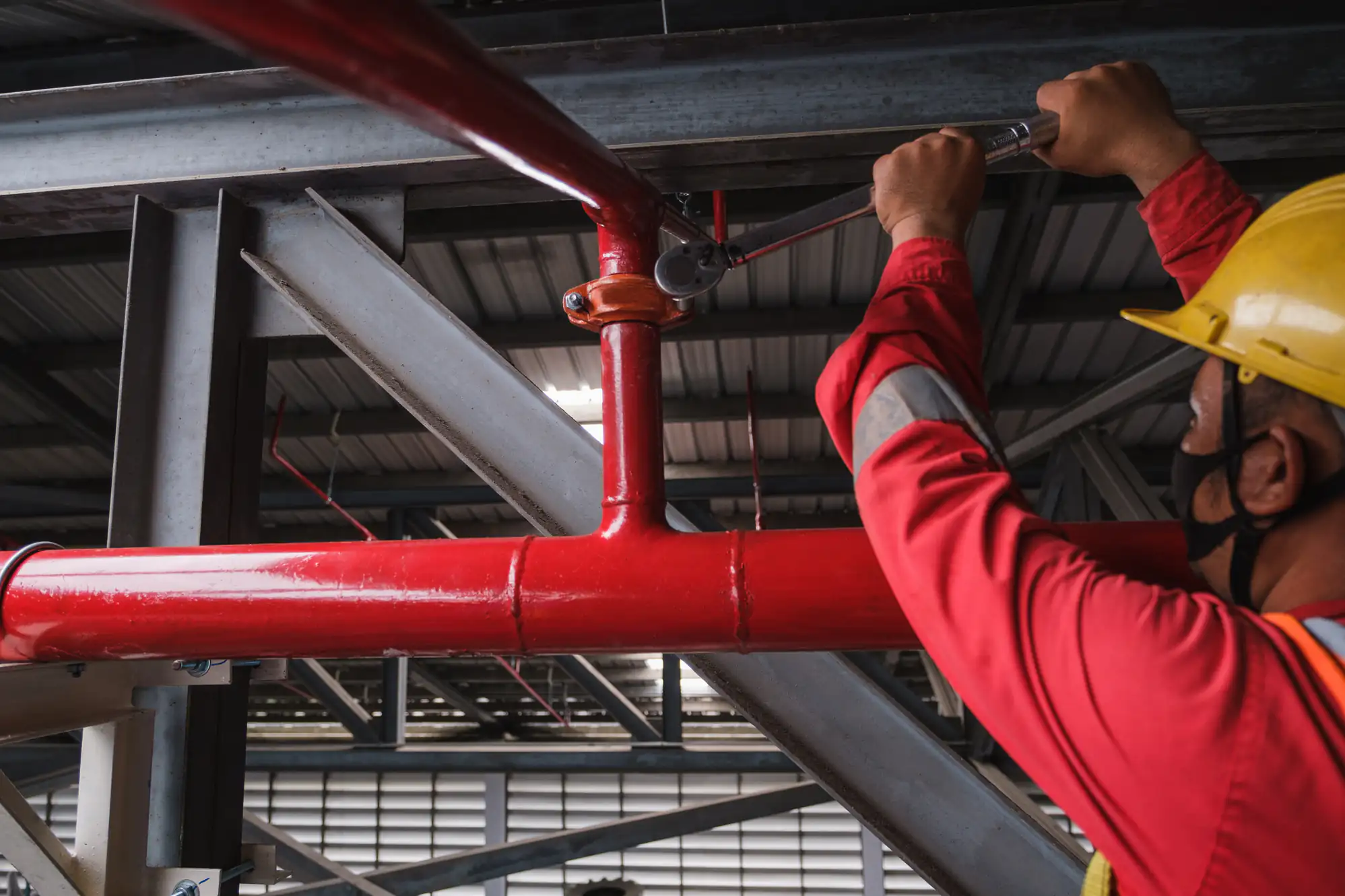
Installation is scheduled around your operations whenever possible. Our NICET certified technicians run wiring, mount devices, program the control panel, and integrate monitoring. Once everything’s in place, we test the full system to make sure every detector, alarm, and notification device works exactly as it should.
After activation, you get documentation for your fire safety log, a monitoring agreement with our UL-listed central station, and a maintenance schedule that keeps your system compliant. If you ever get a violation notice or need something corrected, we handle that too.
Ready to get started?
A complete fire alarm system includes more than just smoke detectors on the ceiling. You’re getting a fire alarm control panel that monitors every device in real time, initiating devices like smoke and heat detectors positioned based on your building’s layout, and notification appliances—strobes and horns—that meet ADA requirements and are loud enough to be heard throughout your space.
Manual pull stations go near exits so anyone can trigger the alarm if they see fire. If your building requires it, we install a BDA system to boost radio signals for firefighters and emergency responders—something that’s becoming standard in larger commercial properties across Suffolk and Nassau counties.
Everything connects to 24/7 monitoring through our FDNY-approved central station. When an alarm goes off, trained operators verify the alert and dispatch emergency services if needed. You’re not relying on someone in the building to notice and call 911—that happens automatically.
In West Sayville and throughout Long Island, commercial fire alarm installation costs typically run between $4 and $12 per square foot depending on building size and complexity. That includes equipment, labor, programming, testing, and monitoring setup. We provide a fixed quote after the site assessment so you know exactly what you’re paying before any work starts.
NFPA standards and New York fire code enforce a ten-year replacement cycle for most fire alarm system components. That doesn’t mean your entire system fails at year ten, but detectors degrade over time and become less reliable at sensing smoke or heat.
If your building still has a system installed in 2015 or earlier, you’re approaching the point where inspectors will start flagging outdated equipment. Smoke detector replacement before you’re forced into it gives you more control over timing and cost instead of scrambling when a violation notice shows up.
Newer systems also integrate better with building management platforms and monitoring technology. If you’re still using a panel from the early 2000s, you’re likely missing features that make maintenance easier and reduce false alarms.
A smoke alarm is a standalone device—usually battery-powered or hardwired—that sounds an alarm when it detects smoke. You see these in homes and small spaces. They’re not monitored, they don’t communicate with other devices, and they don’t alert anyone outside the building.
A fire detection system is a network of devices connected to a central fire alarm control panel. It includes smoke detectors, heat detectors, manual pull stations, and notification devices all working together. When one device triggers, the whole system responds—alarms sound throughout the building, and a signal goes to a monitoring center that dispatches emergency services.
Commercial properties in West Sayville and across Long Island are required to have fire detection systems, not just individual smoke alarms. The system has to meet NFPA 72 standards, integrate with your building’s layout, and connect to monitoring. That’s not something you can piece together with hardware store smoke detectors.
False alarms usually come from outdated detectors, wrong detector placement, or sensitivity settings that haven’t been adjusted for your space. Smoke detectors near kitchens, loading docks, or areas with dust and steam will trip constantly if they’re not the right type for that environment.
Older systems also lack the intelligence to differentiate between actual smoke and nuisance sources like cooking vapor or cleaning chemicals. Newer fire alarm systems use multi-criteria detection and algorithms that reduce false alarms by confirming conditions before triggering a full evacuation.
If you’re dealing with frequent false alarms, the fix isn’t just resetting the panel—it’s identifying why the system is oversensitive and reconfiguring it properly. That might mean relocating detectors, switching to heat sensors in certain areas, or upgrading to smarter devices. We handle false alarm troubleshooting as part of our violation correction services because we know how disruptive it is to your operations when alarms go off for no reason.
BDA systems—Bi-Directional Amplifiers—boost radio signals inside buildings so firefighters and emergency responders can communicate when they’re inside your property. New York fire code requires them in many commercial buildings, especially larger structures where concrete, steel, and building materials block radio frequencies.
If your building is over a certain square footage, has multiple floors, or includes areas like basements and interior spaces where radio signals don’t penetrate well, you likely need a BDA system. Inspectors test for this during fire safety inspections, and if your building doesn’t have adequate radio coverage, you’ll get a violation.
BDA system installation involves placing amplifiers and antennas throughout your building to ensure consistent signal strength in every area. It integrates with your fire alarm system and has to be tested annually to confirm it’s working. We’re certified to install and maintain BDA systems across Suffolk and Nassau counties, and we handle the testing and documentation required to stay compliant.
Commercial fire alarm monitoring typically costs between $40 and $150 per month depending on your system size, number of zones, and the level of service you need. That covers 24/7 monitoring through a UL-listed central station, emergency dispatch when an alarm triggers, and regular system check-ins to confirm everything’s communicating properly.
Some monitoring agreements include routine maintenance visits and priority service for repairs. Others are monitoring-only, and you pay separately for service calls. We include monitoring setup with every fire alarm installation and offer maintenance plans that bundle monitoring, inspections, and repairs into one predictable monthly cost.
The real cost of not having monitoring is much higher. If your fire alarm system isn’t connected to a central station, you’re relying on someone in the building to notice the alarm and call 911. That delay can turn a small fire into a total loss. Insurance companies know this, which is why monitored buildings get better rates.
Yes. Violation correction is one of the most common calls we get from property managers and building owners across Long Island. Most violations come from outdated equipment, missing documentation, failed inspections, or systems that were installed incorrectly in the first place.
We start by reviewing the violation notice to understand exactly what the inspector flagged. Then we assess your current system to determine whether it needs repairs, upgrades, or full replacement. In many cases, you can bring an older system up to code without ripping everything out—it just needs specific components updated or reconfigured.
Once the work is done, we provide all the documentation required to clear the violation, including test reports, equipment certifications, and updated fire safety logs. If your building needs a re-inspection, we coordinate with the fire marshal’s office to schedule it and make sure everything passes the first time.
Other Services we provide in West Sayville