Explore firsthand accounts of our exceptional service and dedication to safety through the glowing testimonials from our satisfied clients.
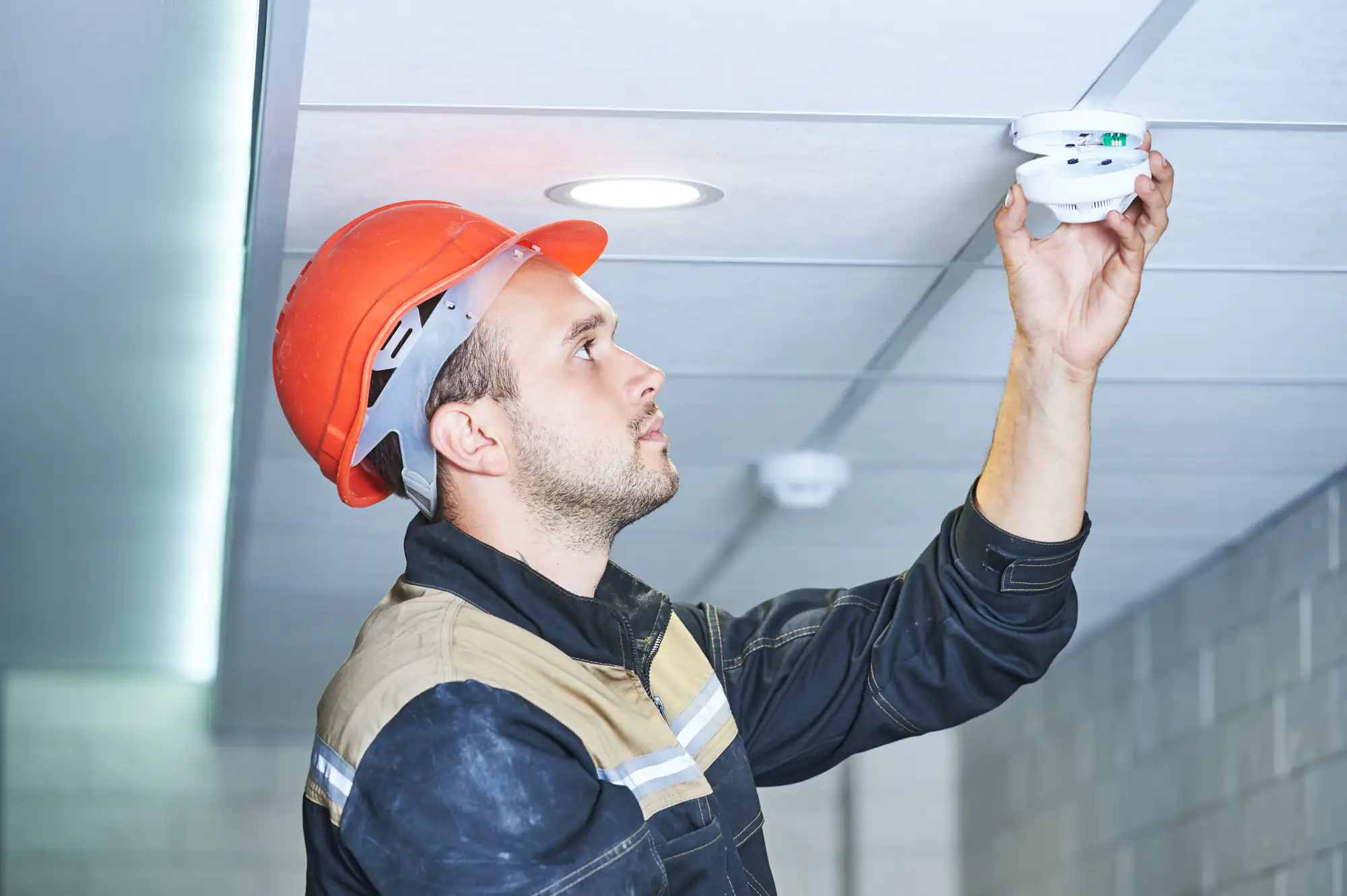
You’re dealing with fire code violations that carry fines between $800 and $5,000. Or maybe your building failed inspection because the smoke detectors are outdated, the fire alarm system has dead zones, or emergency responders can’t communicate inside your facility. Either way, you need it fixed fast, done right, and documented properly so it doesn’t happen again.
That’s where fire detector installation becomes more than just mounting devices on a ceiling. It’s about understanding which detection technology works for your space, ensuring proper placement to meet NFPA standards, integrating with your existing fire alarm or building automation systems, and making sure everything passes inspection the first time.
When the work is done, you’re not just compliant. You have a fire detection system that responds early, communicates clearly with emergency personnel, and gives you documentation that satisfies inspectors, insurance carriers, and local authorities across Lake Ronkonkoma, Bohemia, Holbrook, Hauppauge, and the rest of Suffolk County.
We hold active licenses in New York State (License #12000325006), Nassau County, and Suffolk County. We’re FDNY approved for fire alarm inspection, testing, and service through June 2026, and we’re an authorized Notifier by Honeywell dealer.
Our technicians are NICET certified, which means they’ve passed third-party testing on fire alarm system design, installation, and inspection standards. We’re also MBE certified and members of the New York Fire Alarm Association, which keeps us current on code changes and enforcement trends across the region.
We’ve worked in commercial properties, restaurants, warehouses, healthcare facilities, and high-value residential buildings throughout Lake Ronkonkoma, Ronkonkoma, Islandia, Nesconset, Lake Grove, Central Islip, Sayville, Oakdale, Centereach, Farmingville, Patchogue, Smithtown, Stony Brook, Medford, Bay Shore, Commack, Port Jefferson, and Deer Park. If your building is in Suffolk, Nassau, or NYC, we know the local fire marshals, the inspection requirements, and what it takes to pass.
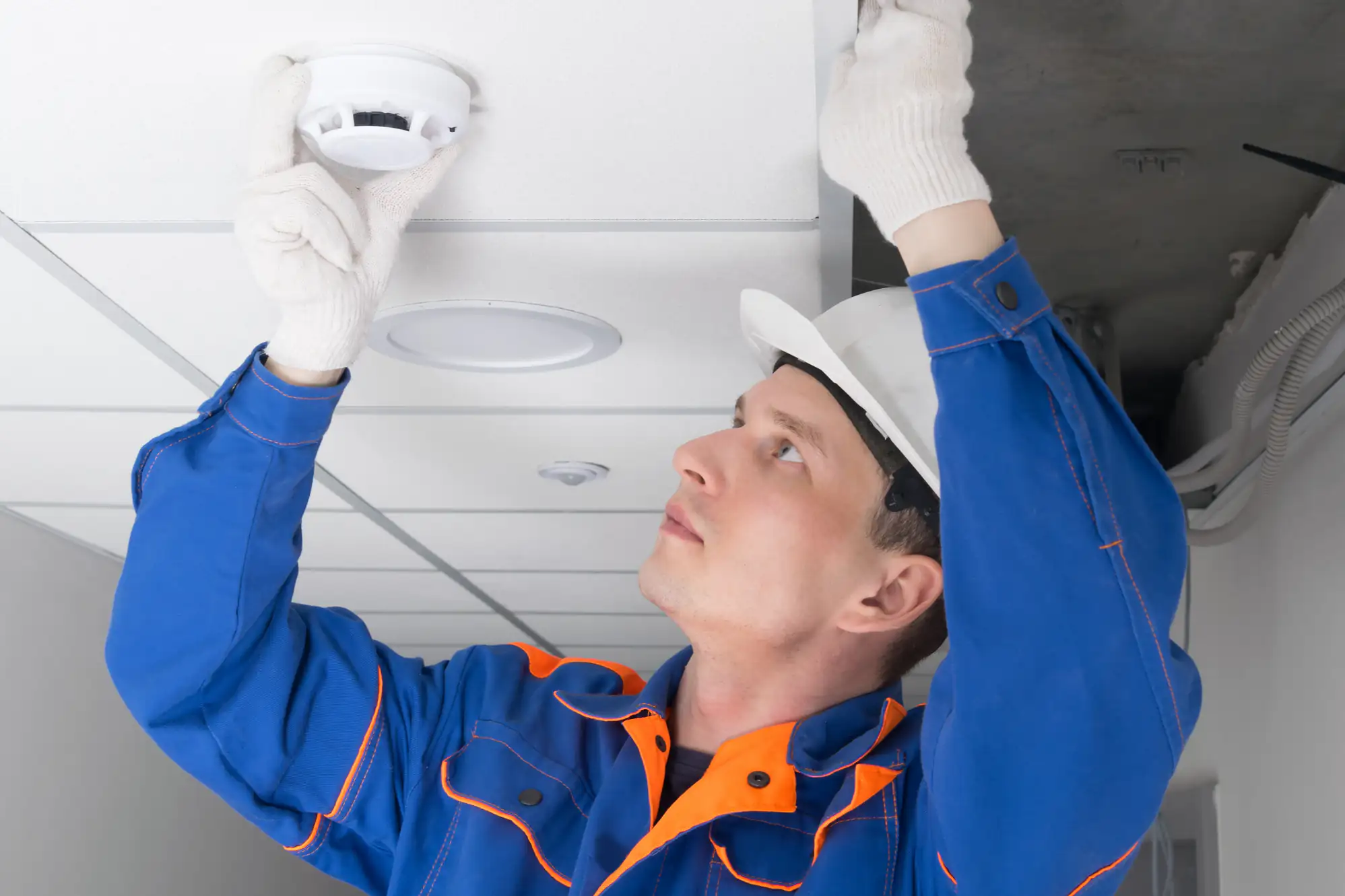
First, we assess your current system or the space where fire detectors need to be installed. That includes reviewing any violation notices, checking detector placement against current code, testing existing devices for functionality, and identifying communication dead zones that could prevent emergency responders from operating safely inside your building.
Next, we design the installation or upgrade. This isn’t about slapping up smoke detectors wherever there’s a blank ceiling. We map out detector type and placement based on ceiling height, airflow patterns, occupancy type, and local fire code requirements. If you need a BDA system to boost emergency radio signals, we integrate that into the plan. If you’re replacing an aging fire alarm panel, we coordinate the detector upgrade with the new control system.
Then we install, test, and document everything. Our NICET certified technicians mount the detectors, wire them into your fire alarm system, program the panel, and run full system tests to confirm every device communicates properly. You get complete documentation for your records, which is critical when the fire marshal shows up or your insurance carrier requests proof of compliance.
After installation, we can handle ongoing inspections, monitoring, and service so your fire detection system stays compliant year after year.

Ready to get started?
You get a full system assessment that identifies code violations, outdated equipment, and coverage gaps. We don’t assume your current setup is correct just because it’s been there for years. Buildings change, codes change, and occupancy types change. We verify everything against current NFPA and local fire code requirements specific to Lake Ronkonkoma and Suffolk County.
We install smoke detectors, heat detectors, combo smoke and CO alarms, and specialized detection devices for kitchens, mechanical rooms, and high-ceiling spaces. If you’re upgrading to smart fire alarm technology with IoT integration, we handle that too. Our work includes Notifier by Honeywell systems, Kidde devices, and Nest-compatible fire alarms depending on your building’s needs and budget.
You also get proper integration with your fire alarm panel, building automation system, or monitoring service. A fire detector that isn’t wired into a monitored alarm system is just a local alert. We make sure detection triggers building-wide notification, emergency responder dispatch, and proper documentation for compliance purposes.
Finally, you get violation correction services if you’re dealing with FDNY or local fire marshal citations. We know what inspectors are looking for, and we know how to document corrections so you don’t get repeat violations or escalating fines.
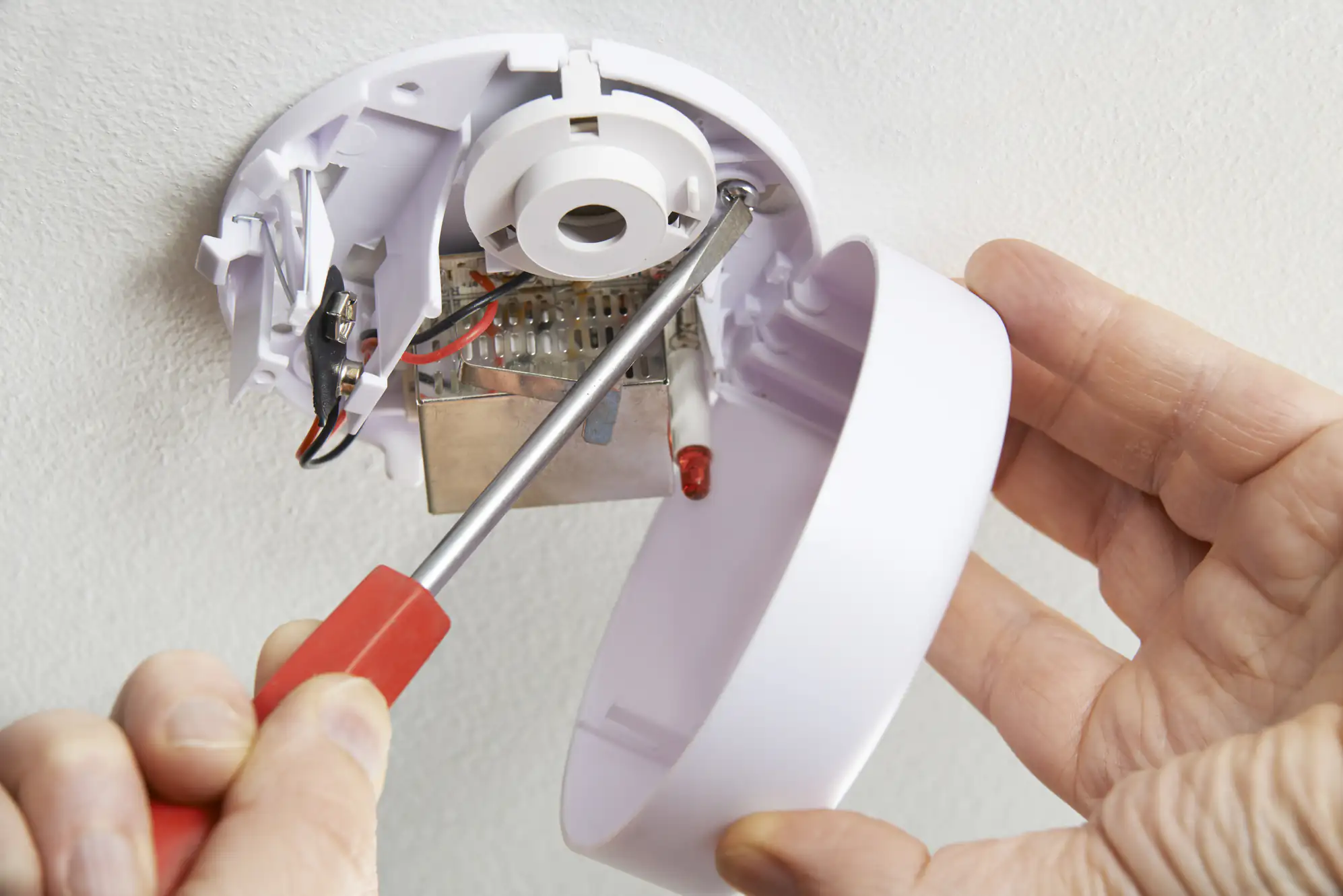
If your smoke detectors or fire alarm system is more than 10 years old, you’re likely due for replacement. Detector sensors degrade over time, and older models don’t meet current code requirements for sensitivity, communication protocols, or integration with building automation systems.
You’ll also need upgrades if you’ve received a fire code violation, failed an inspection, changed your building’s occupancy type, or added square footage. For example, converting office space into a restaurant triggers different fire detection requirements because of cooking equipment and grease vapor. Same goes for adding a data center, medical suite, or any high-value space where early fire detection is critical.
Another sign is if emergency responders have reported communication dead zones in your building. Many municipalities now require BDA systems to boost radio signals, and fire detector installation often happens at the same time to bring the entire fire protection system up to current standards.
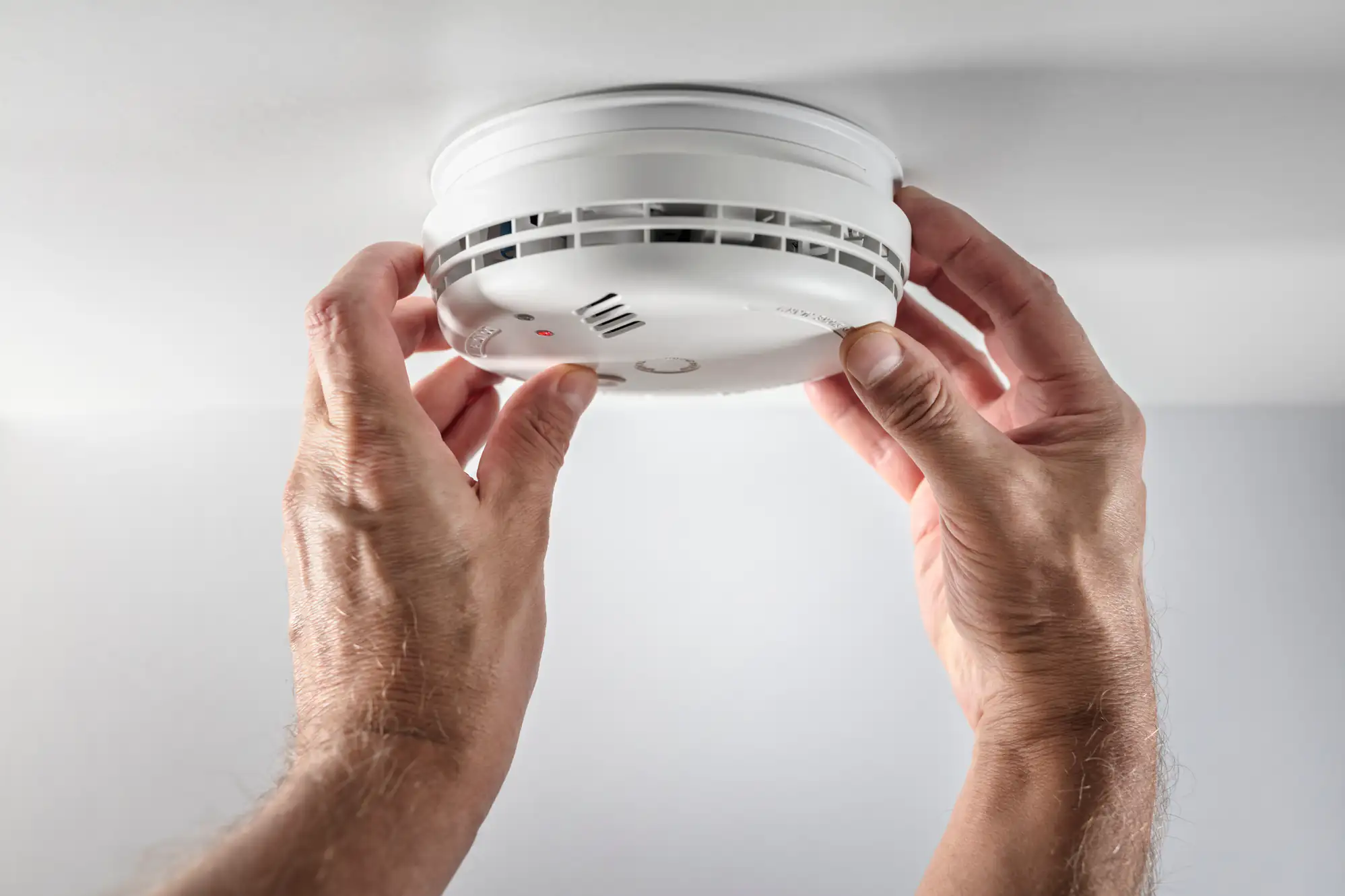
Smoke detectors sense airborne particles from combustion and are required in most occupied spaces. They come in ionization and photoelectric types. Ionization detectors respond faster to flaming fires, while photoelectric detectors respond faster to smoldering fires. Many commercial installations use both technologies in a single device.
Heat detectors activate when temperature reaches a set threshold or rises rapidly. They’re used in areas where smoke detectors would cause false alarms, like kitchens, mechanical rooms, or dusty warehouses. Heat detectors don’t replace smoke detectors; they supplement them in specific environments.
Combo smoke and CO alarms detect both smoke and carbon monoxide. They’re common in residential settings and some commercial spaces with fuel-burning equipment. In Long Island, where many buildings have aging HVAC systems and backup generators, combo alarms provide an extra layer of protection against CO poisoning, which kills without visible warning signs.
For a small commercial space like a retail store or office suite, installation typically takes one to two days. That includes mounting detectors, running wiring, connecting to the fire alarm panel, programming the system, and running full tests to confirm everything communicates properly.
Larger buildings like warehouses, multi-tenant properties, or healthcare facilities can take several days to a couple weeks depending on the number of devices, ceiling heights, and whether we’re integrating with existing fire alarm infrastructure or installing a completely new system. High-ceiling spaces require lifts and additional safety protocols, which adds time.
If you’re dealing with a fire code violation and need emergency service, we can often get critical detectors installed and tested within 24 to 48 hours to satisfy immediate compliance requirements. Then we schedule follow-up work to complete the full system upgrade without disrupting your operations.
Most commercial buildings in Suffolk County are required to have monitored fire alarm systems, which means when a detector activates, it sends a signal to a central monitoring station that dispatches emergency responders. Local alarms alone don’t meet code for most occupancy types because they rely on someone being present to hear the alarm and call 911.
Monitored systems also create a digital record of every alarm, test, and system event. That documentation is critical during inspections and insurance audits. If a fire occurs and your system wasn’t monitored, you could face liability issues even if detectors were installed correctly.
There are some exceptions for small residential properties or specific low-occupancy buildings, but if you’re managing a commercial space, restaurant, warehouse, or multi-family property in Lake Ronkonkoma or anywhere across Long Island, monitored fire detection is almost always required. We can connect your system to a monitoring service as part of the installation.
False alarms usually mean your detectors are wrong for the environment, installed in the wrong location, or past their service life. Smoke detectors in kitchens will false alarm from cooking vapor. Detectors near HVAC vents will false alarm from dust and airflow. Detectors older than 10 years will false alarm because the sensors are degraded.
The fix isn’t to disable the detector or ignore the problem. Repeated false alarms lead to fines in many municipalities, and worse, they train occupants to ignore alarms, which creates life-safety risks during an actual fire. We troubleshoot the root cause by testing detector sensitivity, checking placement against code requirements, and swapping in the right detector type for each location.
In some cases, upgrading to addressable fire alarm systems eliminates false alarms because each detector has a unique identifier. The panel can tell you exactly which device activated and why, so you’re not evacuating an entire building because of steam in one bathroom. That level of control also makes inspections easier and reduces costly false alarm fees.
In New York, fire alarm and fire detection system work requires a licensed contractor. You can’t legally install, alter, or repair fire detectors connected to a fire alarm system unless you hold the appropriate state and local licenses. That applies to commercial buildings and most multi-family residential properties.
Even if you have in-house maintenance staff, they can’t perform fire alarm work unless they’re licensed and the work is done under a licensed fire alarm company. The reason is liability and code compliance. If a fire occurs and your system wasn’t installed by a licensed professional, you face serious legal and insurance consequences.
DIY smoke detectors are allowed in single-family homes where they’re battery-operated and not connected to a monitored system. But the moment you’re dealing with hardwired detectors, fire alarm panels, or commercial occupancy, you need a licensed contractor. We hold active licenses in New York State, Nassau County, and Suffolk County, and our technicians are NICET certified, so the work is done right and documented properly from the start.
Other Services we provide in Lake Ronkonkoma