Explore firsthand accounts of our exceptional service and dedication to safety through the glowing testimonials from our satisfied clients.
You’re not dealing with surprise violations during your next fire marshal inspection. Your insurance company isn’t flagging outdated equipment or threatening premium increases. Your building passes code without last-minute scrambling or expensive retrofits.
That’s what proper fire safety consulting does. It puts you ahead of problems instead of reacting to them.
In Islip and across Suffolk County, fire code compliance isn’t uniform. Different fire districts mean different requirements. What passes in one area might fail in another. You need someone who knows the local codes, understands NFPA 101 life safety code requirements, and can navigate the international fire code standards that apply to your specific property type. Not someone reading off a checklist.
We’ve been handling fire protection systems across Islip, Suffolk County, Nassau County, and NYC for years. Island Fire & Defense Systems holds NYS License #12000325006, Suffolk County license 180, and we’re NICET certified—which means our team has proven technical competency, not just sales training.
We’re also a Notifier by Honeywell authorized dealer and MBE certified. But credentials only matter if they translate to results. What matters more is that we’ve corrected violations for property owners who were facing fines, upgraded systems that hadn’t been touched in decades, and helped facility managers sleep better knowing their buildings won’t fail the next inspection.
Islip properties face unique challenges. Older commercial buildings with outdated fire alarm systems. Warehouses that changed use but never updated their fire protection. Restaurants dealing with kitchen suppression requirements. We’ve seen it all locally, and we know what works here.
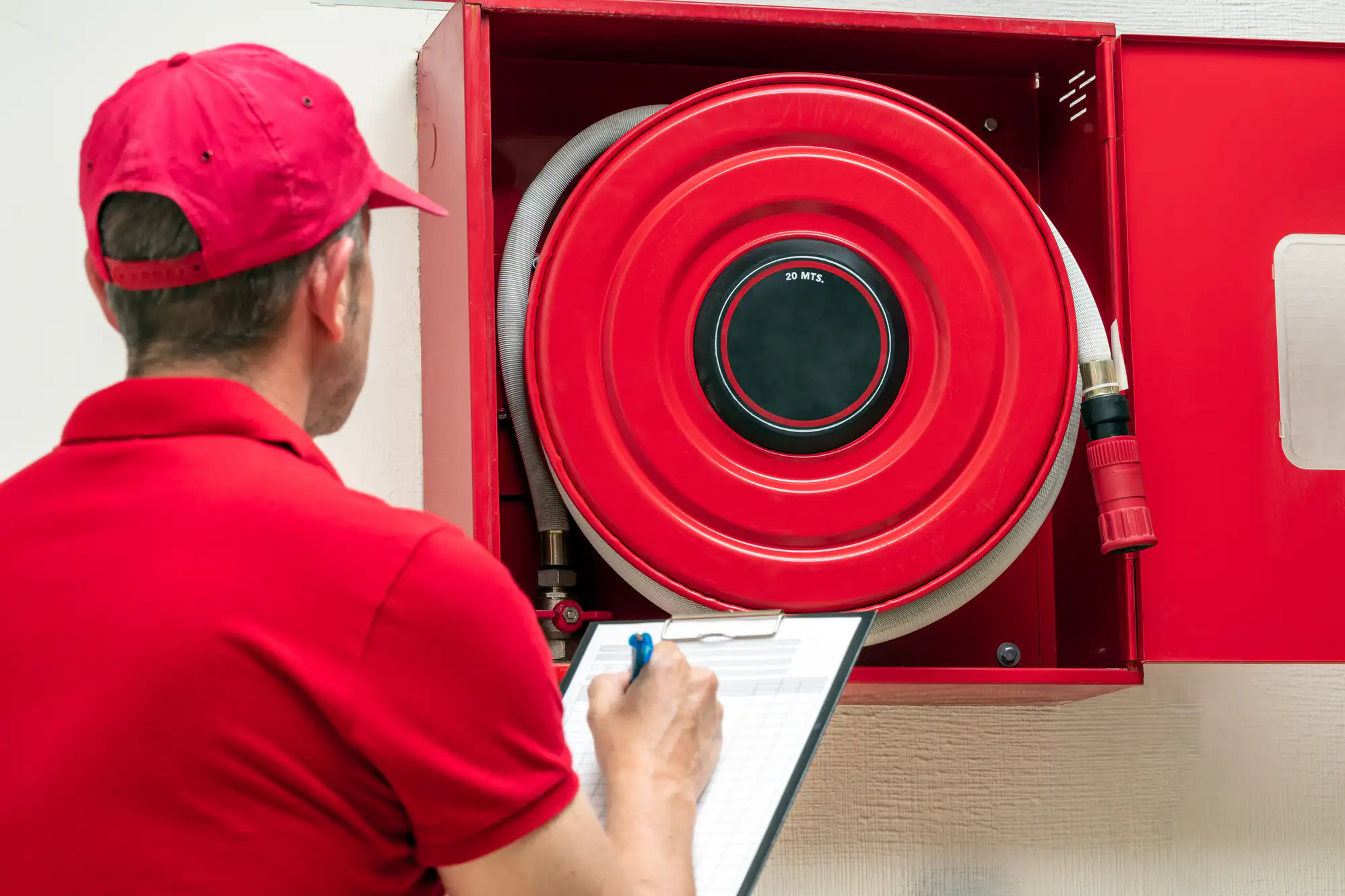
First, we assess what you currently have. That means inspecting your fire alarm systems, suppression equipment, egress routes, and emergency lighting. We’re checking against NFPA 101 life safety code, ICC building code, and local Suffolk County requirements. You get a clear report on what’s compliant and what’s not.
Next, we build your fire and safety plan. This isn’t a generic template. It’s specific to your building type, occupancy, and the fire district you’re in. We identify what needs immediate attention versus what can be scheduled. If you’ve got violations, we prioritize correction work to get you compliant fast.
Then we handle the actual work—system upgrades, violation corrections, new installations, whatever your property needs. Our NICET certified team does the installation right the first time. We’re not subcontracting to the lowest bidder.
After that, we set you up with ongoing maintenance and inspection schedules. Fire protection systems need regular testing to stay functional. We make sure you’re never caught off guard by a fire inspector near me search at 9 PM the night before a scheduled visit.
Ready to get started?
You get a full code compliance assessment based on your property type and location. That includes NFPA 101 requirements, international fire code standards, and Suffolk County’s specific regulations. We review your current fire protection systems, identify gaps, and create a compliance roadmap.
Violation correction is a big part of what we do in Islip. Failed inspections, outdated equipment, improperly maintained systems—we handle the fixes. Fire doors that don’t latch, smoke barriers with unsealed penetrations, emergency lights with dead batteries, exit signs that are blocked. These are the most common NFPA 101 deficiencies, and they’re also the easiest to overlook until an inspector flags them.
We also design and install new systems when needed. BDA systems for emergency communications. Fire alarm upgrades for buildings that expanded or changed use. Kitchen suppression for restaurants. Egress window code compliance for residential properties. Whatever your building needs to meet current standards.
For Islip property owners, this matters because Suffolk County allows individual municipalities to impose their own fire safety regulations on top of state codes. That means you’re juggling multiple layers of compliance. We keep track of all of it so you don’t have to become a fire code expert yourself.
It depends entirely on your building size, current system condition, and what needs to be done. A basic code compliance assessment for a small commercial property might run a few hundred dollars. Full system upgrades or violation corrections can range into the thousands.
Here’s what actually affects cost: the age of your current fire protection systems, whether you’re dealing with active violations, how much your building layout has changed since the last inspection, and what fire district requirements apply to your property. Older buildings in Islip often need more work because systems haven’t been updated in 20+ years.
The real question isn’t what it costs—it’s what it costs if you don’t do it. Fire code violations come with fines. Insurance companies raise premiums or drop coverage for non-compliant properties. And if something actually happens, you’re looking at liability that makes any consulting fee look tiny. We give you a clear estimate after the initial assessment so there’s no guessing.
NFPA 101 is the Life Safety Code. It focuses on protecting people in buildings—egress routes, occupancy limits, fire-resistance ratings, emergency lighting, all the things that help people get out safely during a fire. It’s published by the National Fire Protection Association and updated every three years.
The international fire code (ICC) is broader. It covers fire prevention, suppression systems, hazardous materials, building construction requirements, and operational permits. It’s what most jurisdictions use as their baseline fire code, though many add local amendments.
In Suffolk County and Islip specifically, you’re dealing with both. New York State adopts versions of these codes, and then local fire districts can add their own requirements on top. That’s why you can’t just read the NFPA 101 handbook and assume you’re compliant—you need to know which version applies, what local amendments exist, and how your specific building type is classified. We handle that translation work so you’re not decoding regulations yourself.
It varies by building type and occupancy. Commercial properties typically get inspected annually, but high-occupancy buildings like restaurants, hotels, or assembly spaces might see inspectors more frequently. Some properties get random inspections, others are on scheduled cycles.
What matters more than frequency is readiness. Fire marshals check for common violations: blocked exits, expired fire extinguishers, non-functional alarm systems, improper storage of flammable materials, fire doors that don’t close properly. These are the things that fail most inspections in Suffolk County.
If you’re only thinking about fire safety when an inspection notice arrives, you’re already behind. Regular maintenance and testing keep your systems functional and compliant year-round. We set up inspection schedules that match your building’s requirements and handle the testing ourselves. That way, when the fire marshal does show up, everything works and you’re not paying rush fees to fix violations under deadline pressure.
Yes. Violation correction is one of our main services in Islip and across Suffolk County. We’ve handled everything from minor deficiencies to major system failures that resulted in stop-work orders.
The process is straightforward. We review the violation notice to understand exactly what the inspector flagged. Then we assess your property to confirm the issue and identify any related problems that might not have been caught yet. We create a correction plan, handle the actual repair or upgrade work, and coordinate re-inspection with the fire marshal.
Time matters with violations. Most come with correction deadlines, and missing those deadlines means fines that increase the longer you wait. Some violations can also affect your certificate of occupancy or insurance coverage. We prioritize violation work to get you compliant as quickly as possible. The goal is to fix the problem correctly, not just patch it enough to pass re-inspection and have it fail again six months later.
If you operate a commercial building in New York, yes. A fire and safety plan is required for most commercial occupancies. It’s not optional, and failing to maintain proper records is one of the most common fire code violations.
Your fire safety plan needs to include evacuation procedures, floor plans showing exit routes, emergency contact information, and protocols for different types of emergencies. It also needs to be updated whenever your building layout changes, your occupancy type changes, or your fire protection systems are modified.
Here’s what most property owners miss: the plan has to be accessible and your staff needs to know it exists. Inspectors will ask to see it, and they’ll sometimes ask employees if they know where emergency exits are or what to do during an evacuation. Having a plan filed away in a drawer somewhere doesn’t count as compliance. We create fire and safety plans that meet Suffolk County requirements and actually work for your building. We also provide training so your team knows what to do, not just what’s written on paper.
For residential properties in Islip, a home safety check covers fire protection equipment, egress routes, and code compliance for things like egress window code requirements. We inspect smoke detectors, carbon monoxide alarms, fire extinguishers, and any suppression systems you have installed.
Egress windows are a big issue in Long Island homes, especially older properties or finished basements. Bedrooms need proper emergency escape routes, and windows have to meet specific size and accessibility requirements under ICC building code. A lot of homeowners don’t realize their basement bedroom windows don’t meet code until they try to sell or refinance.
We also check that your fire protection equipment is functional and properly placed. Smoke detectors need to be in the right locations and replaced every ten years. Carbon monoxide detectors are required near sleeping areas. Fire extinguishers should be accessible and currently certified. These seem like small things, but they’re what actually save lives during a fire. We give you a clear report on what meets code and what needs attention, whether that’s adding egress windows, relocating detectors, or upgrading outdated equipment.
Other Services we provide in Islip