Summary:
Your fire extinguishers are sitting exactly where they should be. Mounted, visible, pressure gauge in the green. But when was the last time someone actually checked if they’d work? Not just glanced at them, but really inspected the seals, tested the pressure, verified the agent inside hasn’t degraded?
In Nassau County, that’s not just a good idea. It’s the law. And the difference between a properly maintained extinguisher and one that’s been ignored for years can mean the difference between a small fire you contain in seconds and a disaster that shuts you down. Here’s what you actually need to know about fire extinguisher maintenance, NFPA 25 compliance, and the schedules that keep your business protected and out of trouble.
What Fire Extinguisher Maintenance Actually Involves
Fire extinguisher maintenance isn’t one thing. It’s a layered system of checks that happen at different intervals, each designed to catch different types of failures before they matter.
Monthly visual inspections verify your extinguishers are accessible, undamaged, and appear ready to use. Annual professional servicing digs deeper into mechanical parts, pressure levels, and extinguishing agent condition. Then there’s the 6-year internal examination that requires discharging and inspecting the inside of the cylinder. And every 12 years, hydrostatic testing confirms the cylinder can still handle the pressure it was designed for.
Each level serves a purpose. Skip one, and you’re not just risking a violation. You’re risking equipment failure when someone’s counting on it to work.
Monthly Visual Inspections You Can't Skip
NFPA 10 requires monthly visual inspections of every fire extinguisher in your facility. This isn’t about certified technicians. It’s about someone on your team checking specific things and documenting what they found.
Is the extinguisher in its designated location? Can you actually see it, or is it blocked by boxes, furniture, or equipment that accumulated over the past few weeks? Is the pressure gauge needle in the green zone, or has it drifted into the red without anyone noticing?
Check the tamper seal. If it’s broken, someone may have used the extinguisher partially and put it back without telling anyone. A broken seal doesn’t always mean the unit is empty, but it does mean you need professional service to verify it’s still charged and functional.
Look at the hose and nozzle for cracks, blockages, or damage. Examine the cylinder itself for dents, rust, corrosion, or any signs of physical damage that could compromise its integrity. Make sure the operating instructions are still legible and facing outward so anyone who grabs it in an emergency can read them.
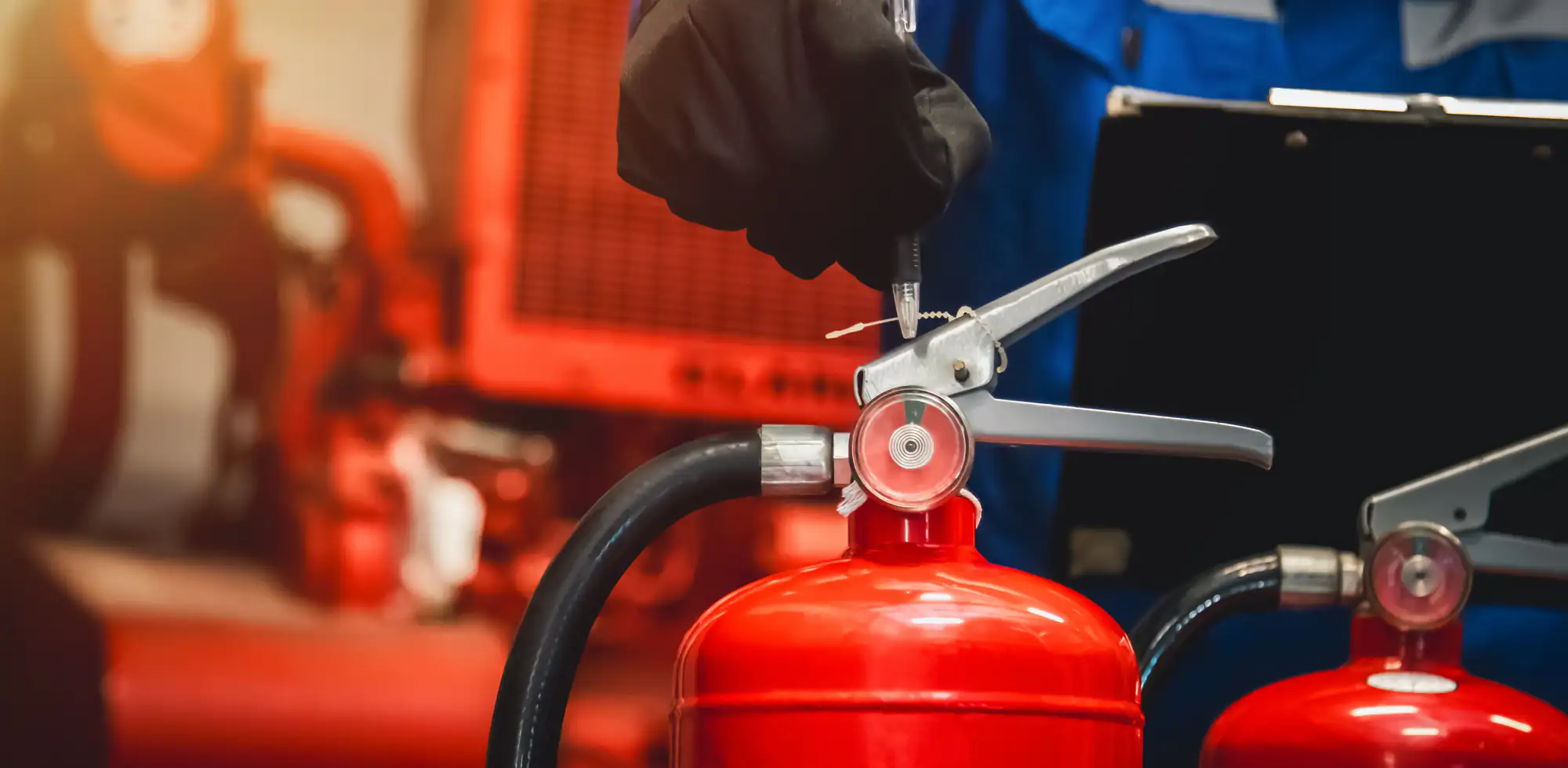
Then document it. Write the date and your initials on the inspection tag attached to the extinguisher. This creates a visible record that satisfies fire marshal requirements and proves you’re staying on top of monthly checks. Missing documentation is one of the most common violations in Nassau County, even when the equipment itself is fine.
Temperature matters more than most people realize. Extinguishers stored in unheated areas experience expansion and contraction cycles that accelerate seal deterioration and pressure loss. If your extinguishers are in garages, loading docks, or outdoor cabinets, they need more frequent attention than units in climate-controlled spaces.
Monthly inspections take minutes per unit. But they catch problems early, before pressure drops too low, before seals fail completely, before a gauge gets stuck showing green when the actual pressure is gone. That early warning is what keeps your first line of defense actually functional.
Annual Professional Fire Extinguisher Maintenance Service
Once a year, your fire extinguishers need more than a visual check. They need a licensed fire protection company to perform a thorough examination of all mechanical parts, verify proper pressure levels, and assess whether the extinguishing agent inside is still viable.
This isn’t something facility staff can handle. New York law requires that fire extinguisher inspections and maintenance be performed by certified professionals with specialized knowledge of pressure systems, extinguishing agents, and safety protocols. In Nassau County, that means working with a company that holds the proper licenses for your jurisdiction.
Annual inspections include removing the extinguisher from its mount to verify it meets manufacturer specifications. The technician checks gauge pressure, inspects the valve and shell for damage or corrosion, and examines the hose for integrity and cracks. They ensure the discharge horn and valve opening are clear of any foreign substances that could prevent proper operation.
The inspection also confirms the extinguisher’s classification matches the potential hazards in its location. Class K extinguishers are required in commercial kitchens where grease fires can occur. ABC multipurpose extinguishers work for most other environments. CO2 units are needed for electrical equipment in certain settings. Having the wrong type in the wrong place is a violation waiting to happen.
After inspection, the technician affixes a new annual inspection tag with the date and company information. This tag is your proof of compliance when the fire marshal shows up. Without it, even a perfectly functional extinguisher can result in a violation and fine.
Here’s what most business owners don’t realize: the annual inspection often reveals issues that monthly visual checks miss. Gauge accuracy problems. Slow pressure leaks. Internal corrosion that’s not visible from the outside. Agent clumping or contamination. These problems don’t announce themselves until a professional looks for them.
The cost of annual inspections is minimal compared to the cost of violations. FDNY fines range from $300 to $1,000 per extinguisher for compliance failures. Add in potential insurance complications, fire marshal citations, and the risk of forced business closure for repeat violations, and the math becomes pretty clear.
Professional service providers also maintain detailed records that create a paper trail protecting you during inspections and insurance claims. Missing or incomplete records can cost more than the service itself, especially if you’re trying to prove compliance after receiving a violation notice.
Fire Extinguisher 6 Year Maintenance Requirements
Every six years, stored pressure fire extinguishers that require a 12-year hydrostatic test must be emptied and subjected to internal examination. This requirement exists because problems develop inside cylinders that no external inspection can detect.
The 6-year maintenance involves discharging the extinguisher completely, removing the valve assembly, and inspecting the interior of the cylinder for corrosion, residue buildup, or damage. The technician examines the siphon tube, valve stem, spring, and all internal components for integrity and wear.
Any defective parts get replaced. The cylinder is refilled with fresh extinguishing agent, recharged to the manufacturer’s specified pressure using nitrogen gas, and thoroughly tested to ensure proper operation. A new metallic label is affixed to the extinguisher indicating when the 6-year maintenance was performed.
This isn’t optional maintenance you can postpone. It’s required by NFPA 10 standards and enforced by local fire codes in Nassau County. The timing matters too. If your extinguisher undergoes recharging or hydrostatic testing before the 6-year mark, the 6-year requirement clock resets from that date.
Portable Fire Extinguisher Maintenance for Different Types
Not all portable fire extinguisher maintenance follows the same schedule. Different extinguisher types have different internal examination requirements based on their design and the agents they contain.
Stored pressure dry chemical extinguishers follow the standard 6-year internal examination schedule. These are the most common type found in commercial buildings, offices, and retail spaces. The dry chemical agent can clump over time, and internal corrosion can develop even when external appearance suggests everything is fine.
Clean agent extinguishers like Halotron units require careful handling during maintenance because the agents must be recovered using specialized closed recovery systems. You can’t just discharge these into the air. The environmental regulations are strict, and improper handling during maintenance can result in additional violations beyond fire code issues.
CO2 extinguishers have different requirements. The hose assemblies must undergo conductivity testing annually to ensure they won’t conduct electricity, which would defeat their purpose for electrical fires. Non-conductive hoses get replaced immediately.
Water-based and water mist extinguishers require internal examination annually, not every six years. The same applies to stored-pressure loaded-stream and antifreeze type extinguishers. These more frequent requirements catch problems specific to water-based agents and prevent freeze damage in units exposed to cold temperatures.
Class K extinguishers designed for commercial kitchens need particular attention because they’re often located in environments with high heat, grease accumulation, and physical impact from busy kitchen operations. The mounting brackets can loosen, the units can get bumped or damaged, and the harsh environment accelerates wear on external components.
Knowing which type of extinguisher you have matters because the maintenance intervals vary. A professional fire protection company tracks this for you, but if you’re managing your own schedule, you need to verify the type and apply the correct maintenance timeline. Using the wrong schedule is a common compliance failure that results in violations even when owners think they’re doing everything right.
The size of the extinguisher also affects maintenance decisions. Small units under 5 pounds are typically replaced rather than recharged when they lose pressure or reach the end of their service life. Larger units are more cost-effective to maintain, recharge, and keep in service for their full lifespan.
Quality matters too. Industrial-grade extinguishers from manufacturers like Amerex or ANSUL can last decades with proper maintenance. Cheaper units might need replacement sooner even with perfect maintenance. The total cost of ownership over 10-12 years often favors investing in quality equipment upfront.
Hydrostatic Testing and 12-Year Requirements
Hydrostatic testing is the most rigorous examination your fire extinguishers will undergo. It’s required every 12 years for most dry chemical extinguishers, though some types need testing every 5 years depending on the cylinder material and extinguishing agent.
The test involves filling the cylinder with water and pressurizing it to levels significantly higher than normal operating pressure. The cylinder is placed in a protective cage during testing because if it’s going to fail, this is when it happens. A technician monitors for any loss of pressure, leaks, or permanent deformation that would indicate the cylinder can no longer safely contain the pressure it was designed for.
Before the hydrostatic test, the technician performs both internal and external visual examination looking for corrosion, pitting, damage, or any condition that would make testing unsafe or pointless. Cylinders with significant corrosion, pitting under nameplates, or previous repairs using soldering, welding, or brazing don’t get tested. They get removed from service permanently.
If the cylinder passes, it’s thoroughly dried, reassembled with new parts as needed, refilled with fresh extinguishing agent, and re-pressurized to operational levels. A permanent record of the test is stamped or labeled on the cylinder showing the test date, pressure used, and the technician’s identification.
Hydrostatic testing requires specialized equipment and training. It’s not something general contractors or facility maintenance staff can handle. Only approved fire extinguisher servicing companies with proper testing equipment and certified technicians can perform this work legally in Nassau County.
The 12-year timeline is strict. Non-rechargeable disposable extinguishers must be removed from service 12 years from their manufacture date regardless of condition. They cannot be hydrostatically tested or kept in service beyond that point. These units are marked with phrases like “Discharge and Dispose of After Any Use” or “Non-rechargeable.”
For rechargeable units, the 12-year hydrostatic test is often combined with the 6-year internal maintenance if the timing aligns. This reduces service visits and keeps the extinguisher out of service for less time overall. During the testing period, a professional service provider should supply temporary replacement extinguishers so your facility remains protected.
Documentation from hydrostatic testing must be maintained for the life of the extinguisher or until the next test, whichever comes first. This record is required by OSHA regulations and must be available for inspection by fire marshals, insurance auditors, or FDNY inspectors.
The testing interval can vary based on extinguisher type. Pressurized water, water mist, and wet chemical extinguishers require testing every 5 years. Carbon dioxide extinguishers need testing every 5 years at specific pressure ratios. Dry chemical extinguishers follow the 12-year schedule. Knowing which interval applies to your equipment is critical for compliance.
Staying Compliant with Fire Extinguisher Maintenance in Nassau County
Fire extinguisher maintenance in Nassau County isn’t complicated once you understand the schedule. Monthly visual inspections by your staff. Annual professional servicing by a licensed company. Six-year internal examinations for stored pressure units. Twelve-year hydrostatic testing to verify cylinder integrity. Each requirement serves a specific purpose in keeping your equipment functional and your business compliant.
The consequences of skipping these requirements go beyond fines and violations. They affect your insurance coverage, your legal liability if something happens, and most importantly, whether your fire extinguishers will actually work when someone needs them. The difference between proper maintenance and neglect shows up in seconds during an emergency, and that’s not when you want to discover your equipment failed.
Working with a qualified fire protection company that holds proper licensing for Nassau County takes the complexity out of tracking schedules, managing documentation, and ensuring compliance. We provide comprehensive fire extinguisher maintenance, inspection, and testing services throughout Nassau County, Suffolk County, and NYC, with NICET certified professionals who understand local requirements and keep your equipment ready when it matters most.