Summary:
You can buy a fire extinguisher anywhere. But mounting it correctly, spacing it properly, and ensuring it meets Nassau County fire codes? That’s where most businesses run into trouble. The Nassau County Fire Marshal doesn’t care that you tried. They care that your installation meets NFPA 10 standards, satisfies travel distance requirements, and passes inspection the first time.
Here’s what you need to know about fire extinguisher installation that actually protects your business and keeps you compliant with the codes that matter in Nassau County, NY.
What NFPA 10 Fire Extinguisher Installation Actually Requires
NFPA 10 is the standard that governs how fire extinguishers get installed, inspected, and maintained across the country. It’s not optional reading for Nassau County businesses. Your fire marshal uses it as the baseline for every inspection, and Nassau County’s centralized fire code enforcement means these standards apply uniformly across the county.
The standard covers everything from which type of extinguisher belongs in which space to exactly how high it can hang on your wall. Get it wrong and you’re looking at violations that can delay occupancy permits, trigger insurance issues, or in serious cases, result in fines that climb into thousands of dollars per offense.
Most violations happen because someone assumed installation was simple. Mount a bracket, hang the extinguisher, move on. But NFPA 10 requires specific placement based on travel distance, proper mounting height based on extinguisher weight, and the right extinguisher class for the hazards in your space. Miss any of those and your installation fails before anyone even checks if the extinguisher is charged.
Travel Distance Requirements That Determine Extinguisher Placement
Travel distance is the measurement that trips up more businesses than any other NFPA 10 requirement. It’s not about how far apart your extinguishers are from each other. It’s about how far anyone in your building has to walk along an actual path to reach the nearest appropriate extinguisher.
For Class A hazards like paper, wood, and ordinary combustibles, the maximum travel distance is 75 feet. That means every single point in your space needs to be within 75 feet of walking distance to an extinguisher. Not straight-line distance through walls or storage racks. Actual walking distance around desks, down hallways, through doorways.
If you have flammable liquids on site, that distance drops to 50 feet or less depending on the hazard level and extinguisher rating. Commercial kitchens with cooking equipment need Class K extinguishers within 30 feet of the hazard. These aren’t suggestions. They’re code requirements that fire marshals measure during inspections.
Walk your space like someone who needs to grab an extinguisher in an emergency. If any spot feels too far from the nearest unit, it probably violates travel distance requirements. Adding an extinguisher costs far less than the violation, the re-inspection fee, and the headache of explaining to your insurance company why your coverage lapsed because you failed a fire safety inspection.
Nassau County’s centralized fire code enforcement means these standards apply uniformly across the county. You don’t get different rules in different towns. One standard, consistently enforced, which actually makes compliance more predictable if you know what you’re dealing with.
Mounting Height Specifications and Why They Matter
NFPA 10 doesn’t let you mount fire extinguishers wherever looks convenient. Mounting height is regulated based on the weight of the extinguisher, and the rules exist so people can actually reach and use the equipment in an emergency.
For extinguishers weighing 40 pounds or less, the top of the unit can’t be more than 5 feet above the floor. For heavier extinguishers, that maximum drops to 3.5 feet. The bottom of every extinguisher must be at least 4 inches off the floor to prevent tripping hazards and allow for cleaning underneath.
These specifications aren’t arbitrary. They account for accessibility, visibility, and the reality that someone under stress needs to grab this equipment quickly. Mount an extinguisher too high and you’ve created a compliance violation and a practical problem. Mount it too low and you’re creating a different hazard.
Extinguishers also need to be mounted on approved brackets, cabinets, or wall hangers designed to support the weight. Improvised mounting solutions fail inspections immediately. The bracket needs to hold the extinguisher securely while allowing quick removal when needed.
Visibility matters as much as mounting height. If your extinguisher is tucked behind equipment, hidden in a closet, or blocked by inventory, it’s non-compliant even if it’s properly mounted and fully charged. Fire marshals cite obstructed access violations regularly because businesses treat extinguishers like storage items instead of emergency equipment.
Signage helps with visibility, especially in larger spaces where the extinguisher might not be immediately obvious. Clear markings and unobstructed sightlines mean people can locate the equipment without searching. In an emergency, those seconds matter.
Fire Extinguisher Maintenance Companies and Ongoing Compliance
Installing extinguishers correctly is step one. Keeping them compliant requires ongoing maintenance that most businesses can’t handle internally. Nassau County requires annual inspections by state and county fire marshals for commercial spaces and multi-family residences, and those inspections check more than whether your extinguisher is still hanging on the wall.
Proper fire extinguisher installation means nothing if the equipment isn’t maintained. We provide the inspections, testing, recharging, and documentation that keep your business compliant between installations. Annual service isn’t optional. It’s a fire code requirement and typically an insurance requirement as well. Let it lapse and you’re risking violations, coverage issues, and equipment that might not work when you need it.
What Annual Fire Extinguisher Inspections Actually Cover
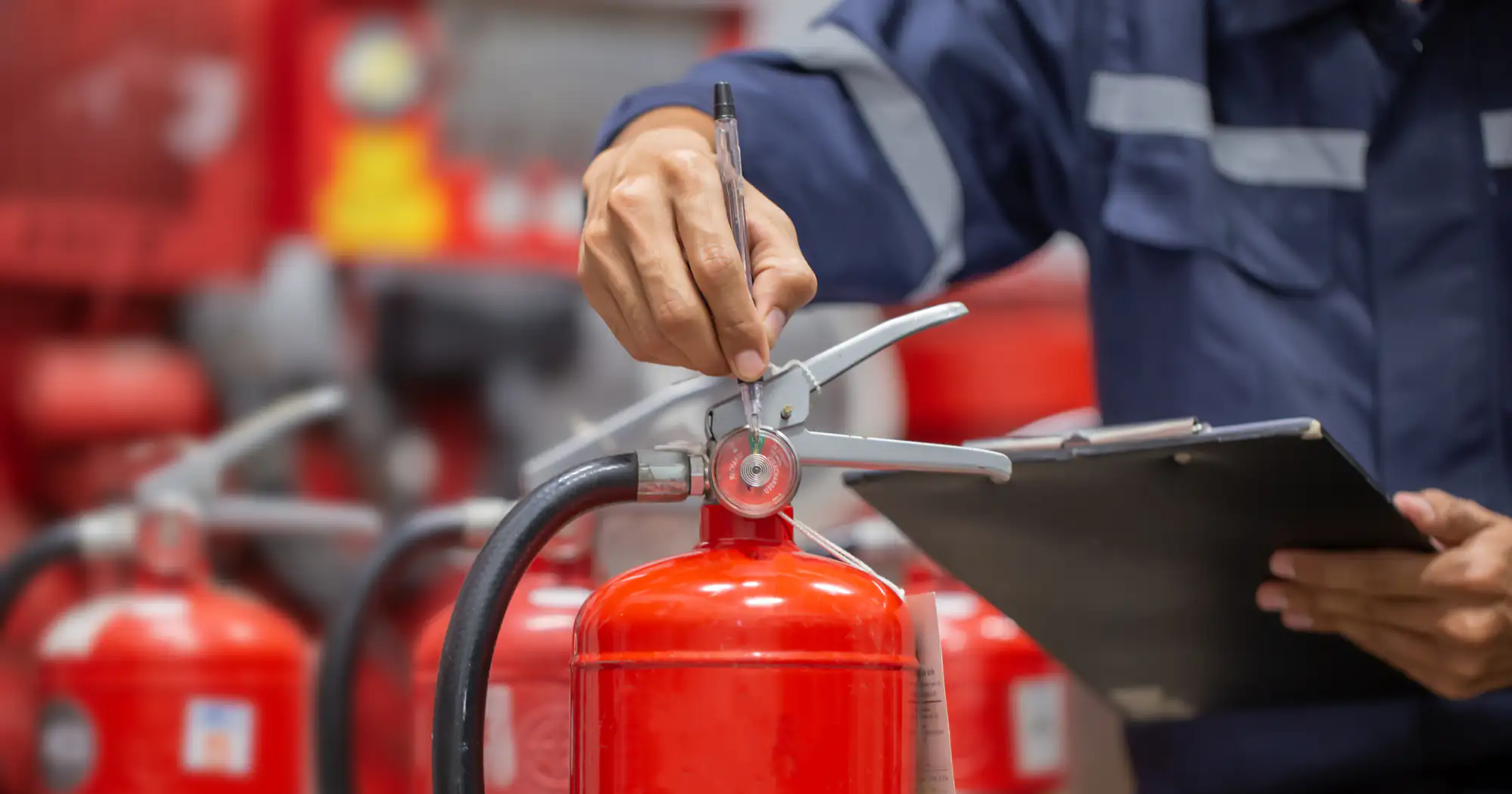
Annual inspections go deeper than the monthly visual checks your staff should be doing. A certified technician examines the extinguisher for functionality, checks gauge pressure and condition, verifies the manufacture date and last hydrotest, and inspects the valve, shell, hose, and discharge components for damage or wear.
They’re also checking that the installation still meets code. Travel distances can change when you rearrange your space. New equipment or storage can block access to extinguishers that were previously compliant. The inspection catches these issues before the fire marshal does.
After the inspection, you get documentation showing the work was completed and any deficiencies that need correction. That documentation matters during fire marshal inspections and insurance audits. Missing inspection tags or expired service dates are treated as missing inspections, which means violations and potential fines.
Six-year maintenance and hydrostatic testing add another layer of compliance. Stored-pressure extinguishers require internal examination every six years and hydrostatic testing every 5 to 12 years depending on type. Most facilities miss these requirements because monthly and annual inspections feel sufficient. They’re not. We track these schedules and notify you before deadlines pass.
Recharging services matter when an extinguisher has been used or shows low pressure during inspection. A partially discharged extinguisher is a non-compliant extinguisher. It needs to be refilled and tested before it goes back into service. Trying to delay that work to save money just extends the period your business operates without proper fire protection.
Choosing Fire Extinguisher Maintenance Companies in Nassau County
Not every company offering fire extinguisher service has the credentials to work in Nassau County. NFPA 10 requires that annual maintenance and internal examinations be performed by trained and certified personnel. Most jurisdictions require NICET certification or equivalent state licensing. Hiring someone without proper credentials means the work doesn’t count toward your compliance obligations.
Look for companies licensed specifically in Nassau County who understand the centralized fire code enforcement structure here. The county’s approach offers businesses greater predictability because compliance standards are uniform throughout Nassau, but that only helps if your service provider knows those standards and follows them consistently.
Comprehensive service matters more than cheap pricing. You need a company that can handle installation, ongoing inspections, recharging, hydrostatic testing, and violation correction if issues arise. Trying to piece together those services from multiple providers creates gaps in documentation and accountability that show up during inspections.
Response time and scheduling flexibility make a difference when you’re dealing with violations or failed equipment. Some companies offer emergency services and violation removal support that can prevent business interruptions. Others schedule weeks out and leave you waiting while your insurance company asks questions you can’t answer.
Check whether the company provides detailed inspection reports with photographs and clear documentation of any deficiencies. Generic service tags don’t give you the information you need to make decisions about repairs or replacements. Detailed reports do.
Ask about their relationship with equipment manufacturers. Authorized dealers for brands like Notifier by Honeywell have access to genuine parts, manufacturer support, and training that affects the quality of service you receive. It’s not just about having a bracket and a wrench. It’s about understanding the equipment and maintaining it correctly.
Getting Fire Extinguisher Installation Right in Nassau County
Fire extinguisher installation per NFPA 10 standards protects your business from violations, insurance complications, and the very real risk of inadequate fire protection when it matters most. Travel distance requirements, mounting height specifications, and proper extinguisher selection aren’t details you can skip. They’re code requirements that Nassau County fire marshals check during every inspection.
Working with certified professionals who understand Nassau County’s fire codes and NFPA 10 standards means your installation passes inspection the first time and stays compliant through ongoing maintenance. The cost of proper installation and annual service is predictable. The cost of violations, failed inspections, and insurance issues isn’t.
At Island Fire & Defense Systems, we bring NICET certified expertise, Nassau County licensing, and comprehensive fire protection services that keep your operation code-compliant and protected. For businesses in Nassau County, NY looking for fire extinguisher installation and ongoing compliance support, we’re here to help.