Summary:
You’re running a business in Nassau County. You check your fire extinguisher during a routine walkthrough and notice the pressure gauge sitting just below the green zone. Or maybe you grabbed it last month to knock down a small equipment fire, and it’s been sitting there ever since. Now you’re stuck wondering whether you need a simple refill or if it’s time to buy a new one altogether.
The answer isn’t always black and white. Sometimes a recharge gets you back to full compliance. Other times, replacement is the only safe option. What you need is a clear understanding of when each choice makes sense, what NFPA standards require, and how to avoid costly mistakes that leave your property unprotected.
When to Refill Your Fire Extinguisher vs. Replace It
The decision hinges on three factors: the extinguisher’s physical condition, how much it’s been used, and what type of unit you’re dealing with. If you’ve discharged your extinguisher at all, even for a few seconds, it needs to be recharged immediately. There’s no gray area here. A partially used extinguisher might look fine, but it won’t deliver full suppression when you need it.
If the cylinder is in good shape with no rust, dents, or corrosion, and the valve components are intact, recharging is typically the right move. The process involves refilling the extinguishing agent, replacing worn seals and O-rings, and restoring pressure to the manufacturer’s specifications. For larger units, it’s cost-effective and keeps you compliant.
But when you’re seeing structural damage, a gauge that won’t hold pressure after multiple recharges, or a unit that’s past its 12-year service life, replacement is the only responsible choice. Same goes for extinguishers with missing service records or unclear maintenance history.
NFPA Fire Extinguisher Inspections and What They Mean for You
NFPA 10 sets the standard for portable fire extinguisher maintenance nationwide, and Nassau County businesses are expected to follow it. This isn’t optional. It’s the compliance baseline that fire marshals, insurance companies, and building inspectors all reference. The standard breaks down into monthly visual inspections, annual professional maintenance, and periodic internal examinations based on your extinguisher type.
Monthly inspections are simple enough for your staff to handle. Check that each unit is in its assigned location, the pressure gauge reads in the green zone, there’s no visible damage to the cylinder or hose, and the pull pin and tamper seal are intact. Initial and date the tag. Takes less than a minute per extinguisher.
Annual maintenance requires a licensed fire protection technician. We examine all mechanical parts, test pressure levels, inspect for internal corrosion, and verify the extinguishing agent is still effective. Worn components get replaced, the service tag gets updated, and you get documentation that satisfies both your insurance carrier and local fire code enforcement. Skip this, and you’re inviting violations.
The 6-year internal examination is where things get more involved. For stored pressure extinguishers, which includes most ABC dry chemical units, the extinguisher is fully discharged, the valve is removed, and a certified technician inspects the cylinder interior for corrosion, contamination, or structural damage. If it passes, valve components are replaced, the unit is refilled with fresh agent, and it’s pressurized to spec. If it fails, the extinguisher is taken out of service and replaced.
Halon Fire Extinguisher Inspection and Why It's Different
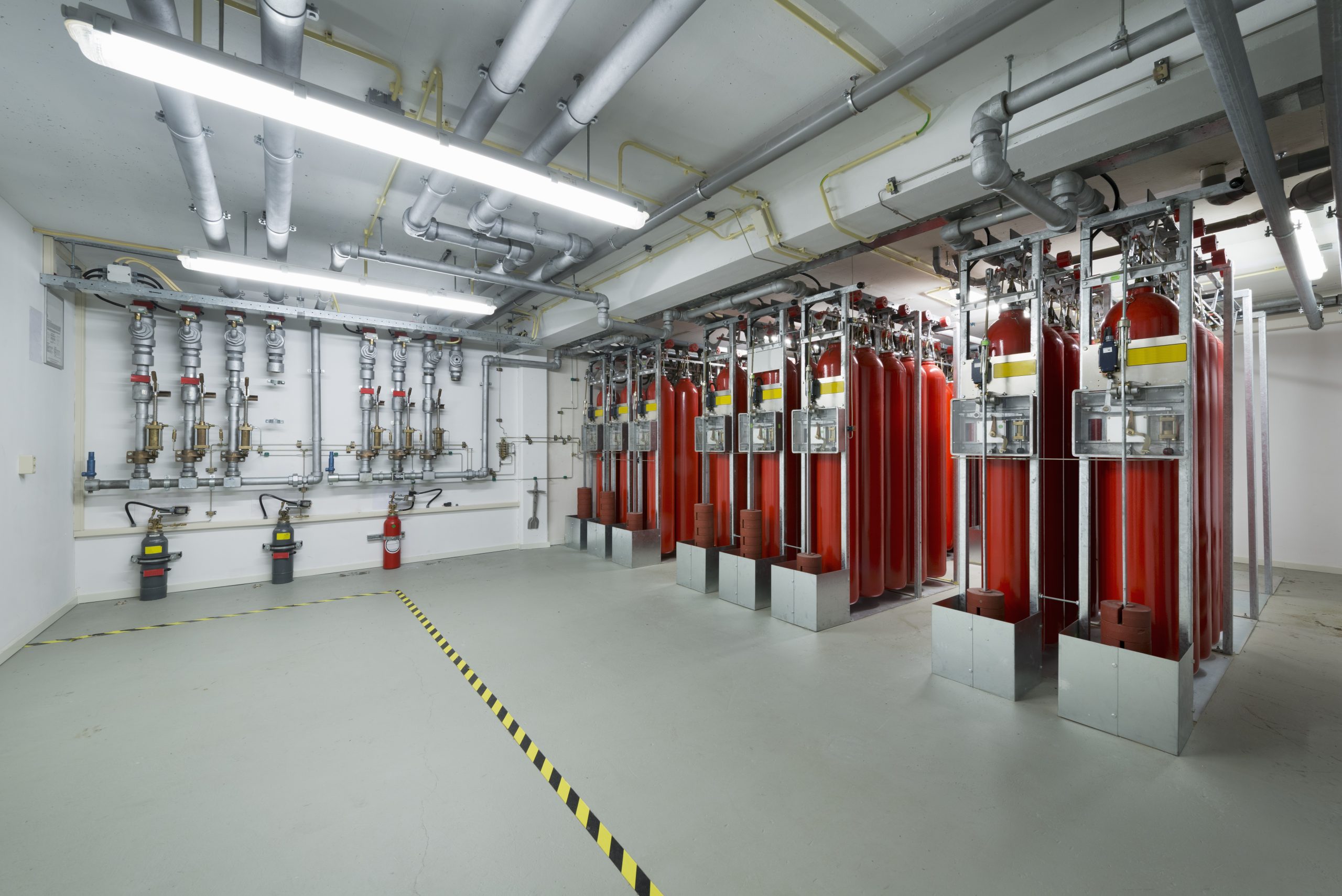
Halon extinguishers operate in a completely different category. They’re clean agent systems designed for environments where traditional dry chemical extinguishers would cause unacceptable damage. Think data centers, server rooms, museums, laboratories, and telecommunications facilities across Nassau County. No residue, no cleanup, and highly effective on Class A, B, and C fires.
The maintenance requirements are stricter. Annual inspections must verify that the agent weight and pressure remain within tolerance. If you’re seeing a 10% pressure drop or 5% weight loss, the system needs immediate attention. That’s a tighter margin than standard dry chemical units.
Six-year internal maintenance for halon systems involves a full discharge, complete internal analysis of all components, and recharging to manufacturer specifications. The 12-year hydrostatic test verifies that the cylinder can still safely contain the pressure needed to expel the agent during discharge.
Here’s what complicates things: halon production ended in 1994 under the Montreal Protocol due to ozone depletion concerns. Every halon extinguisher in service today relies on recycled agent. It’s still legal to use, maintain, and recharge these units, but you need a service provider with access to recycled halon inventory and the technical knowledge to handle it properly. Not every fire protection company in Nassau County has that capability. If you’re relying on halon systems, verify that your service provider is equipped to support them long-term.
6 Year Fire Extinguisher Inspection: What Happens and Why It Matters
The 6-year inspection isn’t just a more thorough version of your annual checkup. It’s a complete teardown and rebuild of the extinguisher to verify it’s still structurally sound and safe to pressurize.
This requirement applies to stored pressure extinguishers, which covers the majority of ABC dry chemical units you’ll find in commercial facilities. At the 6-year mark, the unit is discharged completely, the valve assembly is removed, and a certified technician examines the cylinder interior for any signs of corrosion, contamination, or damage. Valve components like O-rings and stems are replaced regardless of condition, the cylinder is refilled with fresh extinguishing agent, and it’s repressurized to manufacturer specs.
If the internal inspection reveals corrosion, cracks, or structural compromise, the extinguisher gets retired. There’s no repairing a damaged cylinder. Replacement is the only safe path forward at that point.
Halotron Fire Extinguisher Maintenance and How It Compares to Halon
Halotron emerged as the environmentally responsible alternative to halon. It’s a clean agent with similar fire suppression characteristics but a significantly lower ozone depletion potential and faster atmospheric breakdown. For Nassau County businesses looking to phase out halon systems or install new clean agent protection, halotron is often the preferred choice.
Halotron I extinguishers are rated for Class A, B, and C fires. They handle ordinary combustibles, flammable liquids, and electrical fires without leaving residue. The agent discharges as a rapidly evaporating liquid, making it ideal for protecting sensitive equipment where dry chemical powder would cause extensive secondary damage.
Maintenance follows NFPA 10 protocols: monthly inspections, annual professional service, 6-year internal examination, and 12-year hydrostatic testing. The difference is in the recharging process. Halotron requires specialized equipment and must be pressurized with argon rather than nitrogen. The agent itself is a proprietary blend that needs to be transferred under controlled pressure to maintain chemical consistency. Service providers without halotron-specific training and equipment can’t properly service these units.
One significant advantage halotron has over halon is ongoing availability. Since it’s manufactured using reclaimed HCFC-123, there’s a consistent supply chain for recharging. You’re not dependent on a finite recycled inventory. That makes halotron a more sustainable long-term solution for clean agent fire protection.
Fire Extinguisher Recharge vs. Replacement: The Cost Question
Recharging a fire extinguisher typically runs between $15 and $50, depending on size and type. For a 10 or 20-pound ABC unit, that’s a reasonable maintenance expense that extends the life of the equipment. But for a small 2.5-pound extinguisher, the economics shift. A new 2.5-pound unit might cost $30 to $40, while recharging could run $20 to $25. Factor in the logistics of getting it serviced, and replacement often makes more sense.
Larger extinguishers tell a different story. A 20-pound ABC dry chemical unit in good condition can be recharged multiple times over its service life. As long as the cylinder passes inspection and shows no structural damage, you’re looking at significantly lower costs than purchasing new. The same logic applies to CO2, halotron, and other specialty extinguishers where replacement costs are substantially higher.
But here’s the trap: if your extinguisher keeps losing pressure between service intervals, you’re not saving money by continuing to recharge it. You’re dealing with a slow leak or compromised valve. At that point, replacement becomes the smarter financial decision. You’re paying for reliable protection, not just a temporary fix.
Compliance adds another layer to the calculation. When you’re due for a 6-year internal examination and the cylinder fails inspection, the decision is made for you. The unit gets replaced. If it passes, you’re recharged and compliant for another cycle. Either way, you’re meeting NFPA requirements and keeping both your insurance carrier and Nassau County fire marshal satisfied.
One critical point: not all extinguishers are rechargeable. Disposable units with plastic valve assemblies are designed for single use. They’re clearly marked with language like “Dispose After Any Use” or “Non-Rechargeable.” Attempting to recharge these units is both ineffective and dangerous. Check the label. If it’s disposable, replace it.
Keeping Your Fire Extinguishers Ready When It Counts
Fire extinguishers sit on your wall for months or years without being touched. Then one day, you need one, and it has to work. That reliability comes from staying current with inspections, understanding when to recharge versus replace, and partnering with a service provider who knows NFPA standards and Nassau County compliance requirements inside and out.
If you’ve discharged an extinguisher, get it recharged immediately. If you’re seeing pressure loss, corrosion, or structural damage, don’t wait for the next scheduled inspection. And if you’re managing specialized systems like halon or halotron, verify that your service provider has the technical expertise and equipment to maintain them correctly.
Fire protection isn’t about checking compliance boxes. It’s about ensuring your people and property are protected when something goes wrong. We provide fire extinguisher refills, replacements, inspections, and full compliance services for businesses throughout Nassau County, Suffolk County, and New York City.