Explore firsthand accounts of our exceptional service and dedication to safety through the glowing testimonials from our satisfied clients.
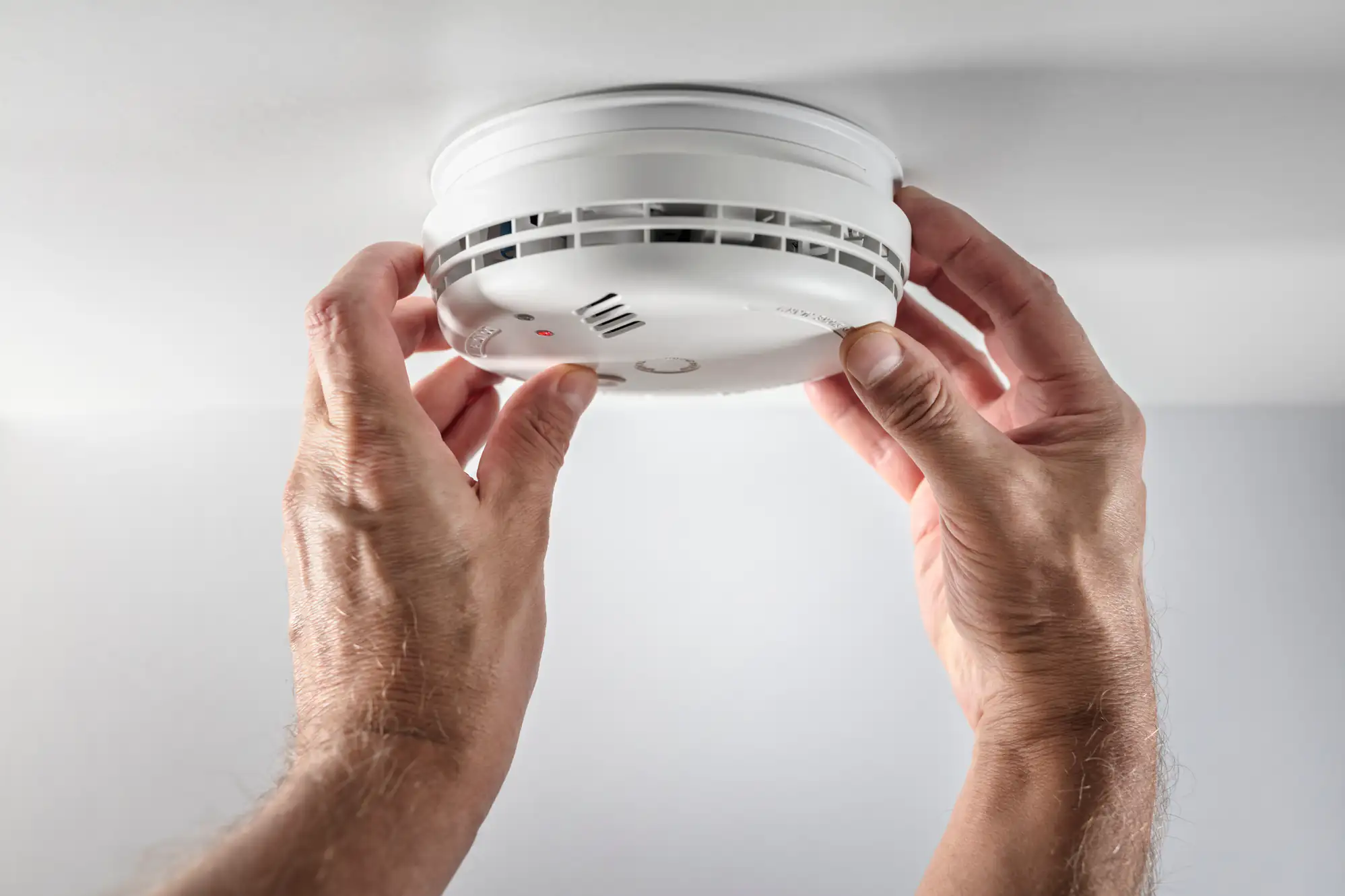
You’re not just checking a box when you install a fire detection system. You’re protecting your property, your people, and your ability to operate without disruption.
A properly installed fire alarm does more than meet code. It integrates with your building systems, reduces false alarms that waste time and money, and gives you documentation that holds up during inspections. In Brightwaters and across Suffolk County, that means meeting New York State Fire Code and NFPA standards without the back-and-forth with inspectors.
When your system is designed right from the start, you avoid the costly retrofits that come from cutting corners. You get reliable smoke detection, carbon monoxide monitoring if needed, and a system that actually communicates with emergency responders when seconds count. That’s what a NICET certified installation gets you—not just equipment on the wall, but a fire protection strategy that works.
We hold NYS License #12000325006 and Suffolk County license 180. We’re NICET certified professionals and a Notifier by Honeywell authorized dealer, which means you’re getting both the credentials and the equipment that matter.
We’ve been installing fire detection systems across Brightwaters, Bay Shore, Islip, and the surrounding Suffolk County communities long enough to know what works in these buildings. The salt air, the mix of old and new construction, the specific code requirements that Nassau and Suffolk enforce differently—we account for all of it.
You’re working with a team that knows the local fire marshals, understands the inspection process, and can walk you through violation corrections if you’ve inherited a problem system. We’re also MBE certified and members of the New York Fire Alarm Association, which keeps us current on code changes before they affect your next inspection.
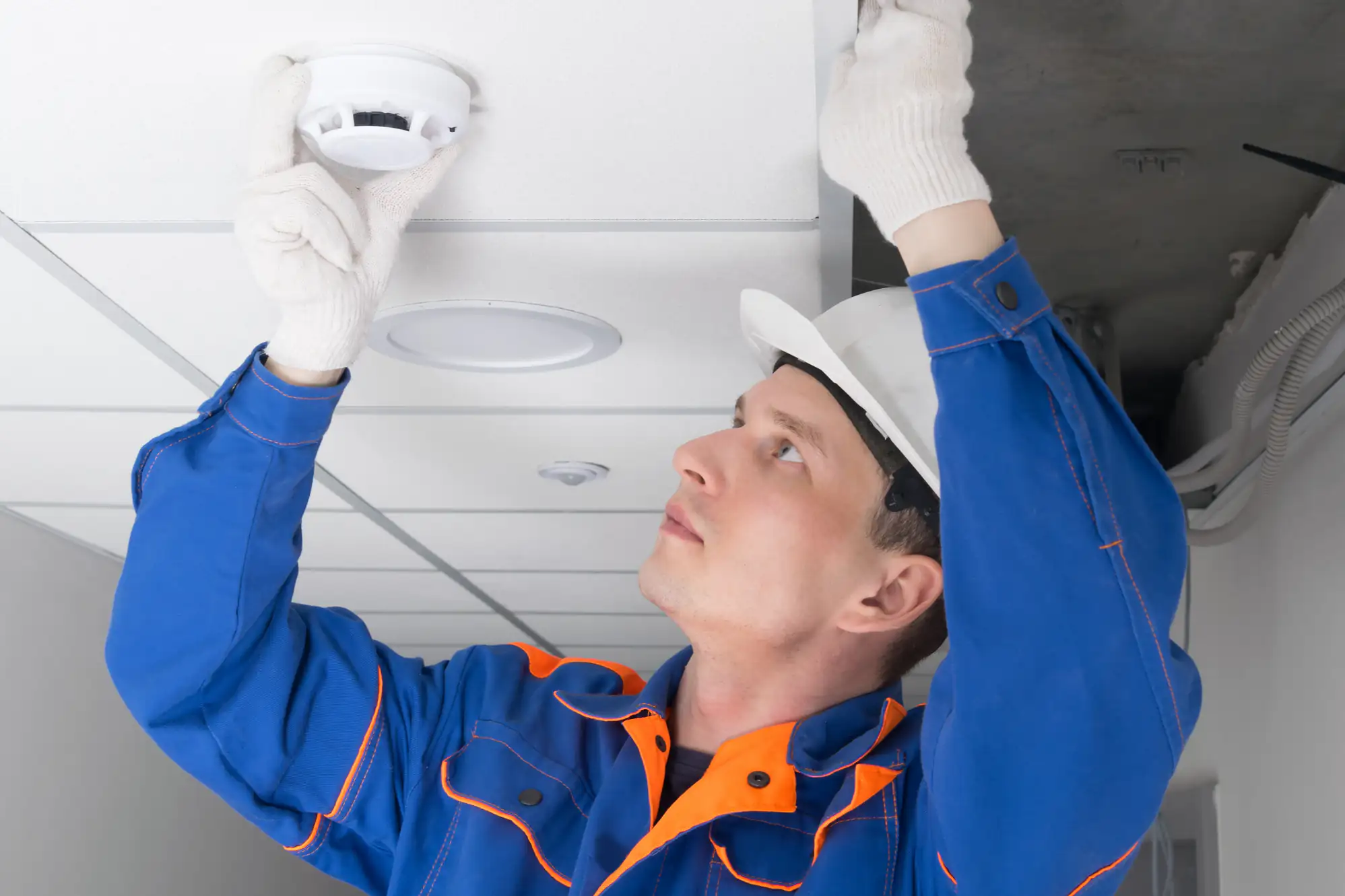
First, we assess your property and review your current fire protection setup, if you have one. That includes checking what’s required for your building type, occupancy, and square footage under current New York fire code. We’re looking at detector placement, panel capacity, and whether you need additional components like a combo smoke and co alarm in certain zones.
Next, we design a system that meets code without over-engineering it. You’ll see exactly what equipment goes where, how it ties into your existing building systems, and what the inspection process will look like. If you’re correcting violations, we map out what needs to change and why.
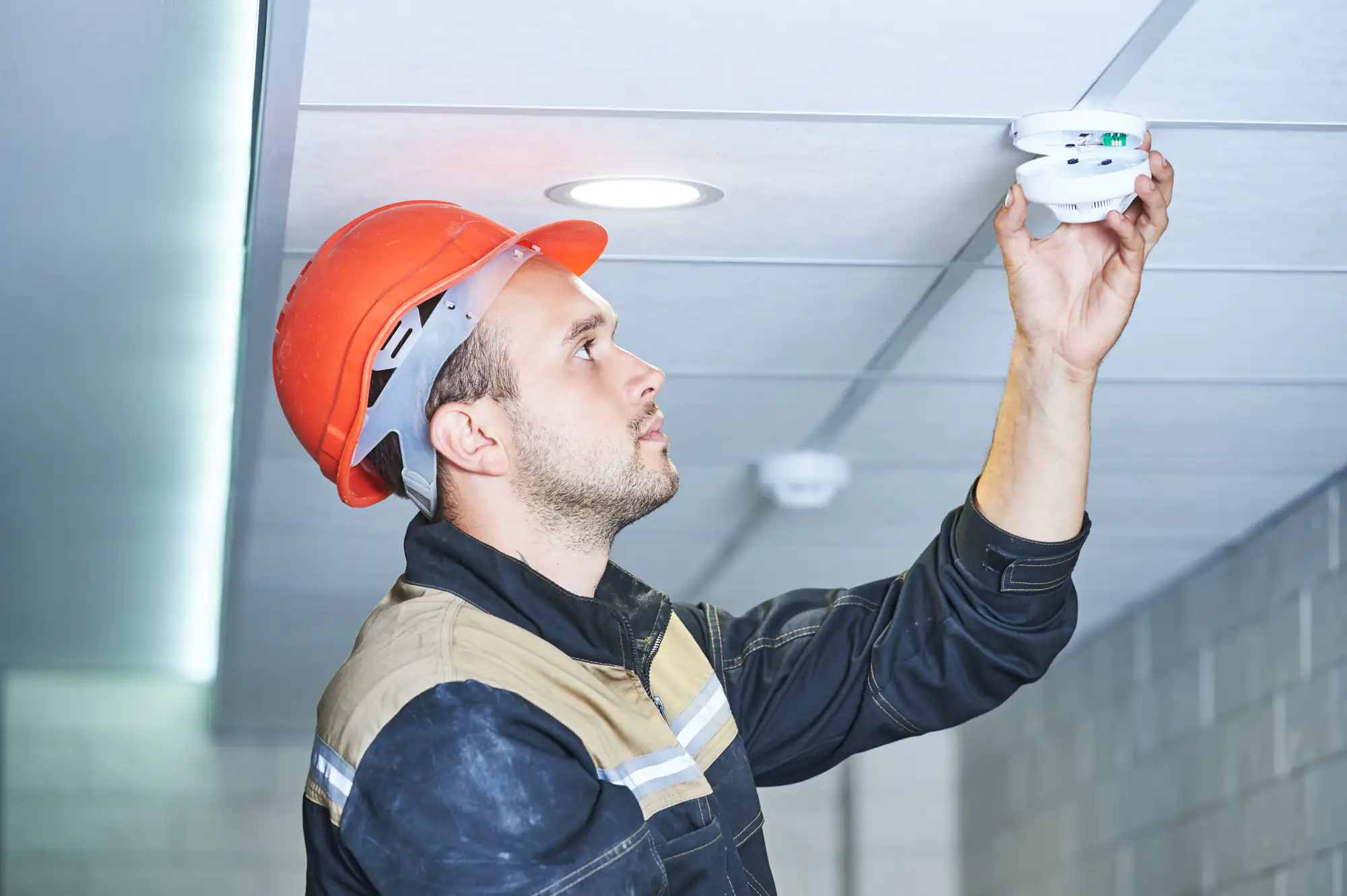
Installation is scheduled around your operations. Our licensed electricians handle all wiring, device mounting, and panel programming. We test every detector, every circuit, and every notification device before we call for inspection. You get documentation that shows compliance, and we walk the inspector through the system if needed.
After approval, you receive a maintenance plan that keeps your fire alarm system NFPA compliant. That’s not optional—it’s required, and it’s how you avoid failures during an actual emergency.

Ready to get started?
A complete fire detector installation in Brightwaters includes the fire alarm control panel, smoke detectors positioned according to NFPA spacing requirements, and notification devices like strobes and horns. Depending on your building, you might also need heat detectors in mechanical rooms, carbon monoxide detectors in parking structures, or duct detectors in HVAC systems.
In Suffolk County, commercial properties often require BDA systems—Bi-Directional Amplifiers that boost radio signals for emergency responders inside your building. We’re FCC certified to install and test these systems, and we coordinate with local fire departments to ensure they meet signal strength requirements. That’s not something every fire alarm company handles, but it’s mandatory for many commercial buildings in this area.
You also get integration with your building’s other systems. Your fire alarm can shut down HVAC to prevent smoke spread, recall elevators to the ground floor, and unlock emergency exits. These aren’t extras—they’re code requirements that prevent your building from trapping occupants during an evacuation.
For properties with existing systems, we handle smoke alarm replacement and detector upgrades. Older ionization detectors are being phased out in favor of photoelectric and dual-sensor models that reduce false alarms. If you’re dealing with frequent nuisance alarms, that’s often a detector placement or sensitivity issue we can fix during an upgrade.
Cost depends on building size, detector count, and system complexity. A small retail space might run $5,000 to $8,000 for a basic addressable system. Larger facilities—warehouses, multi-tenant buildings, restaurants with kitchen suppression—can range from $15,000 to $50,000 or more.
You’re paying for the control panel, detectors, notification devices, labor, and permitting. Addressable systems cost more upfront than conventional panels, but they pinpoint the exact detector in alarm, which cuts down response time and reduces false alarm fines. In Suffolk County, where false alarm penalties can hit $250 per incident after the first few, that’s a real consideration.
If you need a BDA system for emergency responder communication, add another $10,000 to $25,000 depending on building size and how many amplifiers are required to meet signal coverage. We provide a detailed quote after the site assessment so you know exactly what you’re getting and why each component is spec’d.
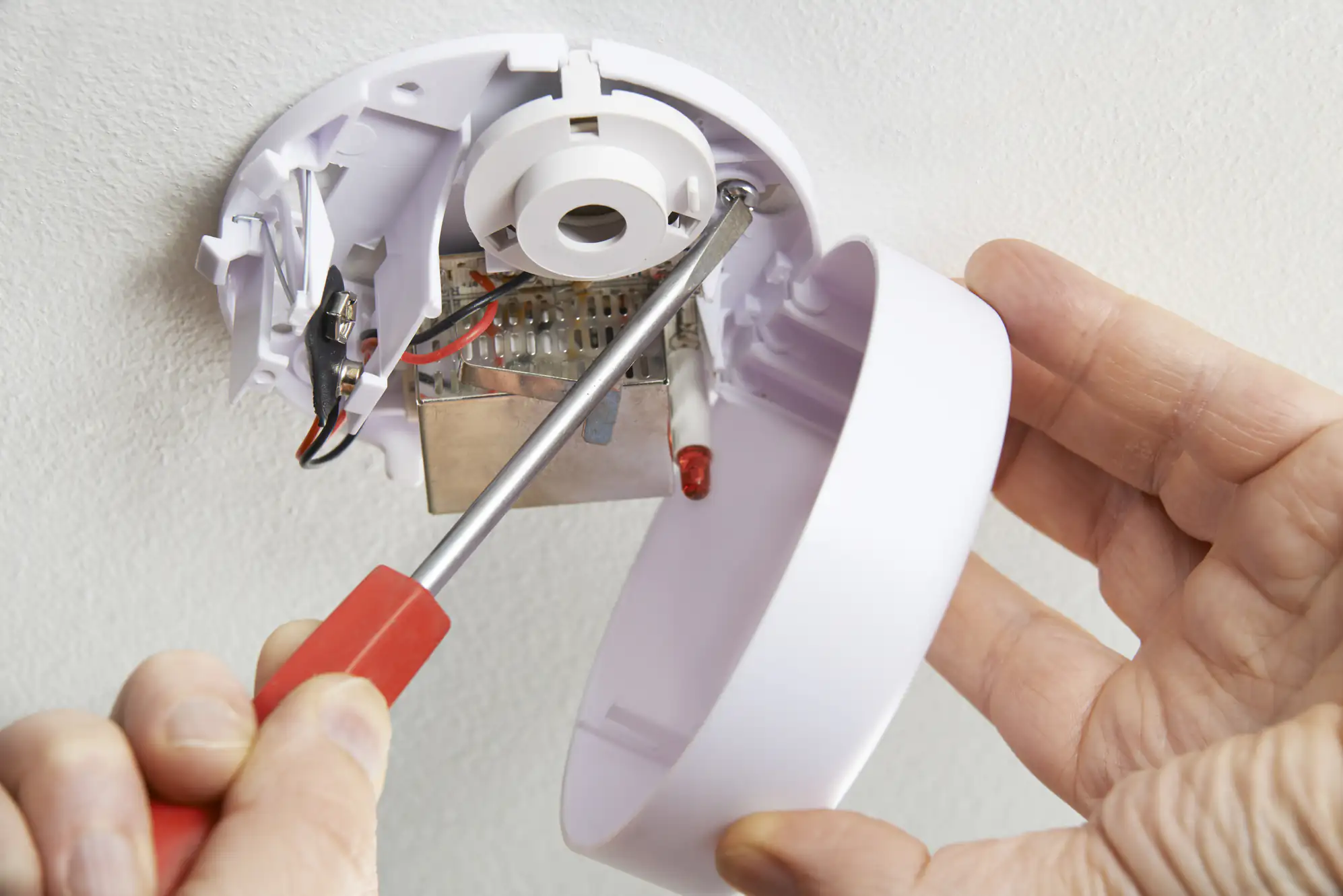
Smoke detectors are individual devices—battery-operated or hardwired—that sound a local alarm. They’re fine for residential use, and you’ve probably seen brands like Kidde or Nest in homes. But they don’t notify anyone outside the building, and they don’t integrate with other life safety systems.
A fire alarm system is networked. Every detector reports to a central panel that monitors the entire building. When one detector activates, the panel identifies its location, triggers building-wide notification devices, and can send a signal to a monitoring station or directly to the fire department. That’s required for commercial buildings in New York.
Fire alarm systems also control other building functions during an emergency. They can release magnetic door holders, shut down air handlers, activate emergency lighting, and recall elevators. You can’t do any of that with standalone smoke detectors. If your building requires a fire alarm system under code, individual detectors won’t pass inspection—even if you install dozens of them.
NFPA 72 requires annual inspections and testing for all fire alarm systems. That includes checking every detector, testing notification devices, verifying panel operation, and documenting everything for your inspection records. You can’t skip this—it’s a code requirement, and your insurance company will ask for proof.
Smoke detectors themselves should be replaced every 10 years, sometimes sooner depending on the environment. Detectors in dusty or high-humidity areas degrade faster. If you’re getting frequent false alarms or detectors that won’t reset properly, that’s usually a sign they’re past their service life.
We offer maintenance agreements that cover your annual inspections, quarterly testing if required, and priority service if something goes wrong. The cost is typically a few hundred to a few thousand dollars per year depending on system size, and it keeps you compliant without having to track deadlines yourself. Most property managers and facility directors prefer this approach because it removes the compliance burden and ensures someone’s actually checking the system regularly.
Yes, and it’s common. Brightwaters has plenty of older commercial and residential properties that either need their first fire alarm system or need to replace outdated equipment that’s no longer code-compliant.
Older buildings present challenges—limited access to run new wiring, outdated electrical panels, and layouts that don’t match modern detector spacing requirements. We handle this by using wireless fire alarm devices where running new wire isn’t practical, or by surface-mounting conduit in areas where concealed wiring isn’t possible. It’s not always pretty, but it’s code-compliant and functional.
If your building is undergoing renovation or a change of occupancy, that often triggers a requirement to upgrade fire protection to current code. We work with architects, contractors, and code officials to design a system that meets today’s standards without requiring you to gut the building. The goal is compliance and safety, not unnecessary construction costs.
You get a violation notice that lists what needs to be corrected, and you have a deadline to fix it. Common failures include detectors that don’t activate, notification devices that don’t sound, panel troubles that weren’t addressed, or missing documentation from previous inspections.
We handle violation corrections regularly. First, we diagnose what’s actually wrong—sometimes it’s a simple fix like replacing a faulty detector or resetting a supervisory trouble. Other times it’s a bigger issue like an undersized panel, inadequate detector coverage, or a system that was never installed correctly in the first place.
Once we make the repairs, we retest everything and schedule a re-inspection with the fire marshal. You get updated documentation showing compliance, and we make sure you understand what was wrong so it doesn’t happen again. Most violations are fixable within a few days to a few weeks depending on parts availability and inspection scheduling. The key is addressing it quickly—ignoring a fire code violation can lead to fines, occupancy restrictions, or liability issues if something happens before you fix it.
It depends on your building type and occupancy. Many commercial properties in New York are required to have fire alarm monitoring that automatically notifies the fire department when the system activates. This is separate from the alarm system itself—it’s a communication path, usually a phone line, cellular connection, or internet-based signal that goes to a central monitoring station.
Monitoring ensures that even if your building is unoccupied when a fire starts, emergency responders are dispatched immediately. For buildings like warehouses, offices that close at night, or any property without 24/7 staff, this is critical. It’s also often required by your insurance carrier as a condition of coverage.
We can set up monitoring as part of your installation or add it to an existing system. Monthly monitoring costs typically run $40 to $150 depending on the communication method and whether you need additional services like supervisory signal monitoring for sprinkler systems. If your building requires it, we’ll tell you during the design phase so there are no surprises at inspection.
Other Services we provide in Brightwaters