Explore firsthand accounts of our exceptional service and dedication to safety through the glowing testimonials from our satisfied clients.
You’re not getting shut down because of a missed inspection or a code you didn’t know existed. Your fire marshal inspection goes smoothly because your systems are already up to standard. Your insurance stays valid, your occupancy certificate stays current, and your business keeps running.
That’s what happens when you work with someone who understands Suffolk County’s decentralized fire safety model. Unlike Nassau County, where codes are enforced uniformly, Suffolk lets each town and village layer on additional requirements beyond state minimums. Brightwaters has its own fire district, which means your compliance checklist isn’t the same as the building two towns over.
We help you figure out what actually applies to your property, get it done right, and document everything so you’re covered when the fire inspector shows up unannounced. No surprises. No violations. No downtime.
We hold NYS License #12000325006, Suffolk County License 180, and Nassau County licenses to operate across the region. Our team includes NICET certified professionals who’ve spent years navigating the exact fire codes that apply to commercial properties, restaurants, warehouses, and high-value residential buildings in Brightwaters and surrounding areas.
We’re an authorized Notifier by Honeywell dealer and a certified Minority Business Enterprise (MBE). We’re also members of the New York Fire Alarm Association, which means we stay current on code changes, enforcement trends, and new technology that affects your compliance requirements.
You’re working with people who know the local fire districts, understand how Suffolk County’s municipal flexibility impacts your building, and can walk you through NFPA 101 life safety code requirements without the jargon.
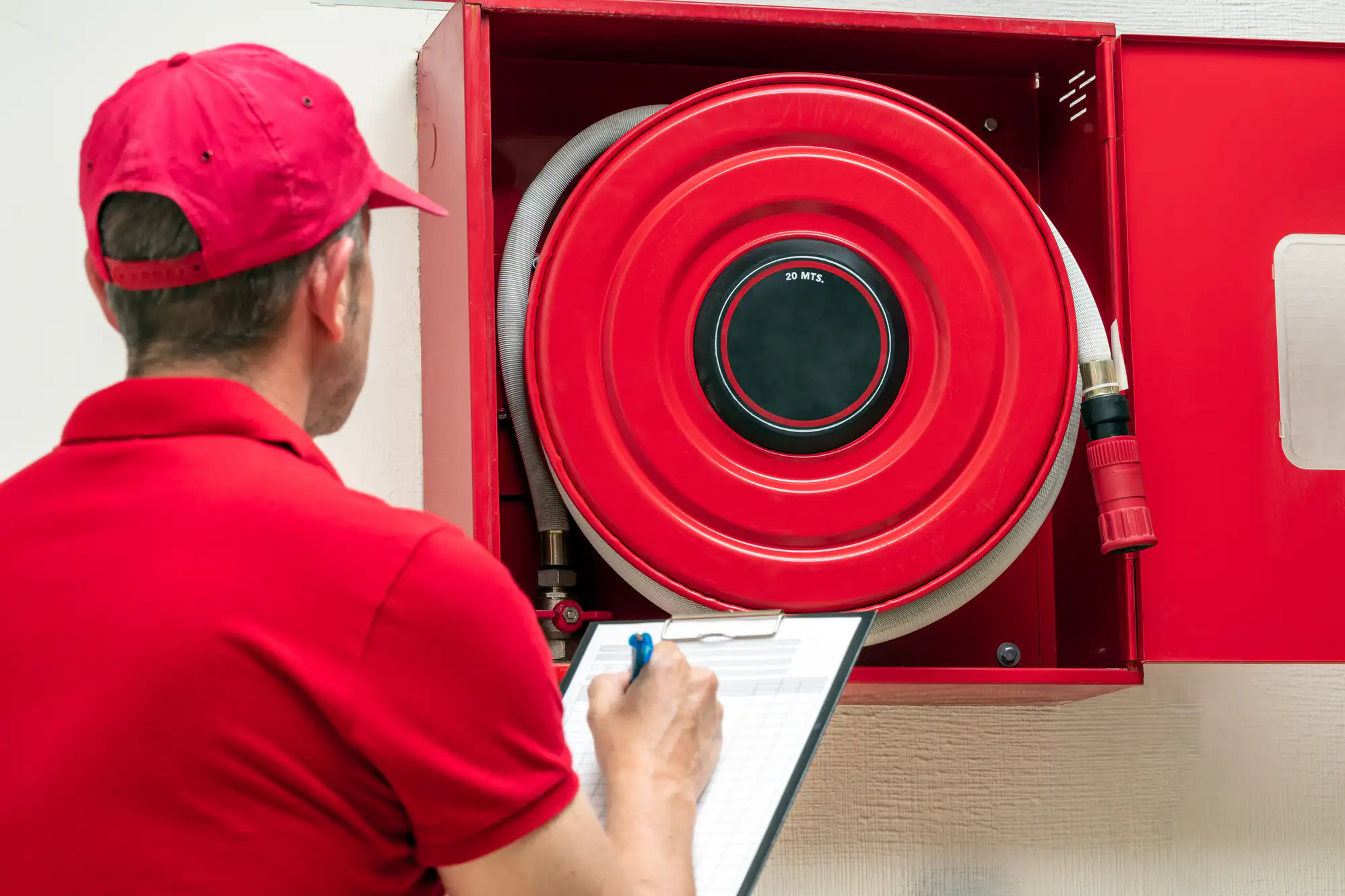
First, we assess your property and identify which codes apply. That includes New York State’s Uniform Fire Prevention and Building Code, the international fire code standards your municipality has adopted, and any local amendments specific to Brightwaters or your fire district. We’re looking at egress requirements, fire alarm systems, sprinkler coverage, emergency lighting, BDA system needs for emergency responder communication, and anything else that shows up during a fire marshal inspection.
Next, we create your fire safety plan. This isn’t a template document. It’s a detailed roadmap that covers your building’s specific occupancy type, life safety systems, evacuation procedures, and maintenance schedules. If you have existing violations, we prioritize corrections based on risk and timeline so you’re not scrambling to fix everything at once.
Then we handle implementation. That might mean installing or upgrading fire alarm systems, designing a compliant BDA system for emergency radio communication, correcting egress window code violations, or coordinating with your fire district for inspections. Once everything’s in place, we document it, train your staff if needed, and set up ongoing maintenance so you stay compliant long-term. You’re not guessing whether you’re up to code. You know.
Ready to get started?
You get a full code compliance assessment based on your building type, occupancy classification, and local fire district requirements. We review your current systems against NFPA 101 life safety code standards, ICC building code requirements, and any Suffolk County or Brightwaters-specific amendments. That includes egress analysis, fire-rated construction, alarm and detection systems, sprinkler coverage, emergency lighting, and signage.
If you’re dealing with violations, we provide correction services that address the root issue and get you back in compliance fast. We also handle BDA system installation for buildings that need emergency responder radio coverage under IFC and NFPA-1221 standards. Our FCC-certified team designs and installs systems that meet code and actually work when first responders need them.
For ongoing compliance, we offer scheduled inspections, system testing, and maintenance that keeps your fire safety plan current. Suffolk County’s approach means you can’t assume what worked last year still applies. Fire districts update requirements. Buildings change use. Occupancy loads shift. We make sure your documentation reflects reality and your systems stay functional. You’re also getting access to 24/7 emergency support if something goes wrong outside business hours, because fire safety issues don’t wait for Monday morning.
Your building falls under New York State’s Uniform Fire Prevention and Building Code as a baseline. But Suffolk County allows individual municipalities and fire districts to adopt additional standards, which means Brightwaters can impose requirements that go beyond the state minimum. You’re also subject to NFPA 101 life safety code provisions and international fire code standards that your local jurisdiction has adopted.
The tricky part is that these codes layer on top of each other. Your occupancy type determines which sections of NFPA 101 apply. Your building size and use trigger specific IFC requirements. And your fire district might have local amendments that affect everything from alarm system specifications to inspection frequency.
That’s why a general code checklist doesn’t work here. You need someone who knows what Brightwaters enforces, how your fire district interprets gray areas, and which violations actually get flagged during inspections. We review your property against all applicable codes and give you a clear list of what needs to happen to stay compliant.
It depends on the violation type and what’s required to fix it. Simple issues like blocked egress, missing signage, or expired extinguishers can be corrected in a day or two. More complex violations involving fire alarm upgrades, sprinkler system modifications, or BDA system installation can take weeks, especially if you need permits and inspections from your local fire district.
Suffolk County expects timely corrections, and most violation notices include a deadline. Missing that deadline can result in fines, increased scrutiny on future inspections, or even occupancy restrictions if the violation poses a serious life safety risk. The key is addressing violations as soon as you’re notified and documenting your progress if the fix takes time.
We prioritize violations based on risk and enforcement likelihood. If you’re facing multiple issues, we handle the most critical ones first and create a timeline for everything else. We also communicate with your fire marshal or inspector to keep them informed, which usually buys you goodwill and flexibility if you’re making a genuine effort to comply.
If your building meets certain occupancy thresholds, has specific hazards, or falls under commercial or assembly use classifications, yes. NFPA 101 and the international fire code require fire safety plans for buildings where occupant safety depends on coordinated emergency response. That includes most restaurants, warehouses, office buildings, retail spaces, and any property with high occupant loads.
Your fire safety plan needs to cover evacuation procedures, fire alarm response protocols, staff responsibilities during emergencies, and maintenance schedules for life safety systems. It’s not just a document you file away. Inspectors check whether your plan reflects your actual building layout, whether your staff knows what to do, and whether your systems are tested on the schedule you committed to.
In Suffolk County, fire districts enforce these requirements inconsistently. Some inspect annually and review your plan in detail. Others focus on visible violations and only ask for documentation if something’s wrong. But if you don’t have a compliant plan and you get inspected, you’re looking at violations that can delay occupancy approvals or trigger follow-up inspections. We create plans that meet code, match your building’s real conditions, and hold up under scrutiny.
A BDA system (Bi-Directional Amplifier) boosts radio signals inside your building so emergency responders can communicate during a fire or other emergency. If your building’s construction materials block radio frequencies, first responders lose contact with each other and with dispatch. That’s a life safety issue, and it’s why the international fire code and NFPA-1221 require emergency responder radio coverage in certain buildings.
You need a BDA system if your building is new construction or undergoing major renovations and it fails radio signal testing. High-rise buildings, large commercial properties, underground parking structures, and buildings with heavy concrete or metal construction almost always need coverage enhancement. Some Suffolk County fire districts also require BDA systems in existing buildings if they’ve updated their local codes.
We handle the testing, design, and installation. Our FCC-certified team ensures your system meets the specific frequency requirements for your fire district and integrates with existing fire alarm infrastructure. We also coordinate the required acceptance testing with your local fire marshal so you pass inspection the first time. If you’re not sure whether you need a system, we can test your building’s radio coverage and tell you exactly where you stand.
NFPA codes set minimum inspection frequencies for most fire protection systems. Fire alarms typically need annual inspections and quarterly testing of certain components. Sprinkler systems require annual inspections, and some components need more frequent checks. Emergency lighting and exit signs need monthly function tests and annual full-duration tests. Portable fire extinguishers need annual inspections and periodic recharging or replacement.
But your fire district or local building department might require more frequent inspections based on occupancy type or building use. Restaurants, for example, often face stricter kitchen suppression system inspection schedules. Buildings with high occupant loads might need semi-annual fire alarm testing. And if you’ve had violations in the past, your fire marshal might put you on a more aggressive inspection cycle until you prove consistent compliance.
We set up maintenance schedules that meet code minimums and match your fire district’s expectations. You get reminders before inspections are due, and we handle the testing and documentation so you’re not tracking deadlines yourself. If something fails during routine testing, we fix it before it becomes a violation. That’s how you avoid the last-minute scramble when the fire inspector shows up unannounced.
You get a violation notice that lists specific deficiencies and a deadline to correct them. Minor violations like missing exit signs or blocked egress usually give you a few weeks. Serious violations involving non-functional fire alarms, sprinkler system failures, or life safety hazards might come with shorter deadlines and the possibility of occupancy restrictions until you fix the issue.
Suffolk County fire marshals typically conduct a follow-up inspection after your correction deadline. If you’ve fixed everything, the violation closes and you’re back in compliance. If you haven’t, you’re looking at fines, additional inspections, and potential escalation to your local building department or code enforcement. Repeat violations or ignored deadlines can result in stop-work orders, occupancy certificate suspensions, or legal action.
The worst thing you can do is ignore the notice or assume it’ll go away. Fire marshals have long memories, and buildings that don’t cooperate get watched more closely. We help you respond to violations quickly, document your corrections properly, and communicate with inspectors so they know you’re taking it seriously. Most fire marshals are reasonable if you’re making a genuine effort. They just want to see compliance, not excuses.
Other Services we provide in Brightwaters