Explore firsthand accounts of our exceptional service and dedication to safety through the glowing testimonials from our satisfied clients.
When fire breaks out, you’ve got about three minutes before flashover. That’s the window where a properly installed fire detection system makes the difference between a contained incident and total loss.
Your insurance company knows this. So does the fire marshal. That’s why they require professional installation with valid certification – not just for compliance, but because DIY systems fail when you need them most.
A code-compliant fire alarm system gives you early warning, automatic notification to emergency services, and documentation that satisfies both your insurance carrier and local fire codes. In Coram and across Suffolk County, that means working with a licensed installer who holds NYS certification and understands local requirements. You’re not just buying equipment – you’re buying time, protection, and proof that you’ve done it right.
The outcome is simple: fewer sleepless nights wondering if your property is actually protected, no surprise violations during inspections, and confidence that if something goes wrong, the right people get notified immediately.
We hold NYS License #12000325006, Suffolk County license 180, and Nassau County certifications because New York requires it – and because you deserve installers who know what they’re doing. Our NICET-certified team has spent years working across Coram, Ronkonkoma, Bohemia, and the surrounding Long Island communities.
We’re authorized Notifier by Honeywell dealers and active members of the New York Fire Alarm Association. That matters because fire safety regulations change, technology evolves, and your system needs to keep pace with both.
Whether you’re managing a warehouse in Islandia, running a restaurant in Lake Ronkonkoma, or protecting a commercial property in Hauppauge, you’re dealing with the same Long Island fire codes and insurance requirements. We’ve handled them all, corrected violations for property owners who got stuck with non-compliant systems, and installed detection equipment that actually passes inspection the first time.
First, we assess your property to determine what type of fire detection system you actually need. Commercial buildings have different requirements than residential properties. Warehouses need different coverage than restaurants. We’re looking at square footage, occupancy type, existing infrastructure, and what the fire code specifically requires for your situation.
Next comes system design and equipment selection. This is where being a Notifier by Honeywell authorized dealer matters – you get access to reliable equipment that integrates with monitoring services and building management systems. We map out detector placement, control panel location, and notification device positioning based on code requirements and your building’s layout.
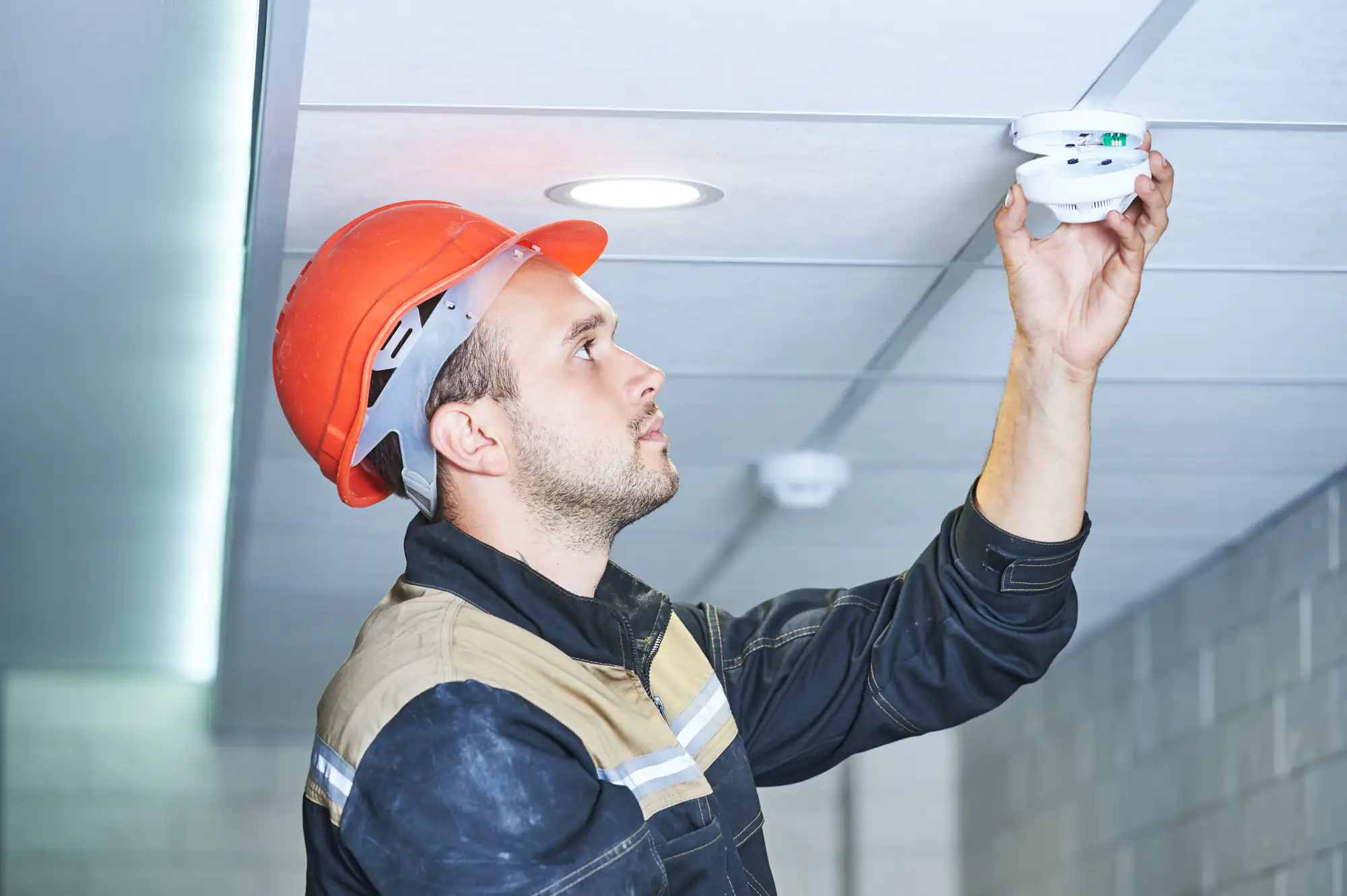
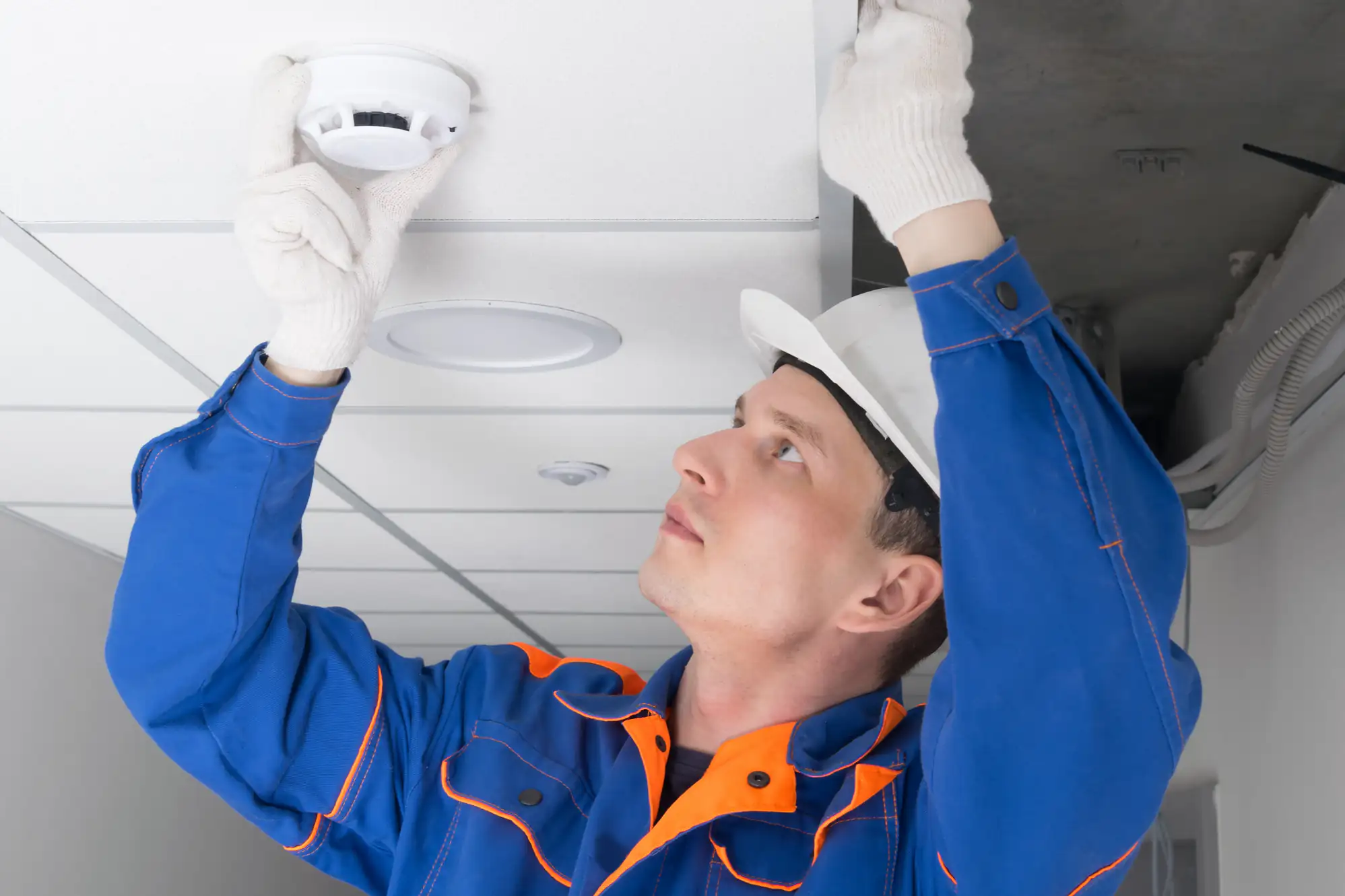
Installation follows. Our licensed technicians run wiring, mount detectors and alarms, install the control panel, and connect everything to our 24/7 monitoring station. Every smoke detector, heat detector, and carbon monoxide alarm gets tested to confirm it’s working correctly.
Final step is inspection and certification. We document everything, provide you with the paperwork your insurance company needs, and activate monitoring. You get a system that’s code-compliant, properly certified, and ready to protect your property from day one.

Ready to get started?
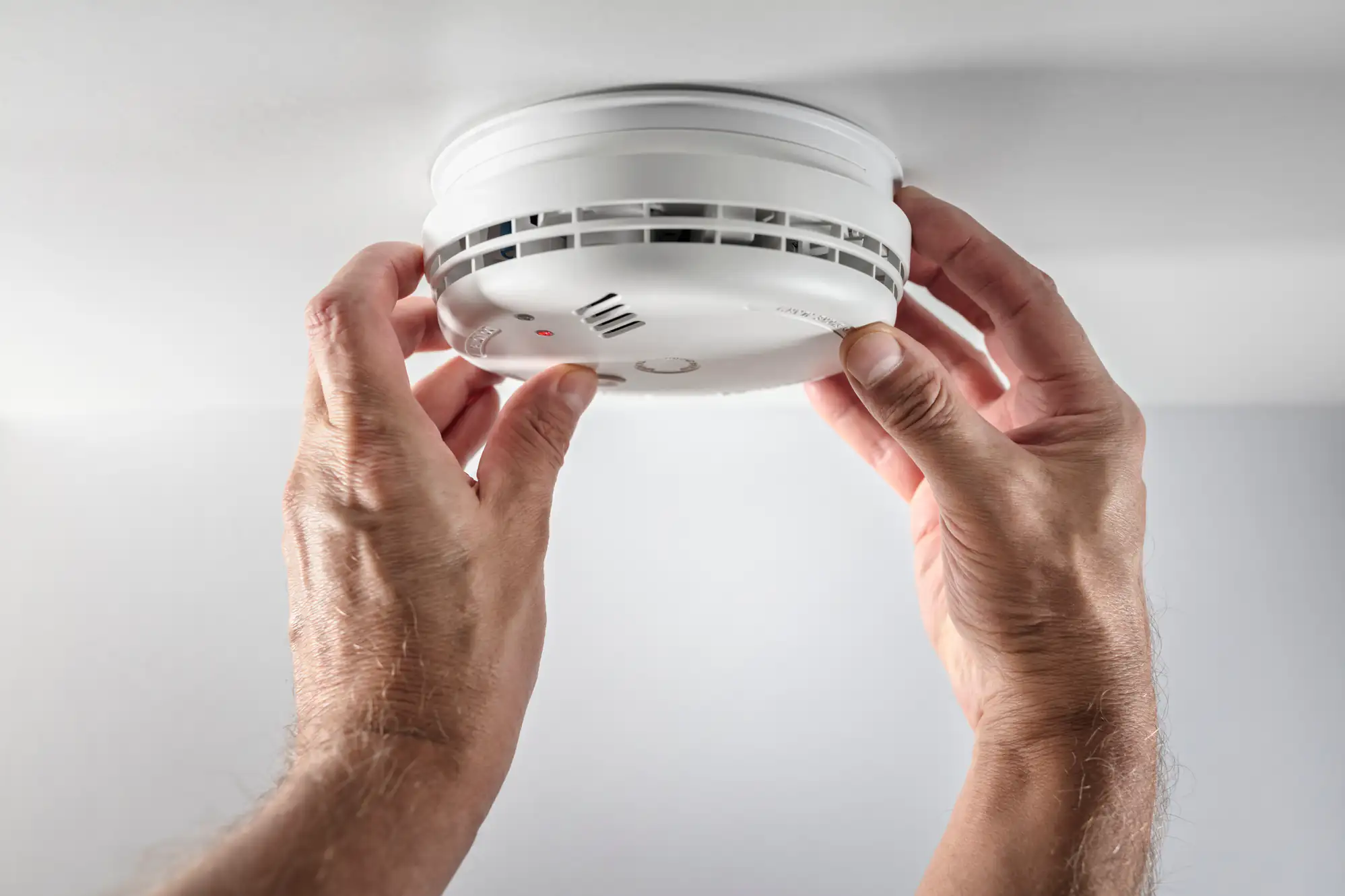
You’re getting a complete fire detection system designed for your specific property type. That includes smoke detectors positioned according to NFPA standards, heat detectors for areas where smoke detection isn’t practical, and combination smoke and CO alarms where carbon monoxide risk exists.
The control panel is the brain of your system – it monitors every detector, processes alarm signals, and communicates with our monitoring station. When something triggers, you get immediate notification and so do emergency responders. No delay, no wondering if the alert went through.
In Coram and throughout Suffolk County, commercial properties often need additional components: manual pull stations, audible and visual notification devices, and sometimes BDA systems to ensure firefighter radio communication works inside your building. We handle all of it, including the paperwork trail that keeps you compliant during inspections.
Installation also covers integration with existing security systems if you have them, connection to your building’s emergency power supply, and programming that eliminates false alarms while maintaining sensitivity to real threats. Every Kidde, Nest, or Notifier device we install gets registered and documented so you have a complete record of your fire protection system.
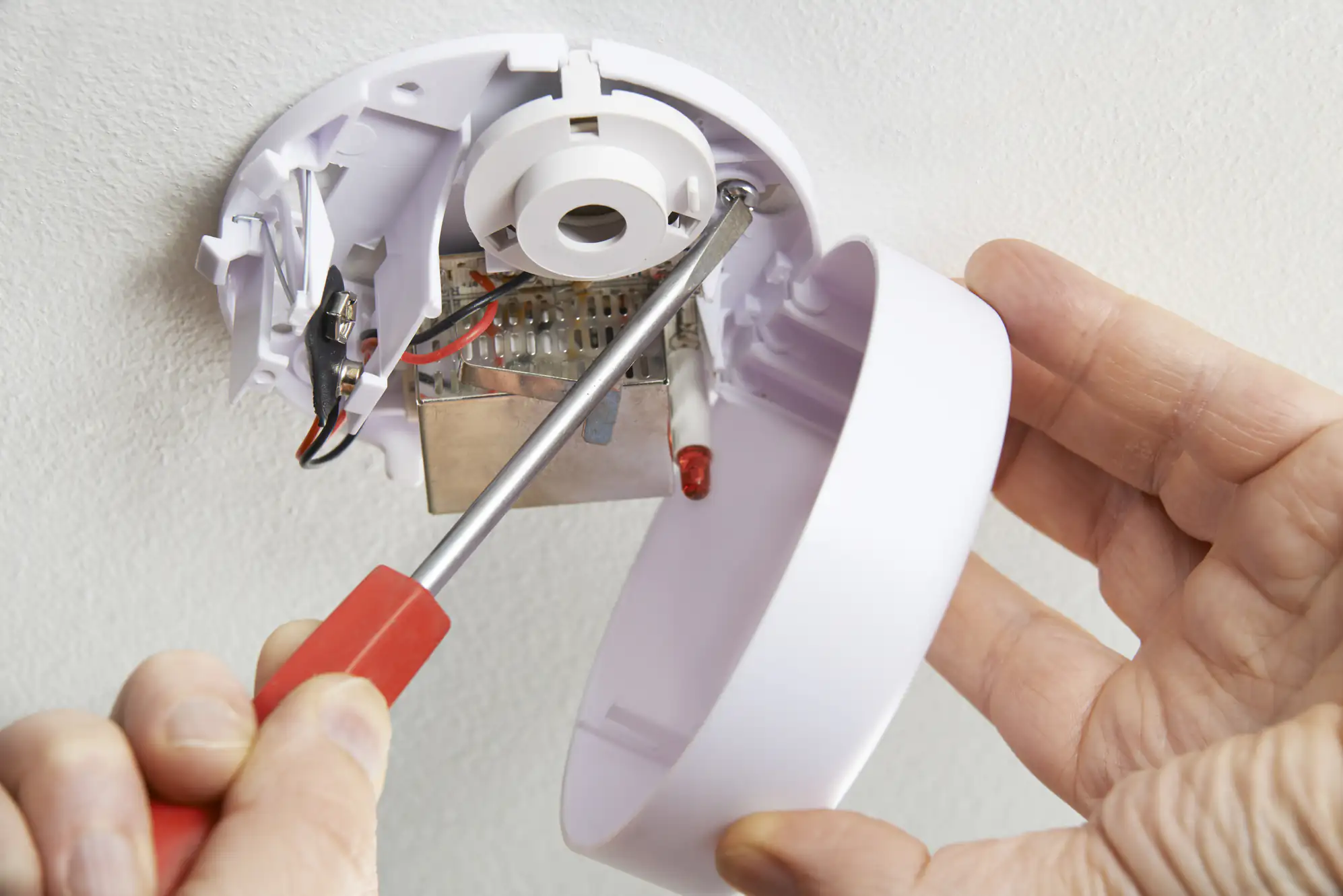
For basic residential smoke alarm replacement – swapping out an old detector with a new one in the same location – you can handle that yourself. But the moment you’re adding new detectors, installing a monitored system, or dealing with commercial property, New York State requires a licensed installer.
Here’s why that matters: insurance companies won’t certify a system that wasn’t professionally installed. Fire marshals won’t approve occupancy without proper documentation. And if you’ve got more than 3-4 detectors that need to communicate with each other or connect to monitoring, the wiring and programming complexity goes beyond DIY territory.
Professional installation also means someone’s verifying that detector placement actually meets code requirements. Smoke rises and spreads in specific patterns – put a detector in the wrong spot and it won’t trigger fast enough to give you that critical three-minute warning window. Licensed installers know the spacing requirements, height regulations, and coverage patterns that turn a collection of detectors into an actual fire detection system.
Cost depends entirely on your building size, occupancy type, and what the fire code requires for your specific situation. A small retail space might need a basic system with 6-8 detectors and a simple control panel. A warehouse facility could require dozens of detectors, multiple notification devices, and BDA system installation to meet emergency responder communication requirements.
Most commercial installations in the Coram area run between $2,000 and $15,000 depending on complexity. That includes equipment, labor, testing, and certification documentation. Monthly monitoring typically adds $30-80 to your operating costs, but that’s what activates the 24/7 response that actually protects your property.
The real question isn’t what it costs – it’s what you’re comparing it against. The average fire restoration bill hits $27,175. Total residential fire damage reached $11.3 billion in 2023. A proper fire detection system is the cheapest insurance you’ll ever buy, and it’s the only one that might actually prevent the claim in the first place. We provide detailed quotes after assessing your property so you know exactly what you’re paying for and why each component matters.
Smoke detectors are individual devices that sound an alarm when they sense smoke. A fire detection system is a network of detectors, control panels, and notification devices that work together and communicate with a monitoring station.
Here’s what that means in practice: standalone smoke detectors alert people in the immediate area. If you’re home and awake, you hear it and react. If you’re not there or the building is large enough that people won’t hear a single alarm, those detectors don’t help much. They also don’t notify the fire department – someone has to hear the alarm and make the call.
A fire detection system connects every detector to a central control panel that monitors all of them simultaneously. When any detector triggers, the system identifies exactly which zone activated, sounds building-wide notification devices, and immediately alerts our monitoring station. Emergency responders get dispatched automatically, even if the building is empty. You get a phone notification so you know what’s happening in real-time.
For commercial properties in Coram, fire code typically requires the full system approach – not just individual detectors. The monitoring, documentation, and automatic emergency notification are what satisfy insurance requirements and pass fire marshal inspections.
Smoke detectors have a 10-year lifespan from manufacture date, not installation date. After that, the sensors degrade and become unreliable. You’ll find the manufacture date printed on the back of the detector – if it’s past 10 years, replacement isn’t optional.
Carbon monoxide detectors typically last 5-7 years depending on the model. Heat detectors can last longer, but the whole system needs professional testing annually to maintain code compliance and insurance certification. That testing verifies every detector responds correctly, notification devices work, and the control panel communicates properly with monitoring services.
New York fire safety regulations require that detection and alarm systems be maintained in operative condition at all times. That means regular testing, prompt replacement of failed components, and documentation that proves you’re keeping up with maintenance requirements. Most commercial properties schedule annual inspections to stay ahead of violations.
Battery-powered detectors need fresh batteries at least once a year – twice if you’re in a high-use environment. Hardwired systems with battery backup still need those backup batteries replaced on schedule. Our monitoring system tracks when maintenance is due and alerts you before you end up with a non-functional detector that could cost you during an inspection.
Properly installed fire detection systems include battery backup that keeps them operational during power failures. The control panel has a backup battery that maintains system function for 24-48 hours depending on the model and how many devices are connected.
Hardwired smoke detectors on a monitored system also have individual backup batteries. If utility power cuts out, the system switches to battery power automatically and continues monitoring every detector. When power restores, it switches back and recharges the backup batteries.
What doesn’t work during extended outages: some notification devices like strobes draw significant power and may have reduced runtime on battery backup. But the detection and monitoring functions – the critical components that alert you and emergency services to fire – stay active as long as backup power holds.
This is one reason why professional installation matters. The backup power system needs to be sized correctly for your building’s detector count and notification device load. Undersized batteries mean your system goes dark before power comes back. Proper installation ensures you’ve got adequate backup capacity and that batteries get replaced before they fail. Our systems monitor battery health and alert you when backup power is compromised so you’re never unprotected.
Fire code violations come with deadlines, fines, and in serious cases, occupancy restrictions until you fix the problem. Suffolk County and Nassau County fire marshals don’t mess around with detection system violations because they’re directly tied to life safety.
If you receive a violation notice, you typically have 30-90 days to correct it and provide proof of compliance. That means hiring a licensed installer to assess what’s wrong, install or upgrade the necessary equipment, test everything, and provide certification documents that satisfy the fire marshal’s requirements.
We handle violation corrections regularly for property owners in Coram and across Long Island who inherited non-compliant systems, had DIY installations that didn’t meet code, or simply didn’t realize their detectors were outdated. The process involves determining exactly what the violation cited, designing a solution that brings you into compliance, and completing installation with proper documentation.
The cost of fixing a violation is always higher than installing it correctly the first time – you’re paying for expedited service, dealing with potential fines, and sometimes upgrading more of the system than you’d planned. But ignoring violations isn’t an option. They escalate, fines increase, and eventually you’re looking at occupancy issues that shut down your business or prevent you from renting your property until fire safety is resolved.
Other Services we provide in Coram